
Braiding Hair Color Chart: Find Your Perfect Shade Today
A braiding hair color chart is an absolute game-changer for anyone who loves protective styles. It’s essentially a universal language for hair, using a standardized numbering system to identify specific shades. This system takes the guesswork out of matching colors, so you can confidently pick the perfect hue every time.
You'll see certain numbers pop up constantly. Think of 1B (Off Black), 27 (Honey Blonde), and 99J (Burgundy) as the foundational shades in the braiding world—staples used to create everything from beautifully understated looks to bold, head-turning styles.
Decoding The Numbers: A Visual Guide
Whether you're a seasoned stylist stocking your salon or a DIY braider prepping for your next look, getting a handle on the color numbering system is the first step. It’s what turns a vague request for "dark brown" into a precise, reliable choice like a number 4.
This guide is designed to be your go-to reference. We'll break down what those numbers actually mean and show you how they translate visually, so you can spend less time guessing and more time creating.
The Most Common Shades
Let's start with the basics. The vast world of braiding hair colors is built on a few key categories that you'll encounter again and again.
- Natural Tones: These are the workhorses of braiding hair. Shades like 1 (Jet Black) and the slightly softer 1B (Off-Black) are by far the most popular and form the base of countless styles.
- Blonde Hues: For a sun-kissed glow or striking contrast, blondes are perfect. Colors like the warm 27 (Honey Blonde) and the icy 613 (Platinum Blonde) are fantastic for highlights, ombré effects, or a full head of bright color.
- Vibrant Reds: When you want to add warmth and richness, reds are the answer. You'll often see shades like 350 (Copper) for a fiery touch or the deep, wine-toned 99J (Burgundy).
This chart shows just how popular these core color families are.
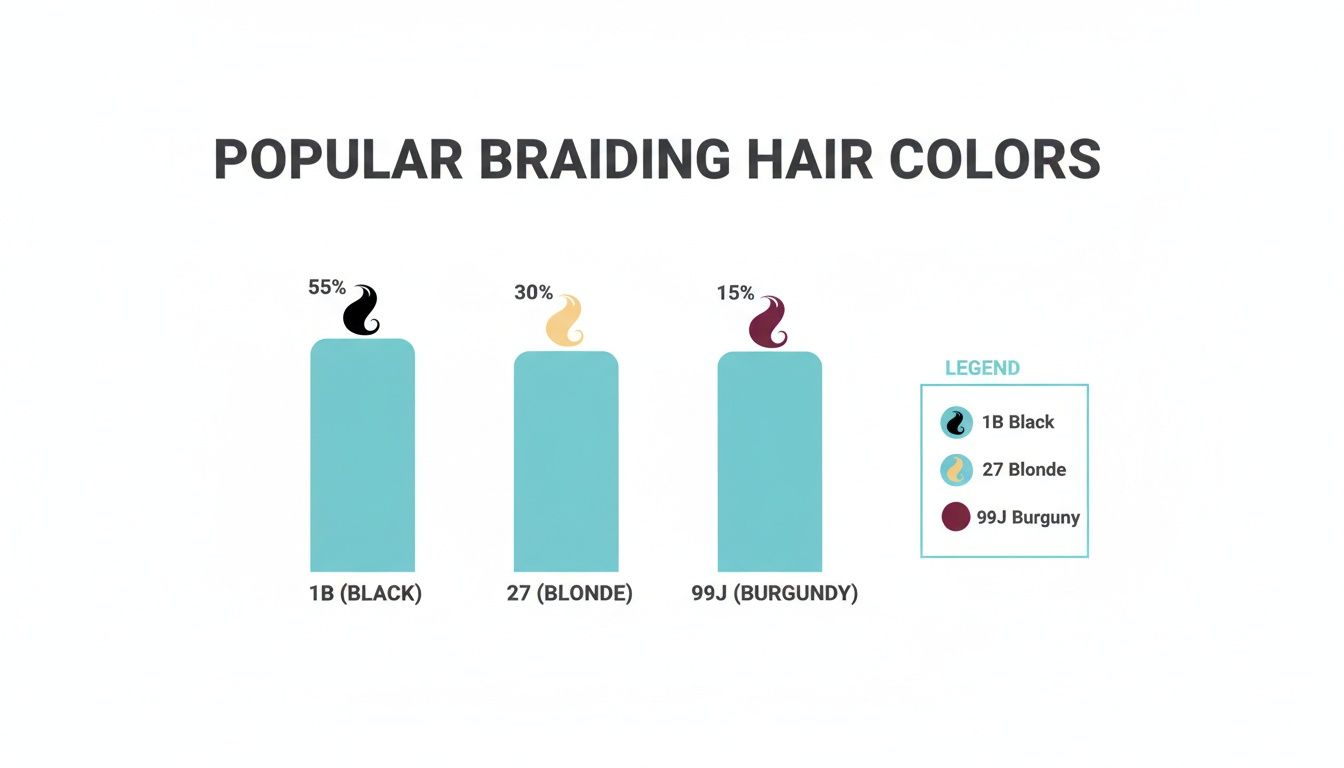
As you can see, while natural black tones dominate at 55%, blondes (30%) and burgundies (15%) are hugely popular for adding that extra dimension and personality to a style.
Standard Braiding Hair Color Number Quick Guide
To make things even easier, here’s a quick-reference table that maps the most common numbers to their names and what they look like. Keep this handy when you're shopping or planning your next style.
| Color Number | Color Name | Visual Description |
|---|---|---|
| 1 | Jet Black | The deepest, truest black with no undertones. |
| 1B | Off-Black | A natural, soft black with very subtle brown undertones. |
| 2 | Darkest Brown | Almost black, but with noticeable warm brown tones in direct light. |
| 4 | Dark Brown | A classic, rich chocolate brown. |
| 27 | Honey Blonde | A warm, golden blonde with distinct honey and caramel tones. |
| 30 | Light Auburn | A light, warm reddish-brown, like a vibrant copper. |
| 33 | Dark Auburn | A deep, rich auburn with prominent red and brown hues. |
| 99J | Burgundy | A deep red with a mix of dark brown and purple undertones, like wine. |
| 613 | Platinum Blonde | The lightest, palest blonde with cool, icy-white undertones. |
| BUG | Burgundy (Alternate) | Another name for a deep, wine-red shade, often interchangeable with 99J. |
This table covers the essentials you'll find in almost any beauty supply store. Getting familiar with these core numbers will make you a much more confident and efficient shopper.
Navigating Natural Shades From Jet Black to Light Brown
Choosing the right base color for your braids is probably the most important decision you'll make for a seamless, natural-looking style. It all starts with the darkest shades on the color chart, where tiny differences in undertone can either perfect your look or make it fall flat. Getting these nuances right is the key to making sure your protective style blends flawlessly with your own hair.
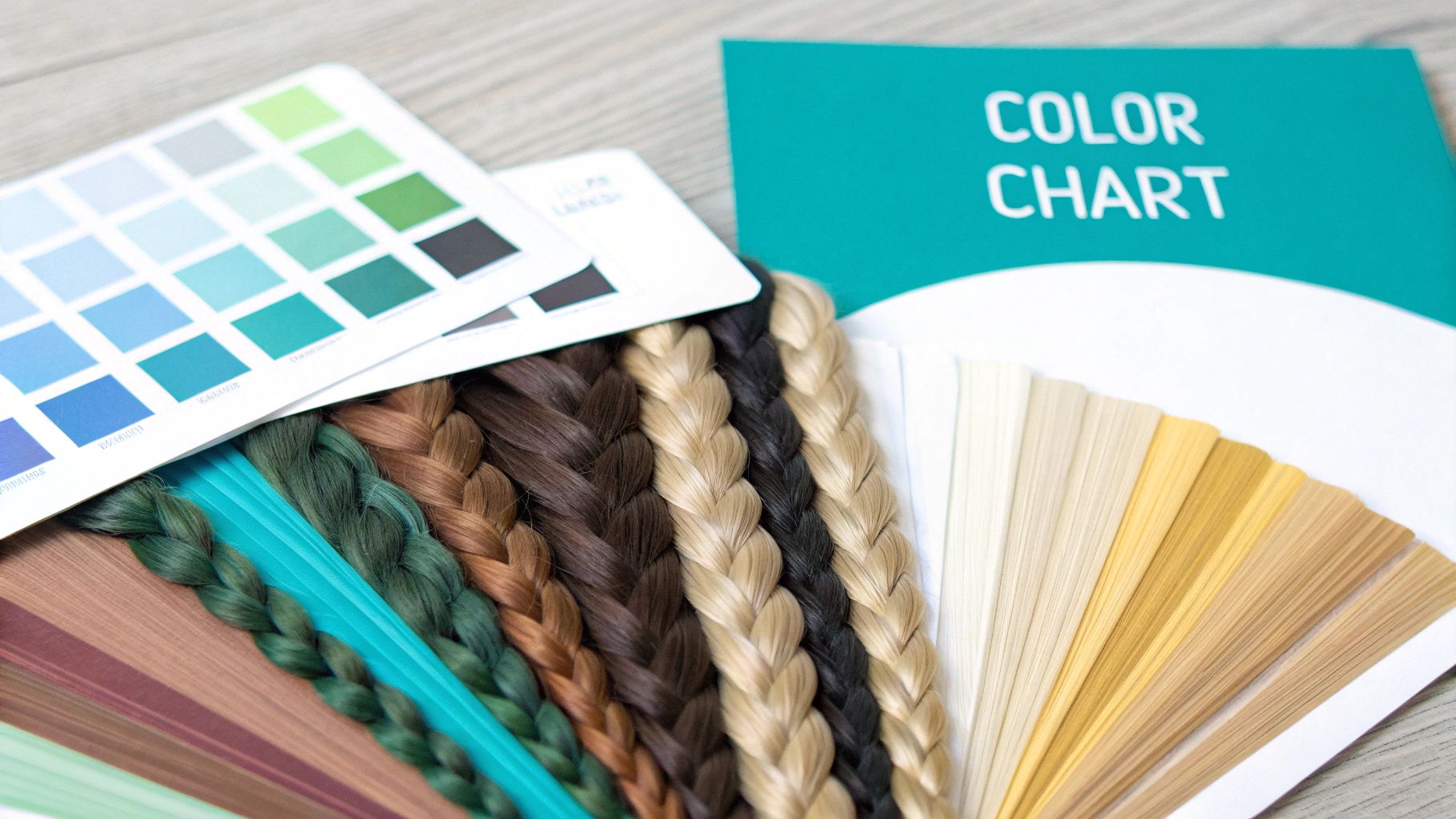
The spectrum begins with the inkiest blacks and slowly transitions into warm, rich browns. Every number represents a very specific shade, each with its own job—whether it’s for a bold, solid-colored look or to serve as the perfect base for custom blends and highlights. Let's dig into the most common natural shades you’ll encounter.
The Darkest Hues: 1 And 1B
Trust me, the difference between a 1 (Jet Black) and a 1B (Off-Black) is bigger than you might think. They're both dark, of course, but their undertones are worlds apart and serve completely different purposes.
- Color 1 Jet Black: This is the deepest, most intense black you can get. It's a pure, inky black with cool undertones and zero hints of brown, which gives it a really striking and dramatic feel. This is the one you want if your natural hair is a true, solid black.
- Color 1B Off-Black: There’s a reason this is the most popular choice. 1B is a softer, more natural black. It has just enough brown undertone that you can see a little warmth in the sunlight, making it a perfect match for the vast majority of people with dark, undyed hair.
For instance, if your hair looks black indoors but you catch glints of warmth outside, 1B is your color. It will melt right in. Using a Jet Black 1 in this case would create a harsh contrast that just doesn't look as natural.
The Rich Browns: 2 And 4
Moving a little lighter down the braiding hair color chart, we get to the foundational brown shades. These are absolute staples for matching different tones of brown hair or for creating styles with a softer, more dimensional feel.
Pro Tip: Deciding between Off-Black (1B) and Darkest Brown (2) can be tough. The best way to know for sure is to hold a small swatch of each color right next to your roots in natural daylight. The one that practically vanishes into your own hair is your perfect match.
The two mainstays here are 2 (Darkest Brown) and 4 (Dark Brown).
- Color 2 Darkest Brown: This shade is so dark that people often mistake it for black, especially inside. But once you step outside, its very strong, warm brown undertones really come through. It’s the go-to for anyone whose natural hair is extremely dark brown but not quite black.
- Color 4 Dark Brown: Think of a classic, medium chocolate brown. This color is noticeably lighter than a 2 and is packed with rich, warm undertones. It’s a fantastic base color on its own or for blending with lighter shades like 27 (Honey Blonde) to create gorgeous, sun-kissed highlights.
Ultimately, these natural shades are the bedrock of braiding hair. Once you get a feel for them, you can build a flawless foundation for any style, whether you’re keeping it simple and classic or going for a complex, multi-tonal masterpiece.
Exploring Warm Tones: Blondes and Reds
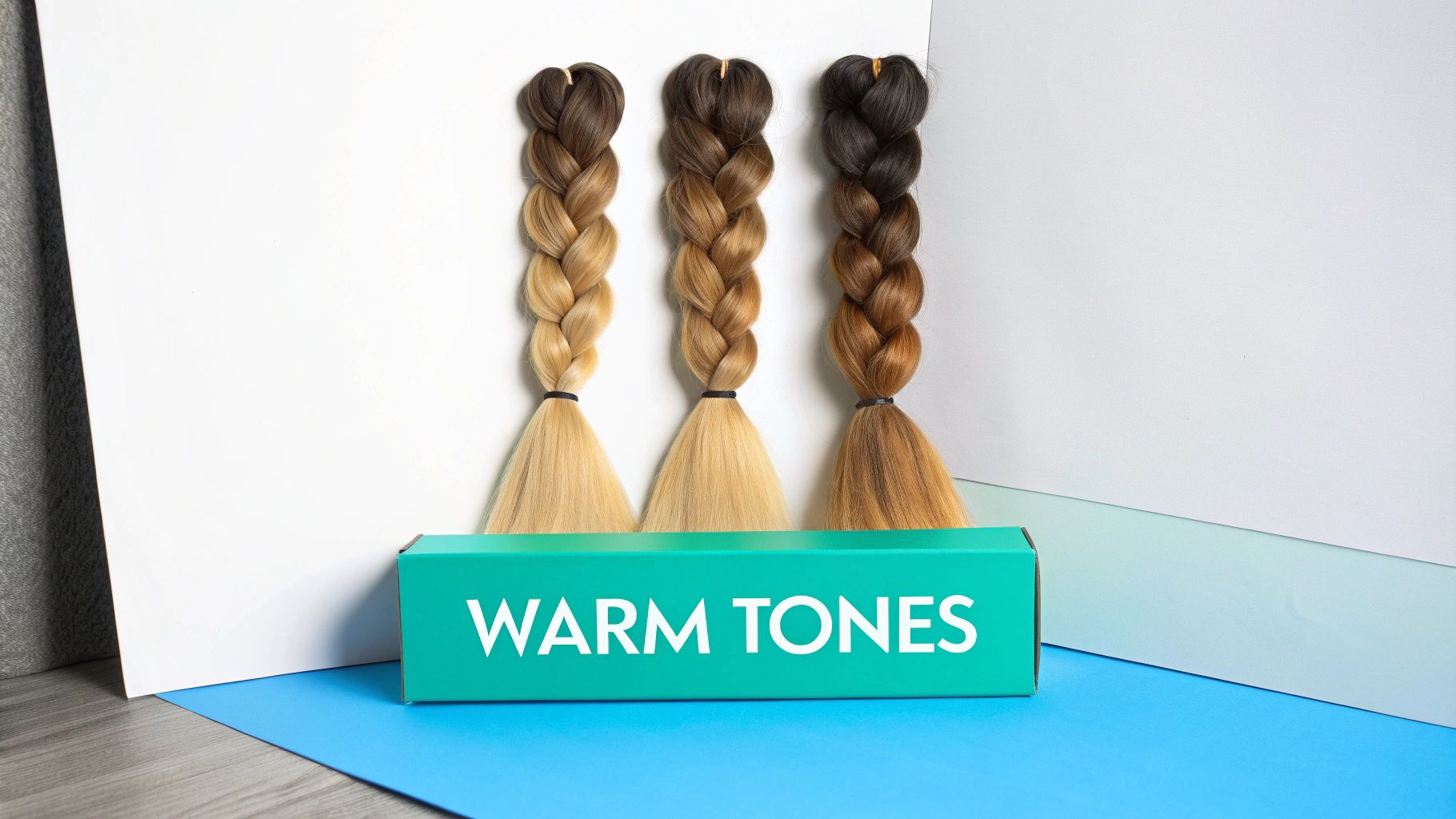
Ready to dial up the warmth? Stepping into the warmer side of the braiding hair color chart is where things get really exciting. We're talking about a whole world of sun-kissed, vibrant, and rich possibilities that can completely transform your look.
While natural shades are the bedrock of any great style, warm tones like golden blondes and deep reds are your secret weapon for adding dimension, weaving in stunning highlights, or just going bold. These colors have a way of instantly brightening your complexion and bringing a dynamic, lively feel to any protective style.
It's no surprise that the demand for these shades is helping fuel major growth in the hair braiding industry. The global market was valued at USD 2.93 billion back in 2026 and is on track to hit USD 6.8 billion by 2035, growing at a solid 8.2% CAGR. This boom is largely driven by women aged 18-25 and wig lovers who crave creative, protective styling options. You can dive deeper into these market trends over at businessresearchinsights.com.
Let's break down three of the most popular warm shades you'll see everywhere.
The Golden Standard: Color 27 Honey Blonde
Color 27 (Honey Blonde) is a true classic, and for good reason. It's that perfect, rich golden blonde, full of warm honey and caramel undertones. Unlike cooler, ashier blondes, this shade is pure sunshine, which makes it a beautiful match for warm and neutral skin tones.
The real magic of Color 27 is its versatility. You can go all out with a full head of radiant box braids, or you can get creative by mixing it with natural shades like 1B (Off-Black) or 4 (Dark Brown). For a subtle, sun-kissed look, try blending 1B and 27 at a 3-to-1 ratio. The result is a gorgeous, natural-looking highlight that catches the light perfectly.
The Fiery Hues: Color 30 Light Auburn and 33 Dark Auburn
When you want to add some warmth but aren't ready to commit to a vibrant red, the auburn family is your go-to. These shades strike that perfect balance between brown and red, giving you a sophisticated and natural-looking warmth.
- Color 30 (Light Auburn): This is your vibrant, coppery red with strong hints of light brown. It’s an amazing choice for adding a fiery pop to your braids, especially when the weather turns cooler in autumn and winter.
- Color 33 (Dark Auburn): Think of this as the deeper, more reserved sibling. It leans more toward a rich, reddish-brown, making it perfect for a subtle yet distinctly warm style that isn’t overpowering.
For a custom blend that looks like it could be your natural color, try mixing Color 30 with Color 4 (Dark Brown). The result is a stunning, dimensional red-brown that’s completely unique to you.
The Deep Richness of Color 99J Burgundy
Color 99J (Burgundy) is pure luxury. It's a deep, decadent shade that blends dark red with just a hint of purple and brown—think fine wine. This is a statement color that manages to be both bold and incredibly chic, and it looks stunning against a huge range of skin tones.
Styling Tip: Want a killer ombré? Start your braids with 1B (Off-Black) at the roots and begin blending in 99J about a third of the way down the shaft. The dark base makes the burgundy pop, creating a seamless and dramatic color melt.
This color is fantastic for knotless braids, twists, and faux locs. It delivers a powerful look that still feels sophisticated and elegant. And don't think these warm tones are just for autumn—check out our guide on the best braiding hair for winter styles to see just how versatile they can be.
How to Choose The Right Braiding Hair Color for You
Picking the perfect shade from a braiding hair color chart is about more than just finding a number you like. The real secret is choosing a color that flatters your unique features for a cohesive, head-turning look. This means taking a closer look at your natural hair, your skin's undertones, and even the type of light you're usually in.
Getting the color right has never been more important. While the braiding hair market is its own force, we can get a sense of its momentum by looking at the closely related hair extensions industry. That market hit USD 4.88 billion in 2024 and is on track to reach USD 5.5 billion by 2035. A huge part of that growth is driven by consumer demand for perfect color matching, so what you see on the chart needs to be what you get in the pack.
Match Your Natural Hair and Skin Undertones
First things first: you need to figure out your skin's undertone. Everyone falls into one of three categories—cool, warm, or neutral—and this is the key to knowing which colors will make your skin glow versus which might wash you out. The easiest way to check is the "vein test." Just look at the veins on the inside of your wrist in natural sunlight.
- Cool Undertones: If your veins look blue or purple, you're in the cool club. Colors with a blue or violet base are your best friend. Think 1 (Jet Black), 613 (Platinum Blonde), or a deep, wine-red burgundy like 99J.
- Warm Undertones: See greenish veins? You have warm undertones. You'll absolutely radiate in shades that have golden, yellow, or red bases. Colors like 27 (Honey Blonde), 30 (Light Auburn), and rich, chocolatey browns like 4 will look incredible on you.
- Neutral Undertones: If you can't really tell whether your veins are blue or green, you're likely neutral. Congratulations! This means you can pull off almost any color, from icy platinums to fiery coppers.
Expert Tip: Never trust indoor lighting when matching colors. It often casts a yellow or blue hue that can completely throw off how a shade looks. Always take a swatch and hold it up to your face near a window for the truest color preview.
Consider Lighting and Your Style Goals
Give some thought to your daily environment. A color that looks perfectly understated in your office might pop with surprising vibrancy out in the sun. If you spend most of your day under harsh fluorescent lights, warmer tones can bring some life and balance back to your look.
Finally, ask yourself if you're going for a solid color or a blend. Solid colors make a powerful, uniform statement. Blends, on the other hand, are fantastic for adding depth and dimension, often creating a more natural finish—especially if you're mixing in shades close to your own hair color. If you're looking for inspiration, we have a massive selection of both solid and blended braiding hair to explore.
Mastering The Art of Color Blending and Mixing
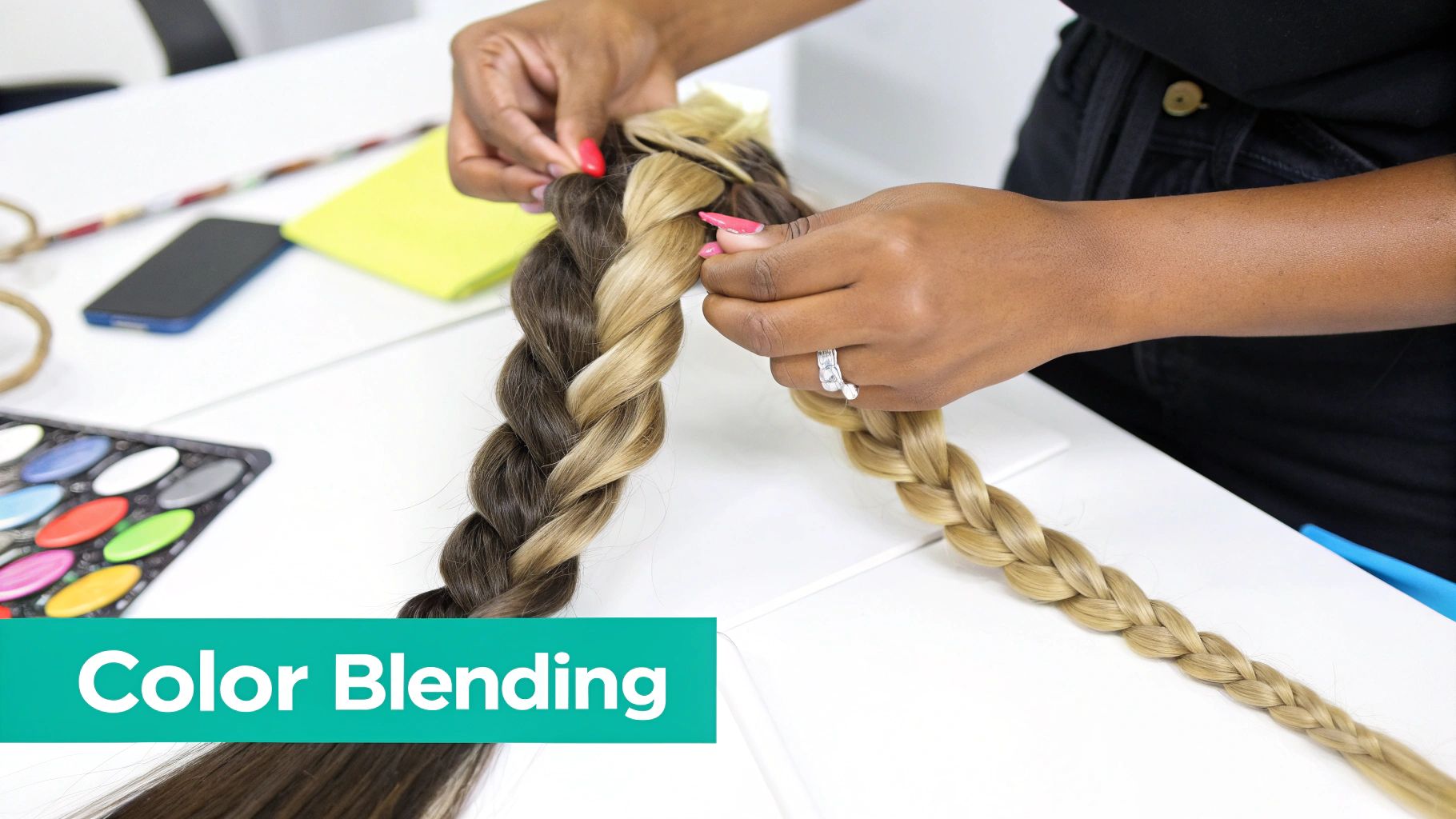
Once you get comfortable with single shades, a whole new world of creativity opens up. Blending different colors of braiding hair is how you create a truly custom look, whether you’re going for a few subtle highlights or a bold, multi-tonal masterpiece. The real trick is knowing which colors play well together.
By physically mixing the fibers from two or more packs of hair before you start braiding, you can get a kind of dimension that no single color pack can give you. This is exactly how stylists create those soft, sun-kissed looks or even wild, artistic color combos that you can't find anywhere else.
Creating Classic Custom Blends
Some color combinations are classics for a reason—they just work. If you can master a few of these foundational blends, you'll have the confidence to start experimenting and creating your own. Think of these as the tried-and-true staples of the braiding world.
Here are a few popular recipes to get you started:
- Subtle Highlights: For that natural, sun-kissed vibe, try blending 1B (Off-Black) with 27 (Honey Blonde). I find a ratio of about three parts 1B to one part 27 works perfectly. This mix gives you a beautiful soft brown with delicate golden strands running through it, just like natural hair after a summer in the sun.
- Salt and Pepper: To get that sophisticated grayscale look, mix 1 (Jet Black) with a pure silver or white like GREY. If you want a slightly softer, more natural version, swap the 1 for 1B. Your ratio is everything here; a 1-to-1 mix creates a balanced salt and pepper, while using more black results in a darker, more "pepper-heavy" style.
- Warm Auburn Blend: You can create a seriously rich and dimensional auburn by mixing 4 (Dark Brown) with 30 (Light Auburn). This combination weaves fiery copper tones into a deep brown base, giving you a warm, vibrant shade that looks amazing, especially in the fall.
Pro Techniques For Seamless Mixing
Getting a blend that looks professional is all in the technique. If you just grab and braid strands from different packs, you’ll end up with a chunky, striped look. The goal is a seamless mix where the colors almost melt into each other.
Pro Tip: Before you even think about braiding, pull your desired amount of hair from each color pack. Hold the bundle together and just brush through it—seriously. Use a paddle brush or even just your fingers to mix and shuffle the strands until they're fully integrated. This one step is the secret to an even, professional-looking blend.
If you're aiming for an ombré, start braiding with your base color at the roots. A few inches down, begin feeding in small strands of your second color. As you move toward the ends, gradually increase how much of the second color you add until the tips are completely the new shade. It takes a bit of patience, but the result is a stunning gradient that looks like you walked straight out of a salon. The best way to find your signature look is to just play around with different shades from the braiding hair color chart.
Navigating Brand Differences and Color Consistency
Every experienced braider has felt that sinking feeling: you grab a pack of what you thought was the right color, only to find it's a shade off from the brand you usually use. It’s a common frustration. While the color chart gives us a universal language, the reality is that a 1B from one company won't always be a perfect twin to a 1B from another.
The reasons are simple but significant. Tiny shifts in the manufacturing process, the specific dye lots, or even the type of synthetic fiber used can create subtle variations. One brand's Off-Black might pull a little warmer, while another’s looks a bit deeper and cooler.
These subtle differences play a huge role in the hair braiding market, which is massive. Some estimates put the global market value at USD 529.3 million back in 2022, and it's expected to climb to over USD 625.30 million by 2032. With North America leading the demand, getting consistent, high-quality hair for protective styles is more important than ever. You can discover more insights about the hair braiding market to see just how big this industry is.
Why Do Colors Vary Between Brands?
So, why the inconsistency? It usually boils down to a few key things. This is exactly why so many stylists become fiercely loyal to one or two brands—when you find one that gives you predictable results, you stick with it.
Here’s what causes those color differences:
- Dye Lot Variations: Think of it like paint. Braiding hair is colored in huge batches, or "dye lots." Even within the same brand, there can be tiny, unavoidable shifts in shade from one batch to the next.
- Fiber Material: The type of synthetic fiber matters. Kanekalon and Toyokalon, for example, take on dye in slightly different ways. One fiber might result in a high-sheen, glossy finish, while another produces a more natural, matte look, which completely changes how the color appears to the eye.
- Manufacturing Processes: Every brand has its own secret sauce for dyeing and finishing the hair. These unique, proprietary methods are what give each brand its signature look and feel, but they also contribute to the color variations we see on the shelves.
Best Practices for Ensuring Color Consistency
The last thing you want is mismatched braids. To get that flawless, uniform look, a little planning goes a long way and can save you from a major headache halfway through an install.
Pro Tip: The number one rule is to buy all the hair you need for one style, from the same brand, all at the same time. This is your best shot at getting all your packs from the same dye lot, which is the key to perfect color consistency from root to tip.
Whenever you can, inspect the hair in person before buying. Grab the packs you need, hold them up together in good light, and give them a close look to confirm they’re a perfect match. For a deeper dive into what makes a brand reliable, check out this review on RUWA braiding hair that lives up to its promise on quality and consistency.
Got Questions? We’ve Got Answers.
Even with a super-detailed color chart in front of you, a few questions always pop up. It’s totally normal! Let's clear up some of the most common ones so you can pick your next color like a pro.
How Do I Match Braiding Hair to My Own Color-Treated Hair?
Getting the right match for dyed hair is all about the details. The absolute best way to do it? Snip a tiny, discrete piece of your own hair (or just use a loose strand) and hold it right up against the braiding hair swatch. Make sure you do this in natural daylight, as indoor lighting can really throw off how colors look.
If your hair is a mix of shades, like with a balayage or highlights, decide which color you want to be the star of the show. Matching the braids to your root color is usually a safe bet for a natural-looking grow-out. But for a truly perfect match, don't be afraid to buy two or three different packs of braiding hair and create your own custom blend.
What Do the Letters in the Color Numbers Mean?
Those letters you see tacked onto the numbers aren't random; they're actually codes that tell you exactly how the color is applied to the hair. Knowing them is the key to getting the look you're picturing.
- B (as in 1B): The "B" just means Black. It’s used to distinguish off-black (1B) from a jet black (1).
- T (as in T27): This stands for "Tipped." It means the base of the braid is one solid color, and the last few inches are dipped, or "tipped," in another. A great example is a 1B base tipped with #27 (Honey Blonde).
- O (as in O1B/30): This one stands for "Ombré." It signals a gradual transition from one color to another, giving you that beautiful, seamless melt from a darker root to a lighter end.
Can I Actually Dye Synthetic Braiding Hair?
Honestly? It's a big no. Most synthetic braiding hair, especially the popular Kanekalon and Toyokalon fibers, is essentially a type of plastic. Regular hair dye is made to penetrate the cuticle of human hair, which these synthetic strands just don't have.
All you’ll get is a messy, splotchy stain that will rub off on your clothes and pillows. Worse, trying to color it can completely ruin the hair’s texture, making it stiff and matted. If you're after a specific custom color, your best bet is to find pre-colored blends or practice mixing different packs together yourself before you start braiding.
Ready to find your perfect match? At Elise Beauty Supply, we stock a huge selection of braiding hair in every color, texture, and blend you can dream up. Explore our premium collection and start bringing your hair goals to life today.