

How long do human hair wigs last: Realistic Lifespan & Care Tips
Let’s get straight to it: A well-made human hair wig, when treated with the care it deserves, should last you anywhere from one to three years. That’s a pretty significant lifespan, making it a real investment in your style, especially when you compare it to synthetic wigs that often tap out after just a few months.
Unpacking the Lifespan of Human Hair Wigs
Think of your human hair wig like a high-quality leather jacket versus a trendy top from a fast-fashion store. One is built to last for seasons, getting better with age if you care for it, while the other is really only meant for a moment. It's the exact same idea here. The impressive longevity of a human hair wig isn't a given—it's something you earn through smart choices and a solid care routine.
While that one-to-three-year window is a great rule of thumb, it's not the whole story. Several key factors come into play that determine whether your wig will lean closer to the one-year mark or push past three. Once you get a handle on these variables, you can make better buying decisions and truly protect your investment.
This image gives a fantastic at-a-glance comparison between human hair and synthetic options.
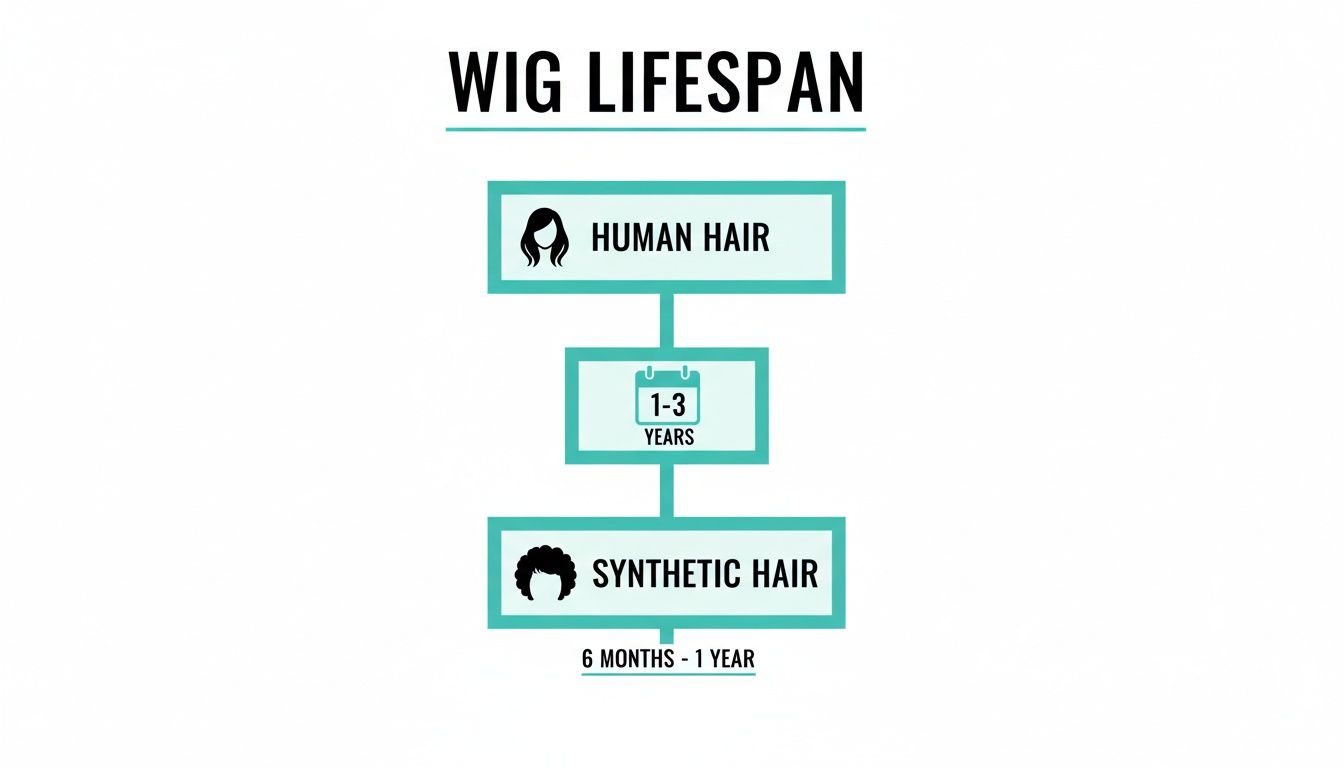
As you can see, the difference is night and day. Human hair wigs are in it for the long haul, which means that initial cost pays for itself over time through sheer durability and value.
Human Hair Wig Lifespan At A Glance
To make it even clearer, this table breaks down how different factors influence your wig's lifespan.
| Wig Quality | Wear Frequency | Expected Lifespan (With Proper Care) |
|---|---|---|
| High-Grade (Virgin/Remy) | Daily Wear | 2-3+ Years |
| High-Grade (Virgin/Remy) | Occasional Wear | 3+ Years |
| Mid-Grade (100% Human Hair) | Daily Wear | 1-2 Years |
| Mid-Grade (100% Human Hair) | Occasional Wear | 2-3 Years |
| Lower-Grade (Blended/Processed) | Daily Wear | 6-12 Months |
| Lower-Grade (Blended/Processed) | Occasional Wear | 1-1.5 Years |
Remember, these are estimates. Your personal care routine is the wild card that can either extend or shorten these timeframes.
Why Durability Matters
The difference in durability is truly striking. A premium human hair wig, like those you’d find at Elise Beauty Supply, can easily last 1 to 3 years. Compare that to a synthetic wig, which typically gives you about 4 to 6 months of good wear.
The numbers back this up. Market data has shown that quality lace front human hair wigs can keep 85% of their original bounce and texture even after 18 months of being worn a couple of times a week—as long as they're stored properly on a mannequin head and kept out of direct sunlight. If you're curious, you can dive deeper into the data on how long human hair wigs last to get the full picture.
In this guide, we'll break down the key things that have the biggest impact on your wig's life:
- Hair Quality and Origin: Because not all human hair is the same.
- Your Wear Schedule: How often you wear your wig matters, a lot.
- Maintenance and Products: This is where you have the most control.
- Styling Habits: Heat and color can take a toll if you’re not careful.
Understanding How Wig Quality Affects Longevity
When it comes to how long your human hair wig will last, one factor stands above all else: the quality of the hair itself. It’s a lot like comparing a high-quality leather jacket to a fast-fashion knockoff. The better the raw material, the longer it will hold up to daily life, and the same is absolutely true for your wig.
But "human hair" isn't a one-size-fits-all term. You’ll hear words like Virgin, Remy, and non-Remy thrown around, and believe me, the differences are huge for your wallet and your wig's lifespan.
The Critical Role of the Hair Cuticle
Let's get into the nitty-gritty for a second. Picture each hair strand covered in microscopic, overlapping scales, kind of like shingles on a roof. This is the hair cuticle, and it’s the key to everything.
In a top-tier wig, every single one of those cuticles is intact and facing the same direction, from root to tip, just like it grew from a scalp. This alignment is the secret sauce that prevents tangling, cuts down on friction, and keeps shedding to a minimum.
Remy hair is the gold standard for this very reason. It means the cuticles were carefully preserved and aligned during collection. The result? Hair that moves naturally, feels smoother, and lasts so much longer. Non-Remy hair is the opposite—the cuticles are all jumbled up, which is a recipe for the frustrating matting and tangles that can ruin a wig.
Virgin Hair vs. Processed Hair
Taking it one step further is Virgin hair. This is Remy hair that is completely untouched by chemical processing. It’s never been dyed, bleached, permed, or treated in any way, making it the purest, strongest, and most durable hair you can buy. Because its internal structure is pristine, a virgin hair wig has the longest potential lifespan, period
On the flip side, any chemical process will weaken the hair strand. A gorgeous platinum blonde wig, for instance, has to go through some serious bleaching to lift its natural dark color. While the result is stunning, that process makes the hair more porous and fragile over time. This is exactly why a natural black or brown wig will almost always outlast a heavily colored one.
The hair’s origin matters, too. Different hair types, like Brazilian or Indian, have their own unique textures and strengths. Exploring the various human hair wigs at Elise Beauty Supply is a great way to see and feel the difference for yourself.
The quality difference isn't just a small detail—it's everything. A good Remy human hair wig can easily outlast a non-Remy one by 50-100%, often lasting well over two years because its cuticles are aligned and healthy.
The numbers don't lie. Studies show that virgin human hair wigs can keep up to 92% of their density after a full 12 months of wear. In contrast, heavily processed colors like blonde or pink might only retain 65%. The harsh chemicals needed to achieve those shades can shorten a wig’s life by a good four to six months. It’s no surprise that natural black wigs are the durability champions, with 85% of wearers reporting they last three years or even longer.
How Often You Wear Your Wig Changes Everything
Think about your most-loved pair of jeans or that go-to leather jacket. The more you wear them, the faster they start to look, well, loved. It’s the same exact story with your human hair wig. Its lifespan isn't just about time passing; it's directly linked to how often you're actually wearing it.
Every single time you put on your wig, it's exposed to friction, sunlight, the oils from your scalp, and just the general environment. A wig you wear to work every single day is under a lot more stress than one you save for special nights out. That downtime isn't just about preventing snags; it's about letting the piece breathe and recover.
The Magic of a "Rest Day"
Letting your wig have a "rest day" on a mannequin head is one of the single best things you can do for it. This simple break allows the cap to snap back to its original shape, keeping it snug and secure for your next wear. It also gives the hair itself a chance to hang freely, preventing the strands from getting stressed, which is what leads to dullness and breakage over time.
This is exactly why any seasoned stylist will tell you to own at least two wigs if you plan on wearing one regularly. It’s not about trying to sell you more hair—it’s the most practical advice for protecting your investment. By simply rotating between two quality wigs, you can realistically expect to double the life of each one.
The difference in wear frequency is dramatic. A human hair wig worn only on occasion might last up to three years, but that same wig could be down to just 6-12 months of life if you're wearing it every single day.
Why a Wig Wardrobe is a Smart Investment
Shifting your mindset from seeing a second wig as an extra cost to seeing it as a long-term investment is a total game-changer. It keeps your primary wig from aging too quickly and gives you the creative freedom to play with different styles. You could have a sleek, professional wig for your 9-to-5 and a completely different one with gorgeous, flowing curls for the weekend.
This strategy doesn't just make your wigs last longer; it guarantees you'll always have a fresh, beautiful option ready to go. A recent global report on wig consumer habits drove this point home, finding that people who wear their wigs only 3-4 times a week see a 65% longer lifespan than daily wearers. That stat alone shows you just how powerful a little rotation can be. You can dive deeper into these findings and see exactly how wig rotation preserves elasticity and shine.
Starting a small, curated wig wardrobe is one of the smartest moves you can make. Think about building a pair from a reliable source like Elise Beauty Supply:
- The Daily Driver: A durable, classic style that looks effortlessly natural, like a body wave lace front.
- The Weekend Wonder: Something with a bit more flair—maybe a deep wave texture or a fun, bold color you've been wanting to try.
By investing in a rotation, you're not just buying more hair. You're buying yourself more time with the pieces you love most, keeping them looking beautiful for years, not months.
The Ultimate Care Routine To Maximize Durability
Proper maintenance is the single most powerful tool you have to influence how long your human hair wig will last. I tell my clients to think of it less as a chore and more as a preservation ritual.
A gentle, consistent care routine protects the delicate hair fibers and the wig cap, turning your investment into a long-lasting style statement. You really can get so much more life out of your piece with just a little bit of know-how.
First things first: forget everything you know about washing your own hair. A human hair wig doesn't get that constant supply of protective oils from your scalp, so it needs a completely different approach. In fact, over-washing is one of the fastest ways to wear it out.
Your Washing And Conditioning Playbook
The golden rule is to wash your wig only when it's absolutely necessary. For most people, this works out to be after every 15-20 wears. If you use a lot of styling products, you might need to wash it a bit more often, but always err on the side of washing less.
When it's finally time for a wash, follow this gentle process:
- Detangle First: Before the wig even touches water, gently detangle it with a wide-tooth comb. Always start at the ends and patiently work your way up to the roots. This prevents putting stress on the knots and causing unnecessary shedding.
- Use Lukewarm Water: Never, ever use hot water. It’s terrible for the hair and can damage the cap. Fill a basin with cool or lukewarm water and add a small amount of a good sulfate-free shampoo.
- Gentle Submersion: Submerge the wig and gently swish it around. Please, no harsh rubbing or scrubbing! That’s how you get massive tangles and damage the delicate hand-tied knots.
- Rinse Thoroughly: Drain the soapy water and rinse the wig under cool, running water. Make sure the water flows in one direction—from the roots to the ends—until all the shampoo is gone.
- Condition with Care: Apply a high-quality, hydrating conditioner, focusing on the mid-lengths and ends where the hair needs it most. Crucially, avoid applying conditioner near the roots or the cap. It can loosen the knots and lead to major shedding. Let it sit for a few minutes before rinsing it out completely.
A critical mistake is treating your wig like natural hair. Vigorous scrubbing or using harsh, sulfate-laden shampoos can strip the hair and weaken the knots that hold it together, drastically reducing its lifespan. Gentleness is non-negotiable.
The Right Way To Dry And Store
How you dry your wig is just as important as how you wash it. Never wring or twist the hair—you'll cause breakage and tangles. Instead, gently squeeze out the excess water with your hands and then lay the wig flat on a clean, dry towel. Blot it carefully to absorb more moisture.
After blotting, place the wig on a mannequin head or a dedicated wig stand to air dry completely. This is key because it helps maintain the cap’s shape and allows air to circulate freely. A blow dryer should be a rare exception, and if you must, always use the lowest heat setting. Too much heat can actually loosen the knots at the base, causing a lot of shedding over time.
For day-to-day care, your best friends are the right tools. Investing in the proper wig accessories and care products makes all the difference. Storing your wig on a stand, away from direct sunlight and dust, not only keeps it clean but also prevents tangles and helps preserve its style. This simple routine is your ticket to getting years, not months, out of your beautiful human hair wig.
Your Weekly And Monthly Wig Care Checklist
To make things even easier, here's a practical schedule to keep your human hair wig in pristine condition and extend its life. Following a consistent routine is the best way to protect your investment.
| Task | Frequency | Pro Tip From Elise Beauty Supply |
|---|---|---|
| Gentle Detangling | Daily (before and after each wear) | Use a wide-tooth comb or your fingers. Start at the ends and work your way up to avoid pulling on the knots at the base. |
| Nightly Storage | Every night | Place your wig on a mannequin head or wig stand. This helps maintain its shape and prevents tangling while you sleep. |
| Deep Wash & Condition | Every 15-20 wears (or as needed) | Use sulfate-free, color-safe products. Never apply conditioner to the roots or cap, as it can loosen the hand-tied knots. |
| Air Dry | After every wash | Blot gently with a towel and let it air dry completely on a stand. Avoid heat styling when wet, as the hair is most fragile then. |
| Deep Conditioning Treatment | Once a month | Apply a hydrating hair mask to the mid-lengths and ends for 15-20 minutes to restore moisture and softness, then rinse thoroughly. |
| Check for Shedding | Weekly | Light shedding is normal, but if you notice a lot, check your care routine. Are you being too rough? Is conditioner getting on the knots? |
Sticking to a simple checklist like this removes the guesswork. It becomes second nature, and you'll see the results in a wig that looks fantastic for much, much longer.
Smart Styling To Prevent Damage
One of the best things about a human hair wig is its incredible versatility. You can straighten it, curl it, and color it to match your vibe. But that freedom is also where most of the damage happens, and it can seriously shorten your wig’s life.
Think of it like this: every time you style your wig, you're making a small withdrawal from its "lifespan bank." If you're smart and careful, you can make that bank last a long, long time. But if you’re aggressive with heat and chemicals, you'll drain that account fast.
Safe Heat Styling Is Non-Negotiable
Heat is probably the number one reason human hair wigs age prematurely. While the hair itself can take the heat, it doesn't have a scalp producing natural oils to protect and repair it. That makes it incredibly vulnerable to drying out, getting brittle, and eventually breaking.
Your first line of defense is a high-quality heat protectant spray. Seriously, don't even think about touching your wig with a hot tool without it. It creates a thermal shield that keeps the direct, intense heat from frying the hair strands. This is a non-negotiable step.
When you do break out the flat iron or curling wand, the temperature setting is everything.
- For finer or color-treated hair, stay in the 250-300°F (120-150°C) range.
- If you have thicker, stronger hair, you can bump it up to 350°F (175°C), but don't go any higher.
There's almost never a good reason to crank your tools to the maximum setting. You can get the exact same style with a lower, controlled temperature without scorching the hair, which causes permanent damage and leads to shedding.
Coloring And Chemical Treatments
Giving your wig a new color is a fun way to switch things up, but it has to be done with care. Grabbing a box dye from the drugstore or trying to bleach it yourself is a recipe for disaster. These harsh chemicals will strip the hair's protective cuticle layer, leaving you with a dry, tangled mess that no deep conditioner can save.
Always take your wig to a professional colorist who specializes in human hair wigs. They know how to lift and deposit color gently, keeping the hair's integrity intact. It might cost more upfront, but it's a small price to pay to avoid destroying a beautiful piece.
Installation Methods And Stress Points
Finally, let's talk about installation. How you put your wig on and take it off has a huge impact on its longevity, especially on the delicate lace and cap.
Going overboard with super-strong glues and tapes can stretch, tear, and fray the lace over time. When it's time for removal, use a proper adhesive remover to gently dissolve the bond. Whatever you do, never pull or tug at the lace to get it off—that’s the fastest way to ruin the hairline.
Even a sew-in can cause problems if it's done too tightly, putting constant tension on the wefts and the cap. Make sure to tell your stylist you want the installation to be secure, but not so tight that it's putting stress on the wig's foundation.
Recognizing The Signs It's Time For A New Wig
Even with the absolute best care routine, every human hair wig has a lifespan. Eventually, it reaches the end of its journey. Knowing how to spot the signs of serious wear and tear helps you decide when it's time to retire an old favorite and invest in a fabulous new one.
Think of it like a beloved pair of leather boots; no matter how much you polish and care for them, they eventually lose their shape and support. Your wig is no different.
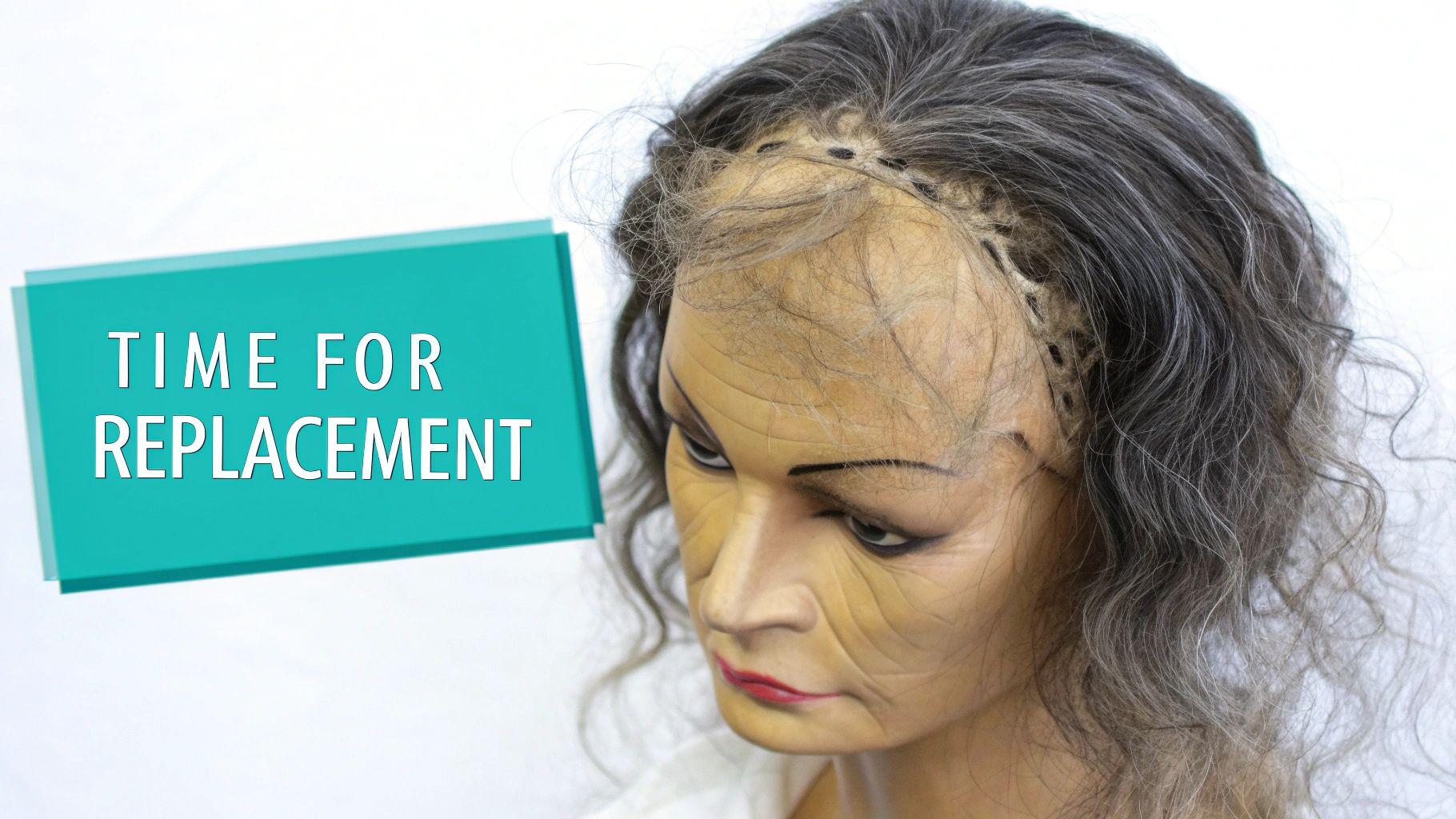
One of the biggest red flags is a major change in the hair's texture. If the strands feel constantly dry, crunchy, or frizzy—even right after a deep conditioning treatment—the hair has likely sustained irreversible damage. This usually comes with constant tangling and matting, especially at the nape of the neck, that even your best wide-tooth comb can't conquer.
Key Indicators of a Worn-Out Wig
Another dead giveaway is excessive shedding. A few strands in your brush is totally normal, but if you're seeing clumps of hair fall out every time you touch it or discovering bald spots on the cap, the knots holding the hair in place have probably loosened for good. This thinning compromises the wig's density and ruins its natural look.
You also need to pay close attention to the wig's foundation—the cap itself. Here are the most common signs that your wig's time is up:
- Dull and Lifeless Appearance: The hair has lost its beautiful, natural sheen. It just won't hold a curl or style anymore, looking limp and tired no matter what products you throw at it.
- Frayed or Torn Lace: Carefully inspect the lace front and parting area. If you see small holes, rips, or fraying along the edges, it's a bad sign. That delicate material can only take so much handling.
- Stretched Out Cap: Over months of wear, the wig cap can lose its elasticity. This leads to a loose, insecure fit that just doesn't feel snug or safe on your head anymore.
When the effort and cost of trying to revive a wig—with endless deep conditioning, detangling sessions, and lace repairs—outweigh the joy of wearing it, it's a clear sign to move on. Gracefully retiring it preserves your style and sanity.
Spotting these signs empowers you to make a smart choice. Instead of fighting with a unit that's lost its magic, you can start the fun process of finding a fresh new style.
If you know you're ready for an upgrade, exploring a classic like a body wave lace front wig can be the perfect way to refresh your entire look.
Common Questions Answered
To wrap things up, let's go over a few of the questions I hear all the time from wig wearers. Getting these details right can make a world of difference in how long your beautiful wig stays that way.
My Lace Ripped! Can It Be Fixed?
Yes, but you need to be careful. For a tiny tear right at the hairline, you might be able to get away with carefully stitching it up with a fine, matching thread. Think of it like delicate surgery.
However, if you're dealing with a larger rip or damage in a high-visibility area like the parting space, it's time to call in a pro. A skilled wig repair specialist has the tools and expertise to patch the lace without making the problem worse.
Is Hard Water Really Bad for My Wig?
It really is. Hard water is loaded with minerals like calcium and magnesium, and over time, they create a film on the hair. This buildup is what makes your wig feel dry, look dull, and tangle like crazy.
If you know you have hard water, try using a good clarifying shampoo every month or two. Another great trick is to do a final rinse with distilled water after washing—it helps wash away those mineral deposits and brings back that soft, shiny feel.
Think of your human hair wig as an investment in your look and confidence. Understanding the little things, like how your tap water affects the hair, is key to protecting that investment and keeping your piece looking flawless.
How Can I Bring My Dull Wig Back to Life?
When a wig loses its shine, it's usually screaming for moisture or suffering from product buildup. The quickest fix is a deep conditioning treatment.
Slather a quality hydrating mask from the mid-lengths to the ends (keeping it away from the cap and knots!) and let it soak in for 20-30 minutes. For an extra boost, pop the wig into a plastic cap; the trapped heat helps the conditioner work its magic. Always finish with a cool water rinse to seal the hair’s cuticle and lock in that beautiful sheen.
Ready to find a high-quality wig that will last for years with the right care? Explore the premium collection of durable and beautiful human hair wigs at Elise Beauty Supply.
Crafted with the Outrank app