
How to Care for Human Hair Wigs to Make Them Last
Properly caring for a human hair wig comes down to three things: a gentle touch, consistent moisture, and smart storage. Your wig doesn't get the natural oils from a scalp, so your job is to provide what it's missing. That means focusing on hydration, careful detangling, and protecting the delicate cap to keep it looking incredible for years.
The Foundations of Flawless Wig Care
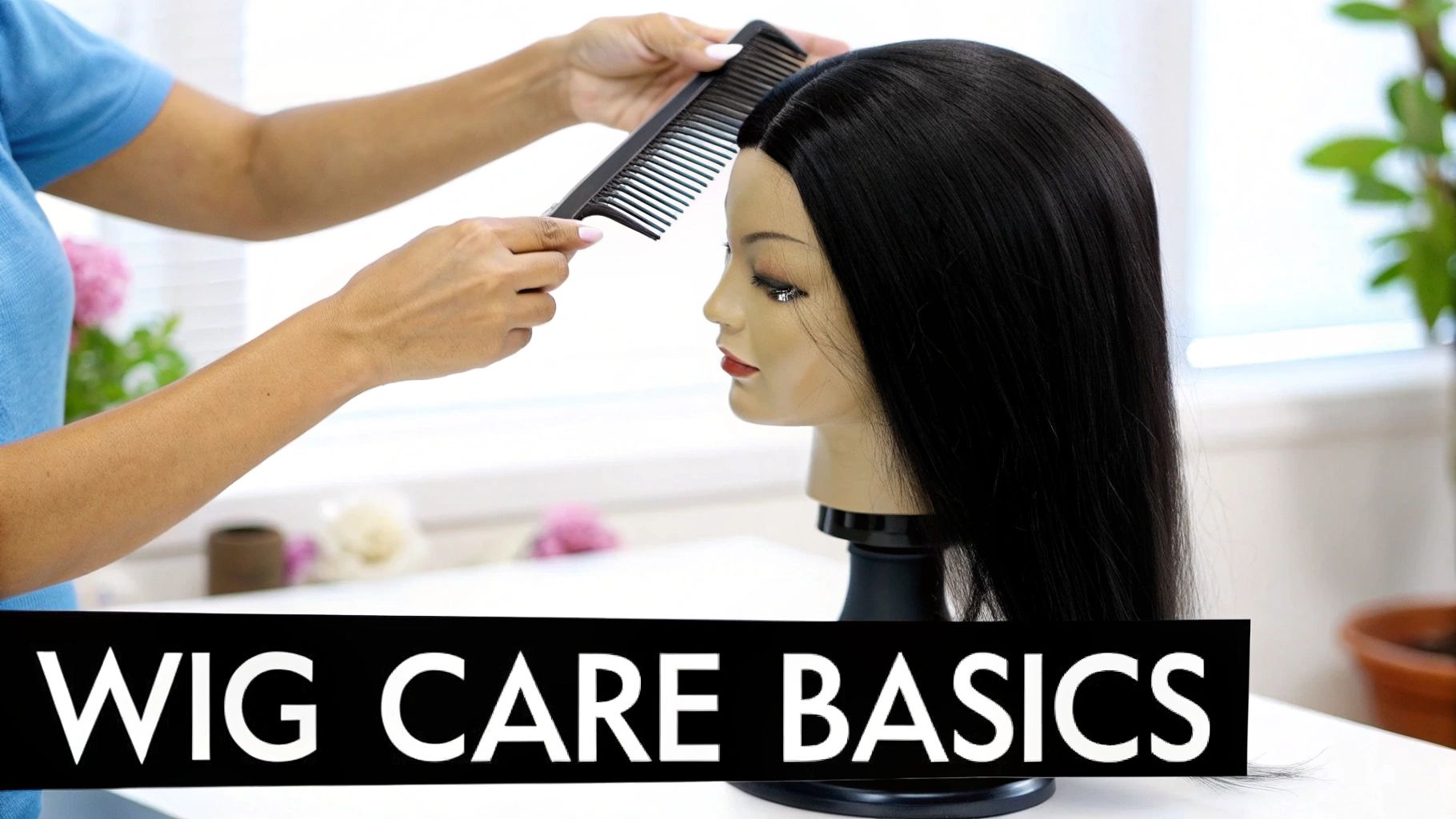
Buying a beautiful, high-quality human hair wig is exciting, but that’s just the beginning. The real magic in making it last is a solid care routine that respects the delicate hair and construction.
Think about it this way: even though the hair is 100% real, it’s no longer getting that constant supply of oils and nutrients from a root. This one crucial difference is why a thoughtful approach isn't just a good idea—it's everything. Without it, the hair will inevitably get dry, which leads to tangles, frizz, and damage that you just can't undo.
Understanding the Core Principles
Learning how to care for human hair wigs really starts with a few key habits. They're not complicated, but mastering them will make a world of difference in protecting your investment.
- Gentle Detangling is Non-Negotiable: Always, always use a wide-tooth comb. Start detangling from the ends of the hair and slowly work your way up to the roots. This prevents you from pulling and putting stress on the hand-tied knots, which is a major cause of shedding.
- Moisture is Everything: Your main goal is to keep that hair hydrated. This means using good sulfate-free conditioners and scheduling occasional deep conditioning treatments.
- Proper Storage Preserves Shape: A wig stand or mannequin head is a must-have. Just tossing your wig on a dresser is a recipe for a tangled mess and a misshapen cap.
The biggest mistake I see beginners make is treating a wig like their own growing hair. You can't scrub it in the shower or rip a brush through it. Aggressive handling loosens the knots at the base, causing shedding and thinning. The mantra is always "gentle" and "smooth."
Establishing a Daily Routine
How you handle your wig every day really sets the stage for its long-term health. It only takes a few moments before and after each wear to gently comb through the strands with your fingers or a wide-tooth comb.
If you're looking to add another gorgeous piece to your collection, you can explore a wide variety of styles in our collection of human hair wigs.
When you take it off for the night, place it on its stand. This lets the cap breathe and helps maintain the style. These small, consistent steps are the foundation of great wig care and will keep your unit looking flawless for as long as possible.
Assembling Your Wig Care Toolkit
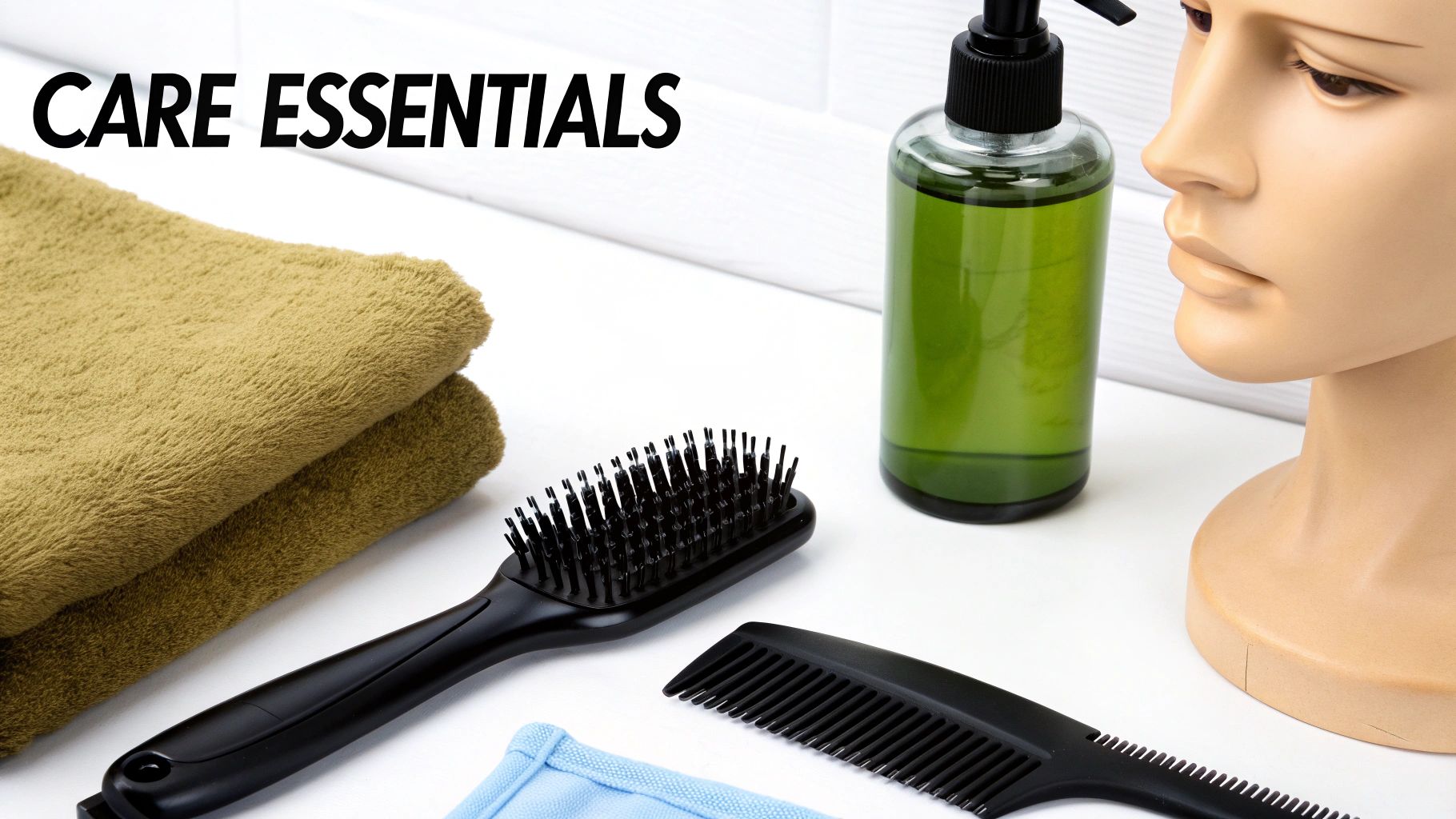
Let's be honest—using the right tools is what separates a wig that looks incredible for years from one that turns into a frizzy mess in a few months. It's like trying to apply makeup with a paintbrush; you just won't get the right result. The wrong brush or a harsh shampoo can actively cause the very damage you’re trying to avoid.
Think of this as your official shopping list. Getting the right gear from the very beginning takes all the guesswork out of the equation and sets you up for success. It’s a small investment that pays off every single time you wash, detangle, or style your hair.
The Absolute Must-Haves
Before you do anything else, you need to have these items ready. These are the non-negotiables for good wig maintenance and the foundation of a solid care routine. Each one is designed to be gentle and effective.
-
Wide-Tooth Comb: This is your best friend for detangling. A regular brush will catch and rip at the delicate knots where the hair is tied to the cap, causing serious shedding. A wide-tooth comb, on the other hand, glides through the strands, gently working out tangles without putting any stress on the wig’s construction.
-
Wig Stand or Mannequin Head: You absolutely need one of these for drying and storage. It allows air to circulate freely through the cap, which is crucial for preventing mildew and odor. Just as importantly, it helps the wig hold its shape and keeps the hair from getting tangled or crushed between wears.
-
Sulfate-Free Shampoo and Conditioner: This is a big one. Standard shampoos contain harsh sulfates that strip away moisture. For a wig that doesn't get natural oils from your scalp, this is a disaster. Always look for formulas made for color-treated or dry, damaged hair—they’re much gentler and will add hydration back in, not take it out.
Tools for Drying and Styling
Once your wig is clean, how you dry and style it is just as critical. Using the right accessories at this stage is your best defense against frizz and heat damage, ensuring you get that smooth, polished look you’re after. Without them, you risk frying the delicate hair strands.
Proper tools are preventative care. Using a microfiber towel instead of a standard cotton one, for example, can reduce friction-related frizz by over 50%. It’s these small, intentional choices that add up to significant long-term preservation of your wig's quality and appearance.
A microfiber towel is perfect for gently blotting and squeezing out extra water post-wash. Its soft fibers are super absorbent but won't rough up the hair cuticle like a regular terrycloth towel can. Remember, never wring or rub the hair—always pat it dry.
Here's a quick rundown of the essential tools you'll want to have on hand.
Essential Wig Care Tools and Their Purpose
| Tool | Primary Use | Why It's Essential |
|---|---|---|
| Wide-Tooth Comb | Detangling wet or dry hair | Prevents breakage and shedding by gently working through knots without pulling. |
| Wig Stand/Mannequin Head | Drying, styling, and storage | Maintains cap shape, promotes even air drying, and prevents tangles when not in use. |
| Sulfate-Free Shampoo | Cleansing the hair and cap | Cleans without stripping essential moisture, preserving the hair's softness and health. |
| Hydrating Conditioner | Moisturizing and smoothing | Replenishes moisture, reduces frizz, and makes detangling much easier. |
| Microfiber Towel | Absorbing excess water after washing | Gently dries hair without causing the friction and frizz that cotton towels create. |
| Heat Protectant Spray | Shielding hair from heat styling | Creates a barrier to prevent heat damage from flat irons, curling wands, and dryers. |
| Wig Brush | Smoothing and styling dry hair | Specially designed with looped bristles or soft tips to avoid snagging the wig base. |
Having these items in your collection ensures you're prepared for every step of the wig care process, from washing to daily styling.
To start building your toolkit, you can browse our curated selection of wig accessories and care products. These are the small investments that protect the much larger one you've made in your beautiful human hair wig.
How to Properly Wash and Condition Your Wig
Think of washing your wig less like doing laundry and more like a careful ritual. Unlike our natural hair, a wig doesn't have a scalp producing oils to keep it healthy. This means every wash strips away moisture that you have to intentionally put back in.
Getting this process right is the cornerstone of great wig care. The wrong technique can quickly lead to a tangled, frizzy mess, while the right one will bring back that beautiful flow and shine you love.
First Things First: The Pre-Wash Detangle
Before your wig even sees a drop of water, you need to detangle it. Trust me on this—trying to wash a tangled wig is a recipe for disaster. It just makes the knots tighter and can lead to matting that’s almost impossible to fix.
Grab your wide-tooth comb and start at the ends. Never, ever start combing from the roots.
- Hold a section of hair firmly near the bottom.
- Gently comb out the knots at the very ends.
- Once the ends are smooth, move your hand up a few inches and repeat.
- Work your way up slowly toward the cap until the comb can glide smoothly from top to bottom.
This method takes the pressure off the hand-tied knots at the base, which is a huge reason why some wigs start to shed prematurely.
The Wash Itself: A Gentle Approach
With your wig perfectly detangled, it's time for the main event. Remember, the goal here is to cleanse, not to scrub. Any aggressive rubbing or swishing will just rough up the hair cuticles and invite tangles.
Here’s the breakdown for a perfect, gentle wash:
- Get your basin ready. Fill a sink with lukewarm water. Hot water is a no-go; it can damage the hair and even warp the cap. Add a small amount of a quality, sulfate-free shampoo and swish it around to create a soft, sudsy bath.
- Let it soak. Submerge the wig and just let it sit for a few minutes. This gives the shampoo time to work its magic and break down any product buildup without you having to do a thing.
- Cleanse with purpose. Lift the wig out and apply a little more shampoo to your palm. Then, gently smooth it down the hair in one fluid motion, from the roots to the ends. Think of it like petting a cat—always in one direction. This keeps those cuticles lying flat.
- Rinse completely. Hold the wig under cool, running water, making sure the water flows from the cap down to the ends. Keep rinsing until every last sud is gone. Leftover shampoo residue is a fast track to dull, heavy-feeling hair.
It's so easy to overwash a wig, but doing so is one of the biggest mistakes you can make. Industry studies show that washing too frequently leads to 30-50% more tangling. In fact, while experts recommend washing only every 7-10 wears, a recent survey found that 62% of wig wearers wash their units far too often, potentially cutting a wig's lifespan by up to 40%. You can learn more about the human hair wigs market trends to see just how much proper care matters.
Don't Skip the Conditioner
Conditioning isn't an optional step—it's absolutely essential. This is how you put back all the moisture that the shampoo just removed, keeping the hair soft, manageable, and free of frizz.
After rinsing out the shampoo, gently squeeze out the excess water. Apply a good amount of a hydrating, sulfate-free conditioner, but be strategic. Concentrate the product from the mid-lengths down to the ends, as this is the oldest part of the hair and it gets the thirstiest.
Pro Tip: Whatever you do, never apply conditioner to the base of the wig, especially if it's a lace or hand-tied cap. The oils in the conditioner can loosen the knots over time, causing major shedding.
Let the conditioner work for at least 5-10 minutes. If the hair feels particularly dry, you can turn this into a deep conditioning treatment. Just pop the wig into a plastic bag and let it sit for about 30 minutes. You’ll be amazed at the difference it makes.
The Final Rinse and Blot
Now it's time to rinse one last time. Use cool water, as it helps seal the hair's cuticle, which is what locks in moisture and gives you that gorgeous, healthy shine. Rinse until the hair no longer feels slippery to the touch.
Once you’re done, please resist the urge to wring or twist the hair out! Instead, lay the wig flat on a clean microfiber towel, fold the towel over it, and gently press down to blot out the excess water. Wet hair is incredibly fragile, and this gentle blotting technique protects it from unnecessary stress.
Now your wig is perfectly clean, rehydrated, and ready for drying. Mastering this gentle routine is the true foundation for keeping your wig looking beautiful for years to come.
Safe Styling and Drying Techniques
How you handle your wig right after washing is every bit as important as the wash itself. When human hair is wet, it's at its most vulnerable. Rushing the drying process or getting too aggressive with a brush can stretch the delicate hair fibers, create a halo of frizz, and cause damage that’s frankly impossible to undo.
I always tell my clients to think of wet wig hair like a delicate silk garment. You’d never twist or wring out a silk blouse, right? The same principle applies here. The name of the game is gentle blotting and patient air-drying to keep the hair’s integrity and beautiful natural texture intact.
The Best Way to Dry Your Wig
It can be tempting to grab a blow dryer to speed things up, but that's a one-way ticket to dehydrating the hair. Since a wig isn't getting a constant supply of natural oils from a scalp, air-drying will always be the superior choice. This one simple habit can have a massive impact on how long your wig lasts.
Once you’ve gently blotted the excess water with a microfiber towel, pop the wig on a sturdy wig stand or a mannequin head. This isn't just about keeping it off your counter; it's crucial for allowing 360-degree air circulation. A well-ventilated wig ensures the cap dries completely, preventing that dreaded musty smell or, even worse, mildew.
The industry data really backs this up. Air-drying a wig 95% of the time can prevent up to 70% of the shrinkage you often see from constant blow-drying. And those microfiber towels? They're proven to absorb 50% more water than a standard cotton towel without roughing up the cuticle. If you're interested in the professional side of things, you can discover more insights on the hair wig market to see why these techniques are standard practice.
This simple infographic gives you a great visual of the entire gentle washing process, which is the perfect setup for proper drying.
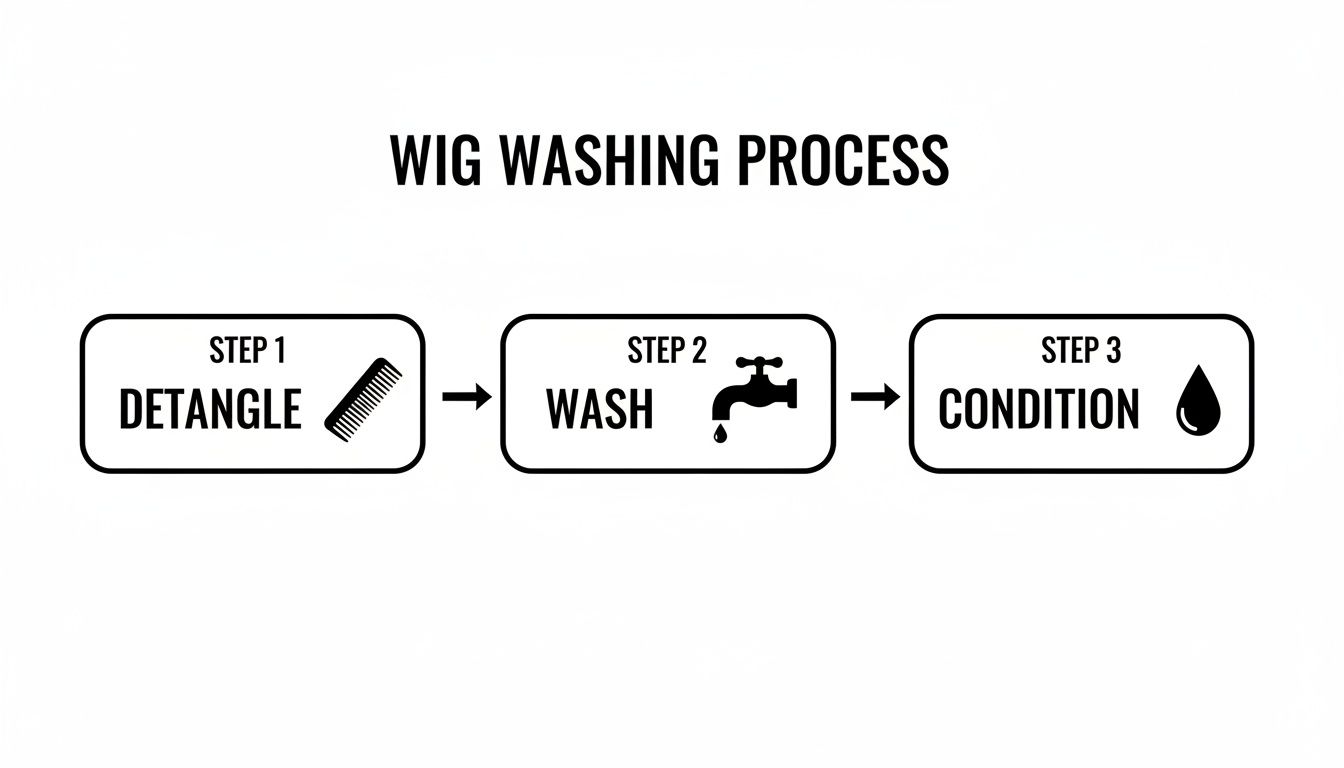
As you can see, gentle care starts from the very beginning, with each step designed to put as little stress on the hair as possible.
Using Heat Safely and Sparingly
Let's be real—one of the best parts of owning a human hair wig is the freedom to style it. You can straighten, curl, and create waves just like you would with your own hair. But with that freedom comes responsibility, because heat is also the hair's number one enemy. Overdo it, and you'll end up with dry, brittle strands.
Think of your heat tools as something you use for special occasions, not for your everyday look. And before a hot tool ever touches the hair, a quality heat protectant spray is completely non-negotiable. It creates a vital thermal barrier that seriously minimizes the potential for damage.
Crucial Tip: Never, ever apply heat to a wig that is even the slightest bit damp. The combination of heat and water will literally boil the hair strand from the inside out. This causes something called "bubble hair," which is irreversible damage that leads to snapping and breakage.
When you do turn to heat, keep those temperature settings low. For most human hair wigs, you'll want to stay below 350°F (175°C).
- For Flat Irons: Work in small, one-inch sections. Glide the iron smoothly and quickly down the hair shaft—don’t ever let it sit in one spot.
- For Curling Wands: Wrap a section of hair around the barrel, hold it for just a few seconds, and release. For a curl that lasts, let it cool completely in the palm of your hand or pin it up before styling. This helps the style set, so you won't need to go back over it with more heat.
Styling Without Any Heat at All
Honestly, the best way to care for your human hair wig is to master heat-free styling. This approach is your best defense for preserving moisture and extending the life of your investment. And thankfully, there are some fantastic ways to get gorgeous styles without plugging anything in.
- Foam Rollers: A total classic for a reason. You can set your wig with foam rollers while it's still a little damp from washing. Just let it air-dry the rest of the way on its stand, and you’ll have beautiful, bouncy curls without a lick of heat damage.
- Flexi-Rods: If you’re after tighter, more defined spiral curls, flexi-rods are your best friend. Simply wrap sections of damp hair around the rods and bend them to hold everything in place. Once the hair is 100% dry, gently unwind them and use your fingers to separate the curls.
- Braiding: Looking for soft, natural-looking waves? It doesn't get easier than braiding. A few large, loose braids on damp hair will give you gentle, beachy waves. If you want a more defined, crimped texture, just create more smaller, tighter braids.
By making these heat-free methods your go-to, you start treating your flat iron and curling wand like special occasion tools. This balanced approach is the real secret to keeping your wig looking luxurious, healthy, and absolutely stunning for years.
Proper Storage for Long-Term Preservation
What happens to your wig when it's not on your head is just as crucial as how you wash or style it. I've seen it countless times—people invest in a beautiful piece only to toss it onto a dresser or shove it in a drawer at the end of the day. This is one of the fastest ways to create a tangled mess, attract dust, and even permanently warp the cap's shape.
Proper storage isn’t just about being tidy. It's a core part of wig care that protects your investment and keeps it looking its best for years. A well-stored wig is always ready to wear, holds its style longer, and is safe from environmental damage.
Daily Storage Solutions
For everyday wear, a wig stand or mannequin head is your absolute best friend. Seriously, this is non-negotiable.
Popping your wig on a stand after taking it off lets the cap breathe and air out. This simple step is vital for preventing odors and any potential mildew from building up, especially in humid climates.
Even more importantly, a stand helps the wig maintain its carefully crafted shape and preserves your style. The hair hangs naturally, which drastically cuts down on tangling and prevents it from getting crushed. Keeping it upright and out in the open is the simplest, most effective way to keep it in grab-and-go condition. For a great option that helps with both styling and storage, you can check out this mannequin canvas head.
Preparing for Long-Term Storage
If you're someone who likes to rotate between different wigs or you’re putting one away for the season, the process needs a little more attention. You should never, ever store a wig long-term without cleaning it first. Any leftover oils, sweat, and styling products can slowly degrade the hair fibers.
Before you tuck it away, make sure you follow these steps:
- Wash and Condition: Give the wig a thorough but gentle wash, followed by a deep conditioning treatment to replenish its moisture.
- Dry Completely: This is critical. Ensure the wig is 100% dry, from the tips of the hair to the inside of the cap. Storing a damp wig is a guaranteed recipe for mold.
- Gently Detangle: Once it’s dry, take your wide-tooth comb and carefully work through any knots, starting from the ends and moving up to the roots.
With the wig prepped, gently fold it in half from ear to ear and get it ready for its protective bag.
The gold standard for long-term storage is a silk or satin bag. These materials don't create friction, which is a lifesaver for preventing frizz and tangles while your wig is packed away. The bag also acts as a fantastic barrier against dust.
Finally, find a cool, dry spot away from direct sunlight, like a closet shelf or a dedicated drawer. The sun’s UV rays can fade the color and make the hair brittle over time. This isn't just my opinion; industry data shows that 85% of professionals recommend silk bags because they can cut dust buildup by 75% and preserve those delicate hair fibers. You can discover more insights about the hair wig market to see just how much value is placed on proper care.
Got Wig Questions? We've Got Answers
Even with the best routine, questions will come up. Getting comfortable with human hair wig care is a journey, and figuring out the little quirks is just part of the process. I've put together answers to some of the most common concerns I hear, giving you straightforward advice to help you keep your wig looking its best.
Think of this as your personal troubleshooting guide for those "what if" moments. A little know-how can save you a ton of stress and keep your beautiful wig in rotation for years to come.
So, How Often Should I Really Wash My Wig?
The golden rule here is simple: less is more. Unlike the hair on your head, a wig isn't getting a constant supply of scalp oils, so it doesn't get greasy. A great starting point is to wash it after every 7-10 wears.
Of course, this isn't set in stone. Your lifestyle and how you style your wig play a huge role.
- Love your styling products? If you're a fan of hairsprays, serums, and other goodies, you'll need to wash your wig more frequently to get rid of that buildup. Product residue can make the hair look dull and heavy. In this case, washing every 6-8 wears is a good idea.
- Just wearing it for a few hours? If your wig only comes out for special occasions or short periods in clean, indoor settings, you can absolutely stretch the time between washes. Pushing it to 12-15 wears is perfectly fine.
Over-washing is probably the fastest way to strip a wig of its moisture and shorten its lifespan. When in doubt, it’s always better to wait an extra wear or two.
Can I Color or Bleach My Human Hair Wig?
Technically, yes, but you need to be incredibly careful. The hair on a wig has already been chemically processed to get its specific color and texture. This makes it more porous and far more fragile than the hair growing from your scalp.
Honestly, your best bet is to take it to a professional stylist who has experience coloring wigs. They'll know how to handle the delicate hair and will use professional-grade products that are less damaging.
If you’re set on doing it yourself, a strand test is not optional. It's the only way to see how the hair will react to the dye before you've committed to the whole wig. I'd also strongly advise against using bleach—it's incredibly harsh and can easily cause damage you can't undo. And remember, this advice is only for 100% human hair wigs. Trying to color a synthetic or blended wig will ruin it.
Help! My Wig Is Shedding or Tangling!
First, don't panic. Seeing a few loose strands is completely normal, just like with your own hair. But if you start noticing a lot of shedding, it's a sign that something in your routine needs to change.
To keep shedding to a minimum, be gentle. Always use a wide-tooth comb and start from the ends, working your way up. A crucial tip: never apply conditioner directly to the roots or the cap, especially on a hand-tied or lace wig. The oils can seep in and loosen the delicate knots, causing the hair to fall out.
If your wig won't stop tangling, it's practically screaming for moisture. Dry hair has a rougher cuticle, which causes the strands to catch on each other and create knots. The best fix for this is a weekly deep conditioning treatment.
This one simple step will bring back so much hydration and smooth everything out, making the hair far less likely to tangle. Also, make sure you're storing it properly on a wig stand to prevent tangles from forming overnight. A light spritz of a leave-in conditioner before you comb can also work wonders.
Can I Just Use My Regular Shampoo?
I really recommend you don't. Most shampoos you find at the drugstore are packed with sulfates and harsh detergents. They’re made to cut through the heavy oils our scalps produce, but for a wig that has no natural oil source, they are way too aggressive.
Using them will strip the moisture right out of the hair, leaving it dry, brittle, and a tangled mess. Your best move is to invest in products specifically labeled as sulfate-free and designed for dry or color-treated hair. It’s a small price to pay to protect your much bigger investment in the wig itself.
Ready to find the perfect products to maintain your style? Explore the full range of high-quality wigs and hair care essentials at Elise Beauty Supply and discover everything you need to keep your look flawless. Find your next favorite style at https://elisebeautysupply.shop.
Crafted with Outrank