

How to Care for Synthetic Wigs and Extend Their Lifespan
Keeping your synthetic wig looking flawless comes down to a few key habits. Think gentle daily detangling, a proper wash every 8-12 wears using products made for synthetic fibers, and always air-drying away from heat. Mastering these simple steps is the secret to preventing friction damage and product buildup, keeping the fibers soft and vibrant for the long haul.
The Foundations of Synthetic Wig Care
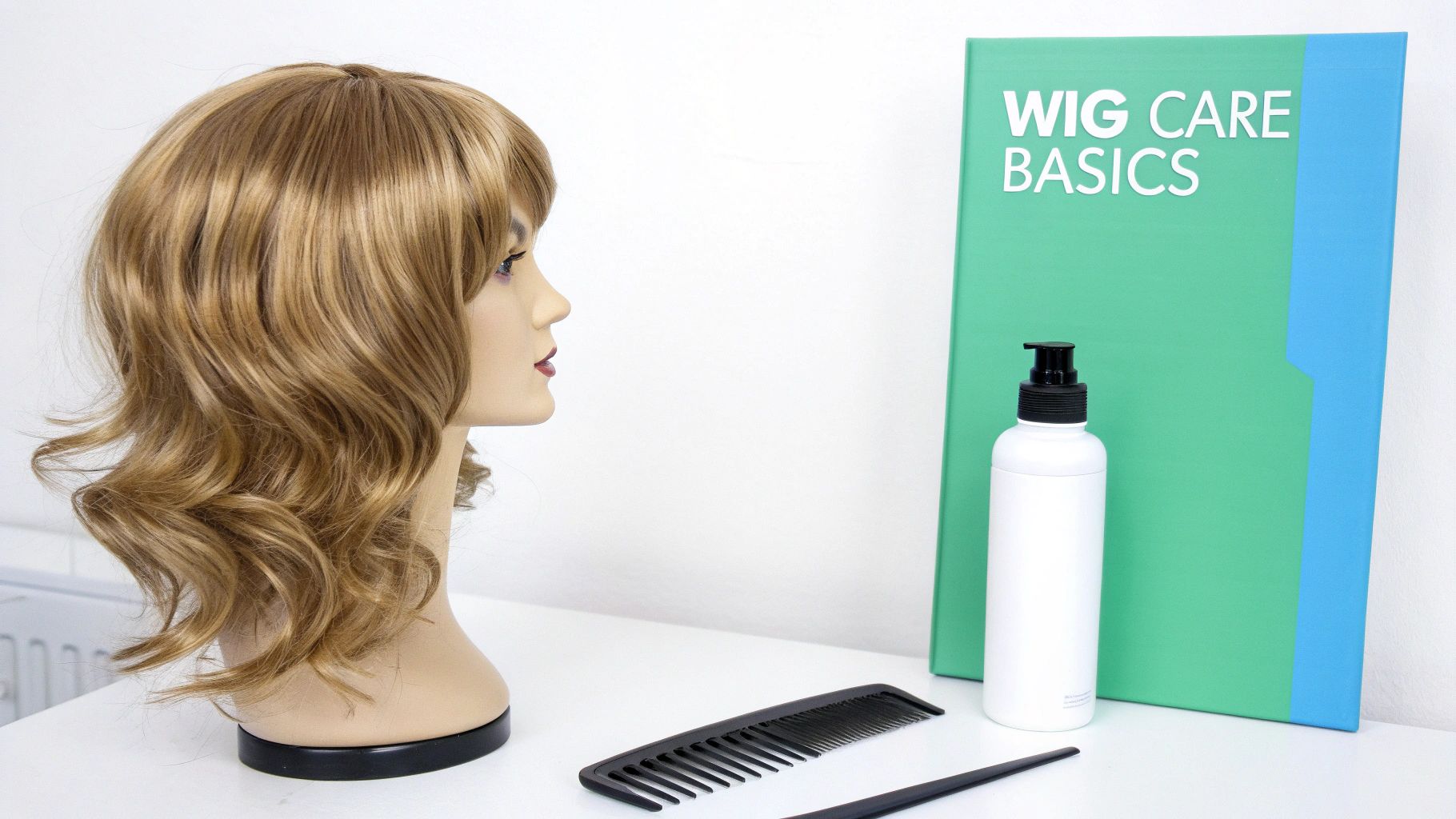
Whether this is your first wig or your fiftieth, getting the care routine right is what protects your investment and keeps you looking fabulous. This guide is all about that—giving you the practical, real-world steps to make your synthetic wigs last.
It's more than just a list of dos and don'ts. It's about understanding why synthetic fibers need their own special kind of TLC. They don't have the natural oils from a scalp to keep them moisturized, which means they're much more prone to dryness, frizz, and those notorious tangles caused by simple friction.
Why Proper Care Is Non-Negotiable
A solid care routine is your best weapon against common wig woes. By turning these steps into habits, you'll see a huge difference in the lifespan and look of your favorite pieces.
A great wig care foundation helps you:
- Prevent Frizz and Tangling: Consistent, gentle maintenance stops knots from forming, especially around the nape and at the ends where friction is highest.
- Maintain Fiber Softness: The right products are crucial. They keep synthetic fibers from turning dull, stiff, or brittle over time.
- Preserve the Original Style: When you wash, dry, and store your wig correctly, you help it hold onto its original shape, texture, and volume.
- Protect Your Investment: A wig that’s well cared for simply lasts longer. This saves you money and ensures you’re always ready to step out in style.
Synthetic wigs are a fantastic, affordable alternative to human hair, but they still deserve attention. If you're curious about the other side, you can see how the upkeep compares in our guide on how to care for human hair wigs.
The popularity of synthetic wigs is booming, and it's easy to see why. Valued at over USD 2 billion, the global market is expected to more than double by the early 2030s. This growth is all thanks to better fiber technology and people like you discovering how versatile and low-maintenance they can be. As more people join the wig-wearing community, knowing how to care for them properly is key to getting the most out of every single one. You can dive deeper into the market trends in this global industry report.
Your At-A-Glance Wig Care Schedule
To make things even easier, here's a simple schedule to follow. Think of it as a quick-reference cheat sheet for keeping your synthetic wig in perfect shape.
| Frequency | Care Task | Key Tip |
|---|---|---|
| After Every Wear | Light Detangling & Storage | Gently brush from tips to roots and place on a wig stand to air out. |
| Every 8-12 Wears | Wash & Condition | Use cool water and products specifically designed for synthetic fibers. |
| As Needed | Deep Conditioning | Apply a conditioning spray to restore moisture and reduce static between washes. |
| Occasionally | Heat Styling (If Applicable) | Always check if your wig is heat-friendly and stay below the recommended temperature. |
This simple rhythm of daily, weekly, and occasional care will become second nature, ensuring your wig always looks like you just took it out of the box.
Your Daily Wig Care Ritual
The real secret to making a synthetic wig last isn't some complex, once-a-month treatment. It’s the small things you do every single day. The biggest enemy of synthetic fibers is friction—that constant, subtle rubbing against your clothes, the back of a chair, or even your own skin. This is exactly why you'll almost always see the first signs of wear and tear at the nape of the neck and on the ends.
Think of your daily routine as preventative maintenance. A few minutes each day is all it takes to head off frustrating knots, frizz, and irreversible fiber damage. It’s about working smarter, not harder, to keep your wig looking flawless.
The Art of Gentle Detangling
If you do only one thing for your wig each day, make it detangling. But how you do it is everything. Ripping a brush through the fibers from root to tip is a surefire way to stretch, break, and ruin them. The goal here is patience and precision.
Always start at the ends of the hair and gently work your way up to the cap. This approach lets you tackle the small knots first, so they don't snowball into one giant, unmanageable tangle closer to the base.
For this job, you need the right tools:
- Wide-Tooth Comb: This should be your go-to. The wide spaces between the teeth allow it to glide through the fibers without snagging or pulling.
- Wig Brush: If you're more of a brush person, make sure it’s one made specifically for wigs. The bristles are softer and more flexible than those on a standard hairbrush.
- Your Fingers: Honestly, sometimes your own fingers are the best tool you have. Gently separating strands is the most delicate method, especially for curly or wavy styles where you want to keep the curl pattern intact.
Treat it like you’re untangling a delicate chain necklace. You wouldn't just yank on it, right? You'd carefully work out each little knot. Apply that same gentle patience, and your wig will reward you for it.
Expert Tip: Never, ever detangle a synthetic wig when it’s wet. The fibers are at their weakest and most vulnerable, making them incredibly easy to stretch or snap. Always wait until it's completely dry.
How to Use a Conditioning Spray Correctly
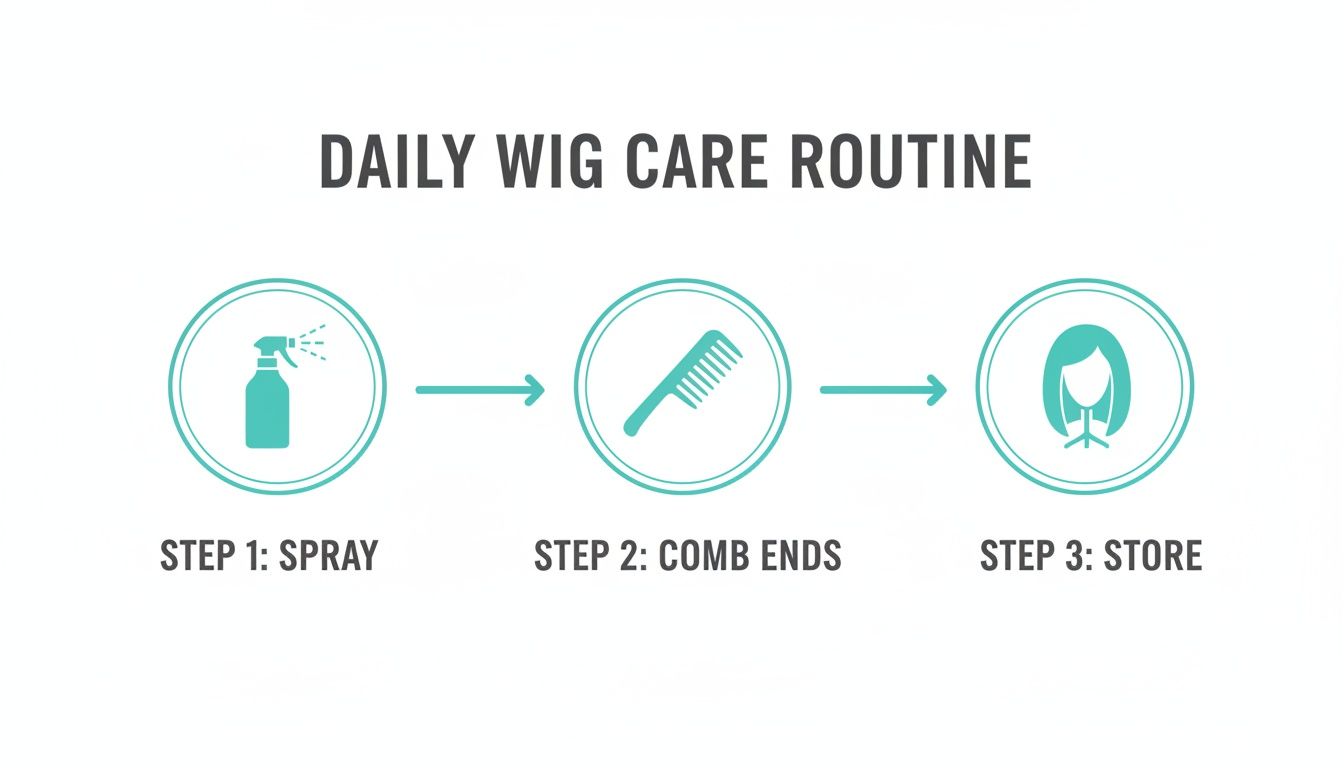
A good synthetic wig conditioning spray is your other daily essential. It's not just for shine—it replenishes a bit of moisture, tames the static that causes flyaways, and creates a protective coating that cuts down on friction.
Think of it as a daily leave-in conditioner. A light mist is all you need. Drenching the wig will only lead to product buildup, which can make the fibers feel heavy and greasy, forcing you to wash it more often.
Here’s the simple, effective way to do it:
- Mist Lightly: Hold the bottle about 10-12 inches from the wig to ensure a fine, even application.
- Focus on the Ends: Pay special attention to the mid-lengths and ends, since these are the areas that get the most friction and tend to look dry first.
- Comb Through: Use your wide-tooth comb to gently distribute the spray from top to bottom.
This takes less than a minute but makes a huge difference in the texture and manageability of your wig all day long.
Small Habits That Prevent Big Problems
Beyond brushing and spritzing, some of the best care is simply being mindful. Small tweaks to your daily habits can drastically reduce the amount of friction your wig endures.
Try to steer clear of high-collared jackets or scratchy wool scarves that will constantly rub against the nape. Even when you're just lounging on the sofa, be aware of how the back of your wig is pressing and rubbing against the cushions. These little things really add up over time, creating that matted, frizzy look we all want to avoid. Learning how to care for synthetic wigs is just as much about preventing damage as it is about fixing it.
How to Properly Wash and Condition Your Wig
Let's talk about wash day. For a synthetic wig, this is probably the most critical part of its care routine—and honestly, it's where most people make mistakes. Unlike our natural hair, synthetic fibers don't get a constant supply of oil from a scalp. This means they get dry easily and can get weighed down by styling products, dust, and everything else in the environment.
I know a lot of wig wearers get a little nervous about washing their pieces. The fear is real: Will I ruin the style? Will it turn into a tangled mess? Don't worry. Once you get the hang of it, washing your wig is simple. The secret is all about using the right products, the right water temperature, and a gentle touch.
Setting the Stage for a Successful Wash
A little prep work before the wig ever touches water makes a world of difference.
First things first, gently detangle the wig. I always start from the ends and patiently work my way up to the roots using a wide-tooth comb or just my fingers. Trying to wash a tangled wig is a recipe for disaster; the water will only make those knots tighter and practically permanent.
Next up, gather your tools. You’ll need a few key items:
- A shampoo made specifically for synthetic wigs.
- A conditioner designed for synthetic fibers.
- A clean sink or a small basin.
- A fluffy towel for blotting.
- A proper wig stand for air-drying.
One of the biggest mistakes I see is people using their regular shampoo. Those formulas often contain harsh detergents that can strip synthetic fibers, leaving them looking dull, feeling brittle, and prone to frizz. Stick to the stuff made for your wig.
The Gentle Cleansing Process
If you remember one thing, let it be this: always use cool or lukewarm water. Hot water is the number one enemy of synthetic wigs. It can relax the built-in style, create frizz, and permanently damage the fibers.
Go ahead and fill your basin with cool water, then add about a tablespoon of your synthetic wig shampoo. Just swish it around a bit to get a nice, sudsy bath ready.
Now, fully submerge your wig in the water and just let it soak for about five to seven minutes. This is where the magic happens. The shampoo gets a chance to break down all that buildup without you having to scrub and risk damage.
After its little bath, gently swirl the wig in the water. Resist the urge to rub, twist, or wring it out! That kind of aggressive handling is what causes those dreaded tangles. To get the inside of the cap clean, you can turn the wig inside out and softly massage the cap area with your fingertips.
Key Takeaway: I call this the "soak and swish" method. It’s the core of a safe wash. You have to let the water and the shampoo do the heavy lifting for you. Aggressive scrubbing is a surefire way to damage the delicate fibers.
Once you feel the wig is clean, carefully lift it out and drain the soapy water. Refill the basin with fresh, cool water to get ready for rinsing.
Conditioning and Rinsing for Lasting Softness
Getting all the shampoo out is just as important as the wash itself. Hold the wig under cool, running tap water or dip it repeatedly in your basin of clean water until there are absolutely no suds left. Any shampoo residue will make the fibers look dull and feel stiff.
Now, it's time to condition. You can use a traditional rinse-out conditioner, but honestly, most of us in the know prefer a good leave-in conditioning spray for synthetics. If you do use a rinse-out formula, apply just a small amount from the mid-lengths to the ends, making sure to avoid the cap. Conditioner on the knots at the base can cause them to loosen over time, leading to shedding. Let it sit for a minute or two before giving it a final, thorough rinse with cool water.
With the final rinse done, gently squeeze out the excess water—again, no wringing! Lay the wig flat on a clean towel and carefully blot it to absorb more moisture.
From there, place it on its wig stand and let it air dry completely. This is crucial: never, ever brush or comb a synthetic wig when it’s wet. The fibers are at their most fragile and can stretch or break. Just be patient and let the style bounce back on its own as it dries.
Drying and Styling Your Wig Without Causing Damage
The first few hours after washing are absolutely critical for your synthetic wig. How you handle the drying and styling process can either preserve its beautiful shape and silky texture or, unfortunately, ruin it. It's not a difficult process, but it does require a bit of patience and knowing what synthetic fibers can—and definitely cannot—handle.
First things first: never, ever twist or wring out your wig. That’s the quickest way to stretch, snap, and permanently damage the delicate fibers. Once you're done rinsing, gently squeeze out the excess water. From there, lay the wig flat on a clean, fluffy towel, fold it over, and carefully blot away as much moisture as you can.
Why Air Drying is Your Best Friend
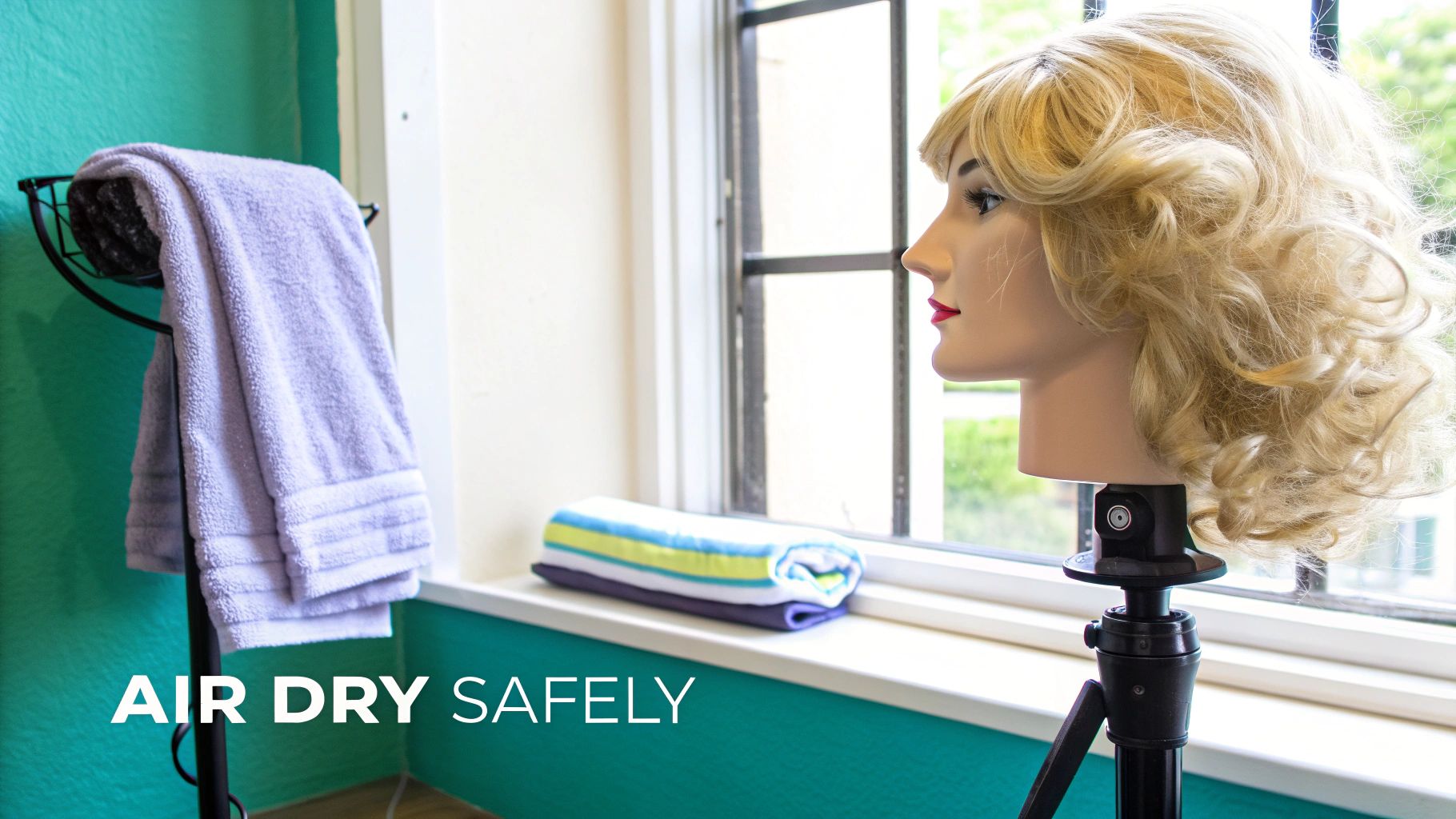
After blotting, the absolute safest way to get your wig dry is to simply let the air do the work. This gentle, hands-off approach is perfect because it allows the wig's built-in style memory to kick in. As the fibers dry, you'll see those factory-set curls, waves, or sleek straightness bounce right back into place all on their own.
Set the damp wig on a sturdy wig stand or a mannequin head. This isn't just for show—it's essential for allowing air to circulate through the cap and all the fibers, which means a faster, more even dry. It also prevents the cap from stretching out of shape.
My Go-To Tip: Find a spot for the wig stand in a well-ventilated room, but make sure it’s out of direct sunlight and away from heat sources like a radiator. Over time, UV rays will fade the color, and ambient heat can cause damage just like a styling tool.
Using Heat: The Do's and Don'ts
Styling with heat is where a lot of wig owners run into trouble. While modern synthetic fibers are much more advanced than they used to be, they aren't all the same. The single most important thing to know is whether your wig is heat-friendly or a traditional synthetic.
Always double-check the wig's original packaging or the online product description. If it's designed to take heat, it will be clearly labeled as "heat-friendly" or "heat-resistant." These wigs are made with special fibers that can handle low to medium temperatures, giving you much more freedom to style.
If your wig is heat-friendly, live by these rules:
- Know Your Limit: Most heat-friendly wigs can handle temperatures up to 300°F to 350°F (150°C to 175°C). Never go above this number, or you risk melting and frizzing the fibers permanently.
- Start Low, Go Slow: Always begin with your styling tool on its lowest setting. I always recommend doing a quick test on a small, hidden section of hair before you commit to the whole wig.
- Keep It Moving: Don't let a flat iron or curling wand linger on any one spot. A quick, smooth pass is all it takes to get the job done without causing heat damage.
The evolution of synthetic fibers is a huge reason why the wig market is booming. As designers use more versatile and heat-resistant materials, we get more styling freedom. It's these kinds of innovations that have helped synthetic hair become one of the fastest-growing segments in the global hair industry.
Styling Wigs That Aren't Heat-Friendly
So, what if your wig isn't made for heat? No problem! The beauty of a standard synthetic wig is that its style is literally baked into the fibers. A simple wash and air dry is usually all it takes to bring it back to its original look.
When you want to change things up without reaching for a hot tool, think accessories. A cute headband, a stylish scarf, or some decorative clips can completely change your vibe. You can also play with gentle updos or braids. Just be careful not to pull the hair too tight, which can put a strain on the wig cap.
To get the best results, you need the right accessories. You can check out a great collection of wig-safe styling tools here that won't cause damage.
Smart Storage to Preserve Your Wig's Shape and Style
Where your wig lives when you're not wearing it is just as important as how you wash it. Let’s be real—proper storage is your number one defense against a whole list of frustrations, from dust and tangles to a style that's been crushed completely flat.
Think of it as your wig’s safe haven. Leaving it out on a dresser or, even worse, wadded up in a drawer, is a fast track to damage. Those fibers are surprisingly vulnerable to friction and pressure, which can create permanent kinks and frizz. A little bit of thought here will pay you back tenfold in the lifespan and look of your favorite pieces.
Short-Term Storage Solutions
For the wigs in your regular rotation, you need something that’s both protective and easy to access. This is where a dedicated stand is non-negotiable. It helps the wig keep its shape and allows the fibers to breathe. Trust me, that air circulation is crucial for preventing any musty odors from developing, especially after a long day of wear.
You have two fantastic options for everyday storage:
- Mannequin Heads: These are the gold standard for perfectly preserving a style. Because they mimic the shape of a human head, they stop the cap from stretching out and let the hair fall naturally. No more weird bends or creases.
- Collapsible Wig Stands: I love these. They're a brilliant, space-saving alternative if your collection is growing but your vanity space isn't. Made from lightweight plastic, they give you excellent air circulation and are an absolute dream for travel.
My Personal Preference: I keep my go-to curly wig on a mannequin head because it helps the curl clumps stay perfectly defined. For my straight and wavy styles, a collapsible stand works beautifully and frees up so much precious space.
Preparing for Long-Term Hibernation
Putting a wig away for the season? Or just rotating it out of your regular lineup? A little prep work is absolutely essential. Storing a wig that's dirty or even slightly damp is a recipe for disaster—it can lead to mildew and permanently set-in odors you’ll never get out.
Before you pack it away, make sure the wig is completely clean and bone-dry. If it’s been a while since its last wash, give it a gentle cleanse and let it air dry for at least 24 hours. Don't rush this part.
Once it's pristine, gently brush it out, starting from the ends and working your way up to the roots. For straight styles, you can fold it neatly in half from ear to ear. If you're storing a curly wig, protect that gorgeous texture by carefully placing a silk or satin hair net around it.
The Best Way to Pack Wigs for Storage and Travel
Whether it's going into a storage bin or a suitcase, the goal is the same: minimize friction and prevent it from getting crushed. Never, ever just toss your wig into a bag unprotected.
Here’s a simple method that has never failed me:
- Prep It: First things first, make sure it’s clean, dry, and totally detangled.
- Turn It Inside Out: This is a great little trick. It protects the delicate outer fibers from rubbing against everything else. The cap is way more durable and can handle a bit more friction.
- Use a Protector: A satin or silk wig bag is your best friend here. The smooth fabric prevents the static and tangles that a plastic bag would create. The original box it came in is also a solid choice.
- Add Support: If you're packing it in a suitcase, stuff the inside of the cap with acid-free tissue paper to help it hold its shape. Then, nestle it in the center of your suitcase and pack soft clothes around it to act as a cushion.
Good storage is a cornerstone of wig care. By giving your wigs a proper home, you're not just getting organized—you're actively protecting your investment. You can explore our full range of wig accessories and care products to find the perfect stands and bags for your collection.
Reviving Your Wig and Fixing Common Problems
Even when you follow a perfect care routine, a synthetic wig you wear and love will eventually start to show its age. The great news? Most common wig problems, from those pesky frizzy ends to a style that’s fallen completely flat, are surprisingly fixable. Think of this as your emergency guide for bringing a tired wig back from the brink, right at home.
The number one issue I see is frayed, frizzy ends. This is a direct result of simple friction—the wig fibers rubbing against your shoulders, your jacket collar, or the back of your office chair. It’s totally normal and pretty much unavoidable, but it definitely doesn't mean your wig is done for.
Smoothing Out Frizzy and Frayed Ends
When the ends of your wig start to look a bit frazzled and tangled, you've got a couple of great options for bringing them back to life. The secret is applying just the right amount of gentle, controlled heat to essentially re-seal and smooth out those synthetic fibers. Just remember, this trick is only for heat-friendly synthetic wigs.
One of my go-to methods is using a standard fabric steamer. The moist heat is gentle enough that it won't melt the hair, but it's effective enough to relax all that frizz.
- First, secure your wig. Pop it on a mannequin head or a wig stand so it’s stable and you can work hands-free.
- Work in small, manageable sections. Don't try to tackle the whole thing at once. Isolate one frizzy section at a time.
- Steam and comb. Holding the steamer a few inches away, slowly pass it down the length of the hair. Immediately follow behind it with a wide-tooth comb to gently straighten the fibers as they cool.
This process basically gives the fibers a factory reset, leaving them looking sleek and feeling so much softer. It's an amazing technique that can add months to your wig's lifespan.
Insider Tip: No steamer? A flat iron on its lowest setting (staying under 300°F) can also do the job on heat-friendly synthetics. Just be sure to test it on a small, hidden piece of hair first. Use quick, smooth passes—never let the iron sit in one spot.
Restoring Body and Defeating Flatness
Has your wig lost its bounce? It happens. Over time, and especially if it isn't stored properly, a wig can get crushed and look limp. Your first line of defense is always a good wash and letting it air dry completely on a wig stand. Often, that's all it takes for the style's built-in memory to reactivate.
If a wash doesn't quite do the trick, you might need to help it along. For a curly or wavy wig, try gently scrunching the hair with your hands while it’s still damp to encourage the curls to spring back up. If you have a straighter style that needs more lift at the roots, you can use large rollers on the dry, heat-friendly fibers and apply a tiny bit of low heat to reintroduce that beautiful volume.
Getting Rid of Unwanted Odors
Synthetic fibers aren't porous like human hair, but they can still pick up smells from your environment—think smoke, perfume, or strong cooking odors. While a full wash is the ultimate fix, sometimes you just need a quick refresh between shampoos.
A fantastic, safe way to deodorize your wig is to use a spray designed for wigs, or you can easily make your own. Just mix one part distilled white vinegar with three parts cool water in a spray bottle. Give the wig a light mist, then let it air dry completely on a stand in a spot with good air circulation. The vinegar smell will disappear as it dries, and it will take all those other unwanted scents with it.
Your Top Synthetic Wig Care Questions, Answered
When you're new to synthetic wigs, it's natural to have questions. Getting the right answers makes all the difference in keeping your wig looking incredible. Let's tackle some of the most common things people ask.
How Often Should I Really Wash My Wig?
The golden rule is to give your synthetic wig a good wash after every 8-12 wears. Think of this as a guideline, not a hard-and-fast law.
Your lifestyle plays a big role. If you're using a lot of styling products or find yourself in smoky environments, you'll need to wash it more often. The wig will tell you when it's time—if the fibers feel sticky, look dull, or have lost their beautiful movement, it’s ready for a refresh.
Can I Just Use My Regular Shampoo?
Please don't! This is one of the most common mistakes and it can permanently ruin your wig. Shampoos made for human hair are packed with sulfates and heavy conditioners that are way too harsh for synthetic fibers. They'll strip the finish, leaving the hair brittle, frizzy, and prone to matting.
The right products are non-negotiable. Always, always use a shampoo and conditioner specifically designed for synthetic hair. These formulas are gentle, cleansing without causing damage and hydrating without creating buildup. It's the secret to keeping the fibers soft and silky.
What Is the Best Way to Fix a Badly Tangled Wig?
Dealing with a seriously tangled wig can feel overwhelming, but the key is patience. Rushing will only make it worse.
First, secure the wig on a mannequin head to keep it stable. Grab a detangling spray made for synthetics and lightly mist the knotted sections. Then, using a wide-tooth comb or even just your fingers, start gently working out the tangles from the very ends of the hair. Slowly and carefully work your way up toward the base. Whatever you do, don't try to rip the comb through a knot.
For all the essentials you need to keep your synthetic wig looking brand new, explore the collection at Elise Beauty Supply. Shop our wig-safe shampoos, conditioners, and styling tools today at https://elisebeautysupply.shop.