

How to Make Synthetic Hair Soft and Silky Again
The absolute quickest way to soften up your synthetic hair? Give it a good wash with a gentle, sulfate-free shampoo in cool water, and let it soak in a deep conditioner for a bit. If you're dealing with serious stiffness, a diluted fabric softener rinse or an apple cider vinegar bath works wonders to cut through those stubborn factory coatings and bring back that silky, easy-to-manage feel.
Why Your Synthetic Hair Loses Its Softness
Ever had a wig or braids that felt incredible right out of the package, only to become stiff and scratchy a few weeks later? It happens to the best of us. The key to fixing it—and preventing it—is understanding that synthetic hair isn't like human hair at all. It's a type of plastic fiber, and it reacts very differently to daily life.
The main culprits behind that loss of softness are usually friction and buildup. Think about it: every time your synthetic hair rubs against your collar, your pillowcase, or even other strands, it creates tiny bits of damage along each fiber. This is what leads to those frustrating tangles and that frizzy, matted look, especially around the nape of your neck and at the ends.
The Role of Buildup and Coatings
Product buildup is another major offender. Hairsprays, gels, and even dirt and oils from the environment can leave a film on the fibers. This gunk weighs the hair down, making it feel dull, heavy, and brittle.
Even brand-new hair can feel stiff straight from the package. This is usually because of coatings applied during manufacturing to hold the style during shipping. These coatings are the hidden reason why a new piece might not have the natural movement you were hoping for. In fact, that popular fabric softener trick works so well precisely because it breaks down these residues, which are responsible for that initial stiffness in as many as 85% of new synthetic pieces.
Once you understand why the hair gets stiff, you can change your entire approach. Instead of just reacting to tangles, you start preventing the friction and buildup that cause them. That’s how you really extend the life of your style.
The synthetic hair market is booming—it's projected to hit USD 4.2 billion by 2035—and that means we're seeing much better fiber technology. Materials like Kanekalon can reduce friction by up to 40% compared to older-style synthetics. But even with these advances, good maintenance is everything. You can learn more about what's new by checking out the latest trends in the artificial hair integration market.
Knowing what you're up against—friction, product buildup, and factory finishes—is half the battle. It explains why a simple shampoo often isn't enough to restore that softness. Now, let's get into the practical, hands-on methods that actually solve these problems and bring your synthetic hair back to life.
Your Foundational Wash and Condition Routine
The secret to bringing synthetic hair back to life isn't some miracle product—it’s all in mastering a simple, consistent care routine. Washing synthetic pieces is a totally different ballgame than caring for human hair. Getting these basics right is your first and best defense against that stiff, tangled mess we all want to avoid.
The number one rule? Always use cool water. Hot water is the enemy of synthetic fibers and can permanently warp them, leaving you with a frizzy, melted-looking texture.
Think of washing your wig or braids like hand-washing a delicate sweater. You don't need to scrub aggressively. Just fill a basin with cool water, add a capful of a gentle, sulfate-free shampoo made for synthetics, and let the hair soak. Gently swish it around for a minute or two to lift away dirt and product buildup. That’s it.
So what makes synthetic hair get so stiff in the first place? It usually comes down to three main culprits.
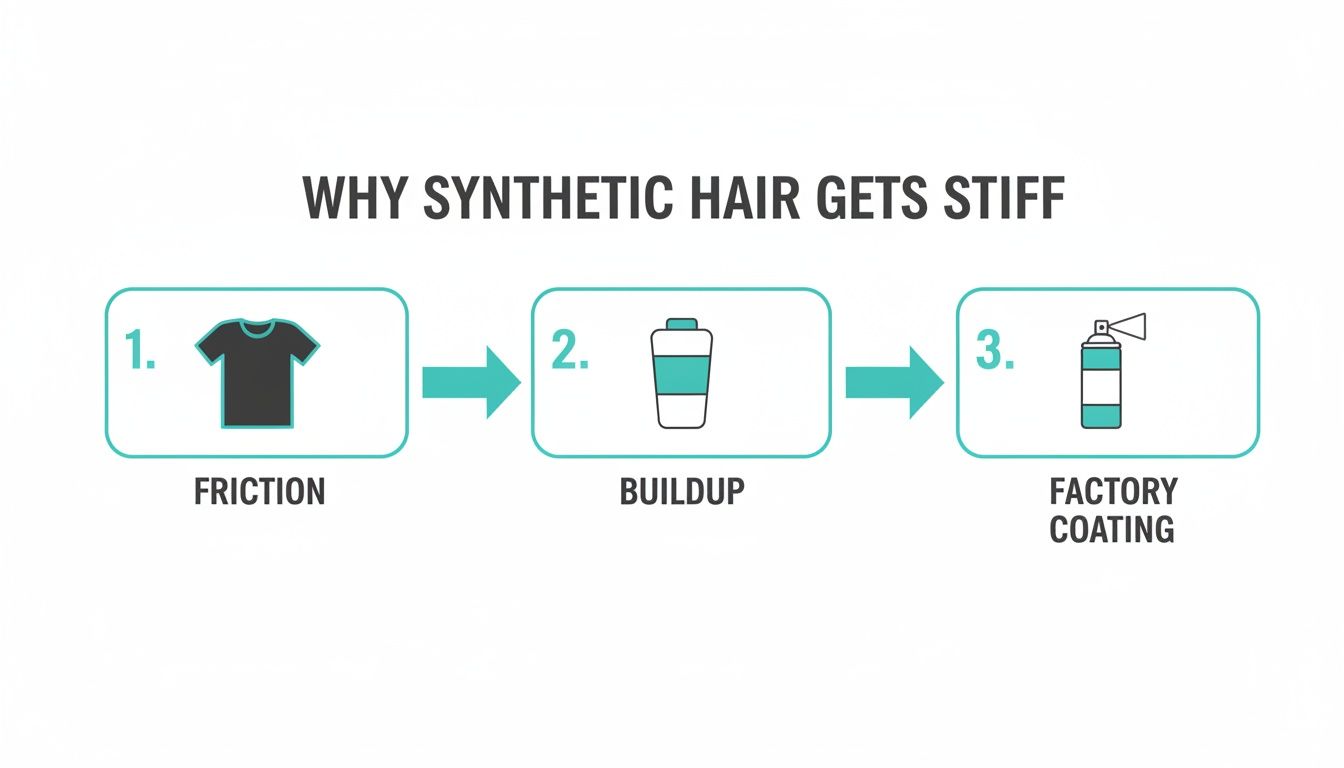
Daily friction from wear, residue from styling products, and even the original factory coating all work against that silky-soft feel over time.
The Conditioning Soak: This Is the Real Game-Changer
After a quick wash, the conditioning soak is where the magic really happens. Seriously, don't skip this step. It's the key to restoring softness and fighting the friction that causes those maddening knots.
Once you’ve drained the soapy water, refill your basin with fresh, cool water and add a small amount of a synthetic-safe conditioner. Let the hair soak for about five to ten minutes.
This isn’t just about a temporary silky feeling; there's real science behind it. A proper conditioning treatment is proven to dramatically reduce friction between hair fibers. For synthetic hair, a simple soak can cut down the force needed to comb through it by up to 90%. The result? You're preventing a whopping 75% of tangles from ever forming. If you're a science nerd like me, you can dive deeper into how this works by reading the full 2023 study.
Your goal isn't to drench the hair in conditioner, but to lightly coat each fiber. This creates a slick, protective barrier that lets the strands glide past each other instead of snagging—and that snagging is what leads to frizz and stiffness.
Rinsing and Drying the Right Way
You’re almost done, but these final steps are just as crucial for keeping that soft texture. Once the soak is finished, rinse the hair thoroughly under cool, running water until you can't feel any product left. Whatever you do, resist the urge to wring it out or twist it like a towel. That will stretch and damage the delicate fibers.
Instead, be gentle. Here's how I do it:
- Gently squeeze the excess water out, working your way down from the top.
- Lay the hair flat on a clean, dry towel.
- Blot, don't rub. Fold the towel over the hair and press gently to absorb more moisture.
- Let it air dry. Place your wig on a proper wig stand or hang your braiding hair to dry completely. Never, ever use a blow dryer unless the packaging specifically says it's "heat-friendly."
Stick to this simple routine after every 6-8 wears, and you'll be amazed at how soft your synthetic hair stays. For even more detailed tips, our guide on how to care for synthetic wigs is a great resource. It really is the consistency of this gentle process that makes all the difference.
At-Home Remedies to Revive Stiff Fibers
When your usual wash and condition routine just doesn't cut it, it’s time to bring out the big guns. We’ve all been there—sometimes a synthetic wig or set of braids gets so stiff and tangled it feels like it needs a serious intervention.
The good news? You probably have everything you need for a powerful revival treatment right in your laundry room or kitchen pantry.
These at-home methods are fantastic for tackling two very different problems: giving a quick boost of softness or cutting through stubborn buildup that’s weighing the fibers down.
Let's break down two of the most effective DIY treatments—the fabric softener soak and the apple cider vinegar rinse—so you know exactly when and how to use each one.
The Quick Fix: The Fabric Softener Soak
The fabric softener method is a classic trick for a reason. It's incredibly effective for a quick, noticeable boost in softness, especially for older pieces that have gotten frizzy and rough from friction. Fabric softener works by depositing a thin, lubricating coating onto the synthetic fibers, just like it does with clothes.
This coating cuts down on static and helps the strands glide past each other, instantly minimizing that scratchy, tangled feeling. It's my go-to solution before a big event or anytime I need a wig to look its best on short notice.
Here’s how to do it right:
- Prep the Solution: Grab a basin or use your sink to mix one part liquid fabric softener with three parts cool water. You don't need a huge amount, just enough to fully submerge the hair.
- Let It Soak: Gently place your wig or braids into the mixture. Let them soak for at least 30 minutes, but an hour is even better for really stubborn fibers.
- Rinse It Out: This step is crucial. After soaking, rinse the hair completely with cool, running water. You have to get all the residue out to avoid a heavy, greasy feeling later.
- Air Dry: Squeeze out the excess water (don't wring!), blot gently with a towel, and let it air dry completely on a wig stand or by hanging it up.
Think of this method as a super-intense conditioning treatment for your synthetic styles. It’s a temporary fix, but it's one that delivers immediate, impressive results when you need to bring a piece back to life quickly.
The Deep Clean: The Apple Cider Vinegar Rinse
If your synthetic hair feels dull, heavy, and lifeless, the problem might not actually be dryness—it could be buildup. Hairspray, leave-in products, and even minerals from hard water can create a film on the fibers, making them stiff and preventing them from moving naturally.
An apple cider vinegar (ACV) rinse is the perfect clarifying treatment to cut right through it.
ACV is acidic, which allows it to break down and strip away all that gunk without damaging the synthetic fibers themselves. The result is hair that feels lighter, swings more freely, and has a beautiful, natural-looking shine because it can finally reflect light again.
This is the method you want for restoring hair that has lost its luster over time. Just mix a solution of one part apple cider vinegar to three parts cool water. Let the hair soak for about 15-20 minutes, rinse it thoroughly with cool water, and let it air dry.
And don't worry—that vinegar smell will disappear completely once the hair is dry, leaving you with nothing but beautifully refreshed fibers.
Safely Using Heat to Smooth and Soften Your Hair
While most synthetic fibers and high heat are sworn enemies, a little bit of gentle heat can be your secret weapon. When you do it right, heat can relax tangled, frizzy ends and bring back that flawless, fresh-out-of-the-box look we all love. It’s all about having the right tools and, more importantly, the right technique.
Forget about cranking up a flat iron and just going for it. For most standard synthetic hair, that kind of direct, high heat is a recipe for a melted disaster. Instead, let's focus on the two safest and most effective methods I swear by: a good steam treatment and carefully controlled low-heat styling for heat-friendly fibers.
The Power of Gentle Steam
Honestly, steam is probably the safest way to apply heat to synthetic hair. It works wonders on those stiff, frizzy ends that pop up from friction, especially on longer styles that rub against your clothes. The moist heat gently works its way into the fibers, making them pliable enough to detangle without risking a meltdown.
A handheld fabric steamer is your best friend here.
After you've gently detangled the dry hair, hold the steamer a good 6-8 inches away. Work in small sections, passing the steam over the hair and always keeping the steamer moving. You'll literally see the fibers relax and straighten right before your eyes. Follow up immediately with a wide-tooth comb to smooth everything out while the hair is still warm.
Low-Heat Styling for Heat-Friendly Fibers
Now, if your wig or extensions are specifically labeled as "heat-friendly" or "heat-resistant," you can bring out the flat iron. But—and this is a big but—you have to follow the rules. No exceptions. Bending them will permanently ruin your hair.
The golden rule for heat-friendly synthetics is less is more. You're not trying to curl or straighten it like human hair. Your only goal is to smooth and reseal the fibers. A quick, single pass is usually all you need to get the job done.
Before you even plug in that flat iron, you absolutely must run through this safety checklist.
- Confirm It's Actually Heat-Friendly: Go back to the original packaging or product page. If you aren't 100% positive, do not apply direct heat. It’s not worth the risk.
- Stay Under the Temperature Limit: Never, ever go above 275°F (135°C). Most heat-friendly fibers will melt past this point. Start your tool on its absolute lowest setting and only bump it up if you have to.
- Always Do a Test Strand: This is non-negotiable. Snip a tiny, hidden piece of hair from the back and test your iron on it first. If it frizzes, melts, or the texture goes weird, your heat is too high.
- Keep That Iron Moving: Don't let the flat iron linger in one spot. Clamp it at the top of a small section and glide it down smoothly and quickly toward the ends. One fluid motion.
For an extra layer of care, using a heat cap during your deep conditioning treatments before any heat styling can help distribute warmth evenly and prep the fibers. See how a heat cap dryer attachment can easily fit into your hair care routine. Stick to these steps, and you can confidently use heat to keep your synthetic styles looking perfect.
Daily Habits for Long-Lasting Softness
You've put in the work to get your synthetic hair feeling soft and silky, but the real win is keeping it that way. The secret isn't some marathon treatment session once a month; it's the small, consistent things you do every single day. Think of it as proactive care—stopping stiffness and tangles before they even get a foothold.
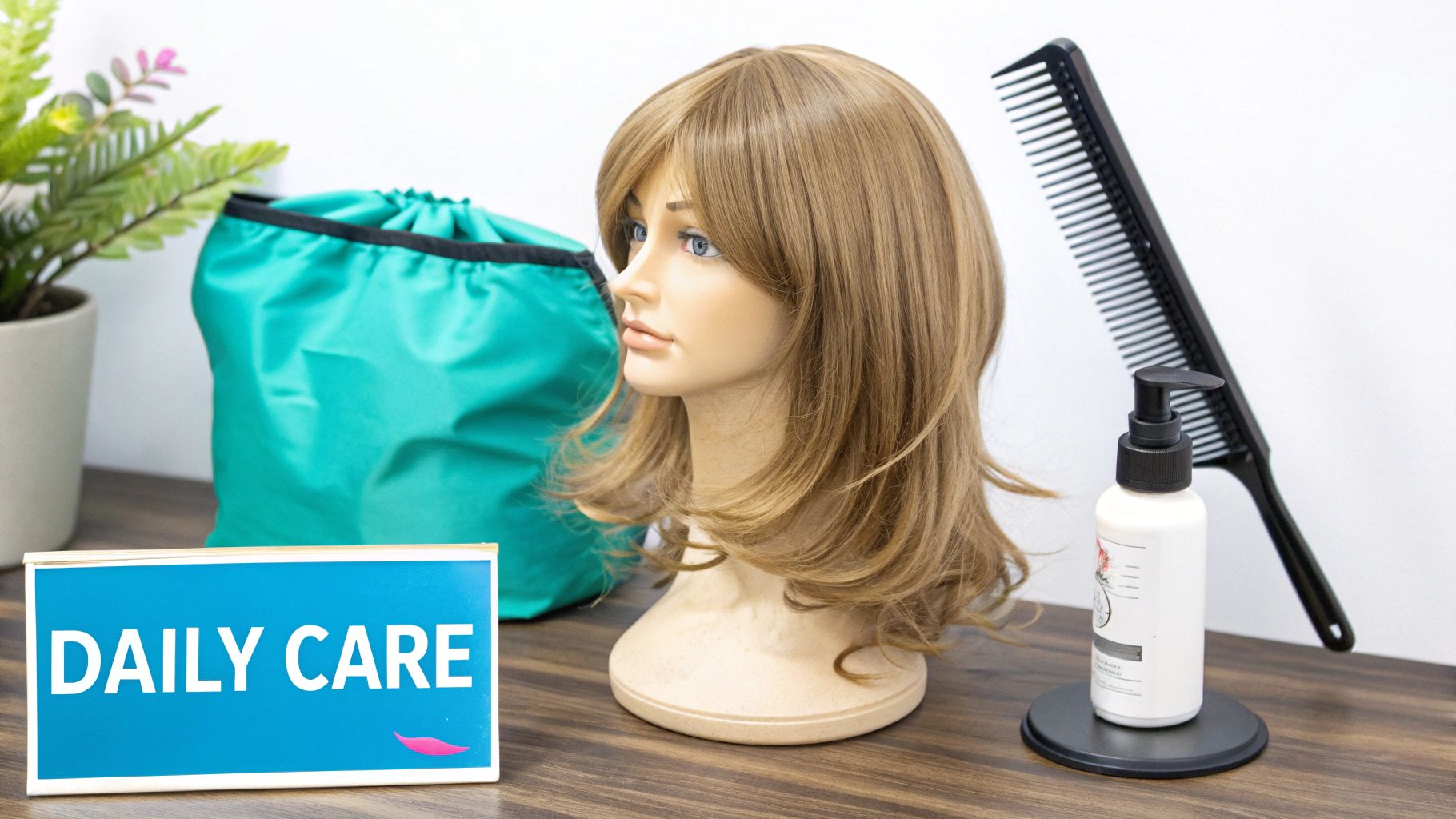
These daily habits are all about fighting friction and static, which are the main culprits behind that stiff, scratchy feeling we all want to avoid. You can spend hours trying to revive a piece, or you can spend a few minutes each day making sure it never gets that bad to begin with.
Master Your Detangling Technique
Trust me, the tool you use to detangle your synthetic hair makes a world of difference. Grabbing a standard brush with those little ball-tipped bristles is a recipe for disaster—it'll just snag and stretch the fibers, leading to permanent frizz and damage.
Instead, your new best friends should be a wide-tooth comb or a specially designed wig brush.
Always, always start detangling from the ends and gently work your way up to the roots or the wig cap. This technique avoids putting a ton of tension on the fibers, which prevents the stretching and snapping that causes a rough texture. I find that working in small, manageable sections makes the whole process faster and way more effective.
Here's a pro tip: Daily detangling isn't just about getting knots out. It's about gently realigning the synthetic fibers. This simple act reduces the friction they create against each other and your clothes, making it your number one defense against matting.
Proper Storage Is Non-Negotiable
How you store your wig or hair extensions when you're not wearing them can either preserve their softness or completely destroy it. Just tossing a wig onto your dresser or cramming it in a drawer is a guaranteed way to end up with a tangled, misshapen mess. The fibers get crushed and bent, creating friction points that turn into knots almost instantly.
To keep that smooth, soft feel, proper storage is everything.
- Use a Wig Stand or Mannequin Head: This is the gold standard. It lets the hair hang naturally, which preserves the style and stops tangles from even forming.
- Try a Silk or Satin Bag: If you're tight on space, a silk or satin bag is your next best bet. These materials are incredibly smooth, so the fibers slide instead of snagging.
- Hang It Up: For long bundles of braiding hair, a simple hanger with clips works wonders. Just hang it in a closet to keep the strands straight and tangle-free.
No matter which method you pick, the goal is always the same: reduce friction at all costs. Finding the right wig accessories and care products can make building this habit a whole lot easier.
The Power of a Daily Conditioning Spray
Finally, let’s talk about my favorite little trick: a light mist of a leave-in conditioning spray specifically for synthetic hair. These sprays are a total game-changer. They're formulated to cut down on static, add a protective shield against the elements, and give back a little moisture without creating any greasy buildup.
Just a quick spritz each morning before you detangle will make your comb glide through like a dream. This simple, two-minute habit keeps the fibers looking and feeling supple and shiny. It really extends the time you can go between deep-conditioning soaks and makes your daily routine feel effortless.
Common Questions About Softening Synthetic Hair
Even when you follow all the steps, you're bound to have questions. Let's be honest, bringing a synthetic piece back to life can sometimes feel like a game of trial and error. But getting the right answers can make all the difference.
We get a ton of questions from customers at the shop, so we’ve rounded up the most common ones—from product choices to fixing those dreaded frizzy ends. Think of this as your personal cheat sheet for those "what do I do now?" moments.
Can I Use Regular Human Hair Conditioner on My Wig?
This is easily one of the most common questions we hear, and I get why—it seems like an easy shortcut. But you really want to avoid using conditioners formulated for human hair on your synthetic wigs and braids. Here's why: products for natural hair are packed with oils and proteins designed to penetrate the hair's cuticle.
Synthetic fibers don't have a cuticle. At all. So, all those rich ingredients just sit on top of the fiber, creating a heavy, greasy film. Instead of making the hair feel soft, that residue acts like a magnet for dirt and dust, which only leads to more stiffness and tangles down the road.
My Two Cents: Stick with products made specifically for synthetics. If you're ever in a real pinch, a heavily diluted fabric softener soak is a much better bet for getting that silky feel without the greasy buildup.
How Often Should I Be Washing and Softening My Synthetic Hair?
Finding the right washing schedule is all about balance, and it really comes down to how often you're wearing your style. If you wash it too much, you'll cause unnecessary wear and tear. But if you wait too long, friction and product residue will turn it into a tangled, stiff mess.
A good rule of thumb is to plan on washing and deep conditioning your synthetic hair after every six to eight wears.
Of course, that's just a starting point. You have to consider your environment. If you’re around strong smells, smoke, or a lot of dust, you'll probably need to wash it more often. The best advice I can give is to just pay attention to the hair itself. When it starts feeling stiff, looks dull, or isn’t moving like it used to, it's telling you it’s time for a refresh.
Is It Possible to Fix Frizzy Ends on a Wig?
Yes, you absolutely can, and it's a game-changer! Frizzy ends are a super common problem, especially on longer styles where the hair constantly rubs against your clothes. For any heat-friendly synthetic piece, a flat iron on its lowest setting is your secret weapon.
Here’s the safest way I've found to smooth them out:
- First, set your flat iron to its absolute lowest temperature setting. Never go above 275°F (135°C).
- Next—and don't skip this—always test a small, hidden strand first to make sure the fiber can take the heat without melting.
- Grab a very small, thin section of the frizzy ends.
- Quickly and smoothly glide the iron over the section just once or twice. Don't linger.
That quick hit of low heat is usually all it takes to reseal the roughed-up fibers, making them look sleek and smooth again.
Will a Vinegar Rinse Actually Damage the Fibers?
Nope, a vinegar rinse is perfectly safe when you do it right. In fact, it’s one of the best tricks in the book for restoring softness. I understand the hesitation—vinegar is acidic, after all—but the key is all in the dilution. The magic ratio is one part apple cider vinegar (ACV) to three parts cool water.
This mixture is just acidic enough to break down and dissolve all the gunk—like product buildup and hard water minerals—that makes fibers feel stiff and crunchy. But it's also gentle enough that it won't harm the synthetic material itself. It’s a fantastic clarifying treatment that brings back incredible shine and movement. Just be sure to rinse it out thoroughly with cool water after letting it soak for a few minutes.
Ready to put together the perfect care routine? At Elise Beauty Supply, we have everything you need, from wig-safe products to essential accessories, to keep your synthetic hair looking and feeling its best. Shop our full collection today!