
Best Braiding Hair for Box Braids
The best braiding hair for box braids is pre-stretched Kanekalon hair because it is lightweight, tangle-free, easy to install, and seals well with hot water. It creates smoother braids, reduces prep time, and gives box braids a neat, long-lasting finish for both professional and at-home installs. Let's get one thing straight: choosing the best braiding hair for box braids doesn't have to be complicated. If you want the short answer, it's this: high-quality, pre-stretched Kanekalon synthetic hair is the industry's gold standard for a reason. Pre-stretched Kanekalon hair is considered the gold standard for box braids because it is lightweight, tangle-free, and easy to install. For those looking to achieve a smooth, professional finish, choosing the best pre-stretched braiding hair can significantly reduce prep time and improve the overall look of your braids. It's affordable, feels light on your head, and holds its style beautifully, making it the top pick for professional braiders and at-home braiders alike.
Your Quick Guide to Choosing the Right Braiding Hair
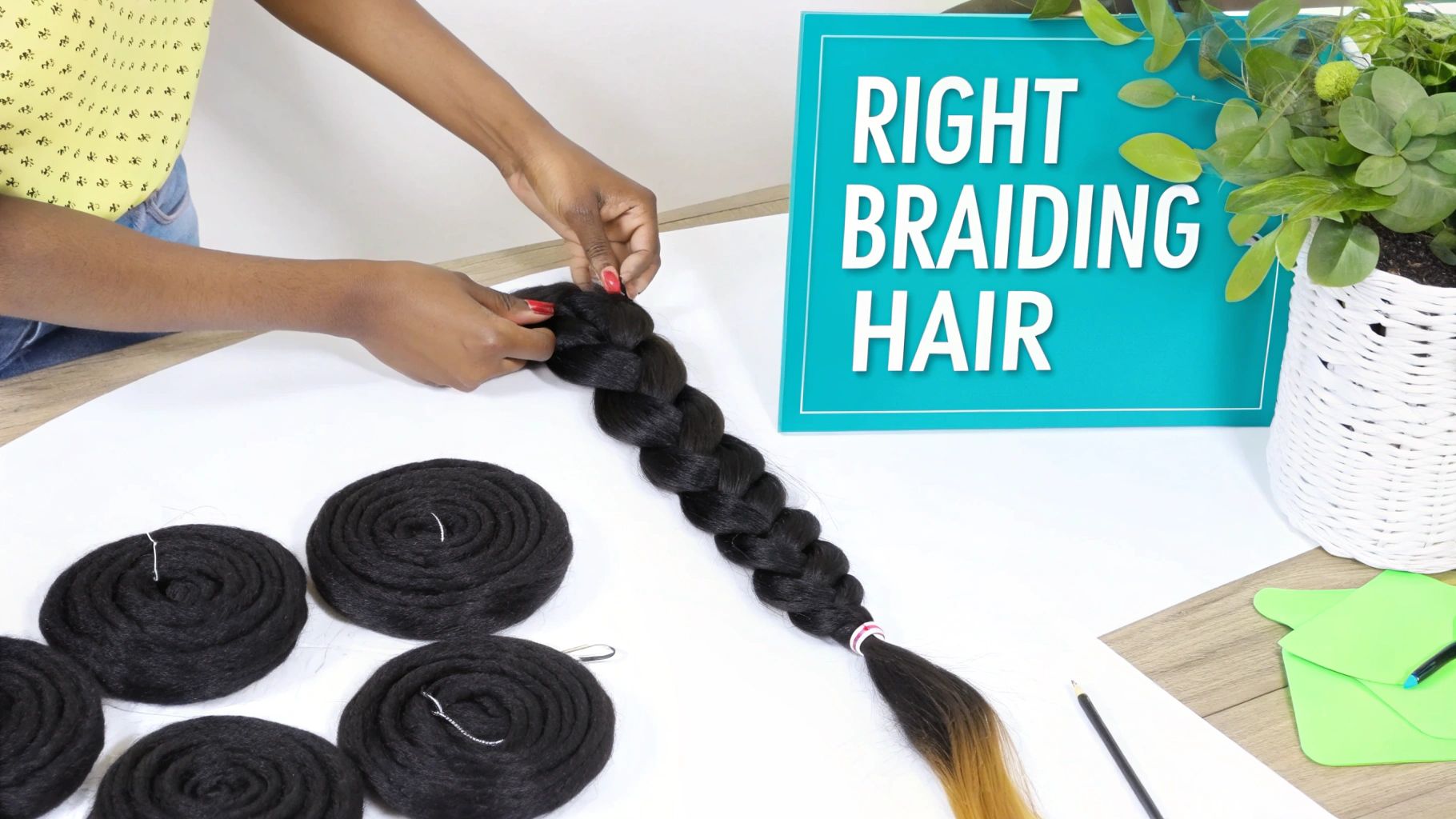
Walking down the hair aisle can feel like a pop quiz you didn't study for. So many choices! But think of it this way: you wouldn't use silk to make a pair of jeans. Picking braiding hair is the same—you need the right material for the job. For box braids, you're looking for something that looks great, feels comfortable, and can hang in there for the long haul while protecting your natural hair.
That's where Kanekalon fiber comes in. It's the MVP of the synthetic hair world. It’s a flame-retardant fiber that feels surprisingly soft, almost like natural hair, but without the human hair price tag. Best of all, it sets perfectly with hot water, giving you those clean, sealed ends that complete the look.
Why Your Hair Choice Matters
The hair you pick is more than just a color choice; it sets the stage for your entire box braid experience. Get it right, and your style will look amazing and last for weeks.
Here’s a breakdown of what’s on the line:
- Longevity and Durability: Good synthetic hair is built to fight off tangles and frizz, keeping your braids looking neat and fresh far longer.
- Comfort and Weight: Lighter hair, like pre-stretched Kanekalon, means less tension on your scalp—a total game-changer, especially for styles like knotless braids.
- Installation Time: Pre-stretched and pre-feathered hair is a massive time-saver. It cuts out the tedious prep work of pulling and tapering the ends.
- Final Appearance: The texture you choose, from silky to yaki, determines how well the extensions blend with your own hair and the overall vibe of your style.
Box braids are a staple protective style, particularly for women aged 18-25 looking for chic, low-maintenance options. It's a huge market, with 68% of braid wearers opting for synthetic hair for its cost-effectiveness and resilience. For a deeper dive, check out these insights on the hair braiding market's growth, which is expected to hit USD 6.8 billion by 2035.
At the end of the day, making the right choice isn't just about the look. It’s a practical decision that affects the health of your hair and how long you get to enjoy your beautiful new style. For more braid inspiration, explore our guides on Fulani braids, Boho braids, and protective styles.
Synthetic vs. Human Hair: A Practical Comparison
When you're standing in the beauty supply aisle, picking between synthetic and human hair for your box braids can feel a lot like choosing between a pair of high-performance sneakers and some luxury leather loafers. One is engineered for a specific purpose it's durable, affordable, and gets the job done beautifully. The other is all about a premium, natural feel and versatility.
For pretty much any style of box braids, synthetic hair is going to be your best bet. More specifically, Kanekalon fiber is the undisputed champion.
Think of Kanekalon as the specialized athletic gear of the braiding world. It's designed to be lightweight, which is a lifesaver when you have a full head of braids—less tension on your scalp means more comfort. It's also incredibly resilient, holding up against the frizz and tangles that can make a fresh style look worn out way too soon.
The real magic, though, is how it behaves with hot water. High-quality synthetic fibers are made to be sealed with a quick dip, creating those clean, perfectly tapered ends that give box braids their signature polished look. You just can't get that same neat, locked-in finish with human hair.
The Case for Kanekalon (Synthetic Hair)
There's a reason you see walls and walls of Kanekalon in every beauty supply shop. Its massive popularity for box braids comes down to a few practical advantages that make it the best braiding hair for most of us. It's the workhorse fiber that was literally made for this.
- It's budget-friendly. You can get all the hair you need for a full head of braids for a tiny fraction of what a single bundle of quality human hair costs.
- It's light and comfortable. Modern synthetic fibers are so much lighter than human hair, which means no neck strain or scalp pulling, even with long, dense styles.
- The color options are endless. Want a natural black? A honey blonde ombre? A vibrant pop of neon green? Synthetic hair comes in every color imaginable, right off the shelf.
- It's incredibly low-maintenance. Once the braids are in, they're set. The hair holds its style without needing extra products or heat styling.
This blend of features makes synthetic hair the smartest choice for a temporary protective style like box braids. You get a gorgeous, long-lasting look without breaking the bank.
When to Consider Human Hair
So, if synthetic is so great, is there ever a reason to use human hair? Absolutely, but think of it as a luxury upgrade for very specific styles, not your everyday go-to for braiding.
Human hair really shines in styles like bohemian or "goddess" braids, where you leave loose, curly ends out. Those free-flowing pieces blend beautifully with your own hair and can be heat-styled, giving a completely natural, organic look that synthetic fibers can't quite mimic. Plus, you can color and treat human hair extensions just like your own hair, opening up a world of customization.
The market for human hair extensions is huge for a reason—it was valued at over USD 5.90 billion in 2026 and is expected to more than double by 2034. This is all thanks to its incredible versatility. The ability to use heat and color on it creates a flawless look that's hard to beat.
But this luxury comes with a hefty price tag, often running into hundreds of dollars for a full installation. It also requires a lot more care. You have to wash, condition, and gently handle it to avoid tangles, just like the hair on your head.
It’s a serious commitment in both money and time. To dig deeper into this, check out our detailed guide comparing synthetic vs. human hair wigs. But for classic box braids—where every strand is braided down and sealed—investing in human hair is usually an expense you just don't need.
What Texture and Length of Braiding Hair Should You Choose?
Okay, so you've picked your fiber. Now for the fun part: deciding on the texture and length. This is where you really get to customize your box braids and make the style your own. Think of it like this—the fiber is the fabric, but the texture and length are the cut and finish. It's what separates a generic style from one that looks like it was made just for you.
Getting these details right ensures your braids not only look amazing but also blend beautifully with your own hair.
Finding Your Perfect Texture Match
When you're looking at braiding hair, you'll mainly see two texture options on the shelf: Yaki and Silky. The difference between them is huge, and it completely changes the final vibe of your braids. Whether you're creating classic box braids or modern knotless styles, choosing the right hair is essential for achieving long-lasting results. You can explore a full range of options in our braiding hair collection to find the perfect match for your desired style.
-
Yaki Texture: This is the MVP for most box braid styles. Yaki hair is designed to mimic the texture of natural hair that's been relaxed or silk-pressed. It has a subtle micro-crimp to it, giving it a slightly matte, less slippery feel. This texture is a lifesaver because it grips your own hair so much better, making the braids more secure and the blend absolutely seamless. If you want braids that look like they could be growing right out of your scalp, Yaki is the way to go.
-
Silky Texture: Sometimes called "silky straight," this hair is exactly what it sounds like—super smooth, shiny, and slippery. It has a finish similar to many Caucasian or Asian hair types. While it creates a really sleek, polished look, that slipperiness can be a real challenge. It's harder for the braider to grip, and it often doesn't blend as naturally with coarser hair textures, sometimes creating a noticeable line where your hair ends and the extension begins.
Bottom line? For the most natural-looking and secure box braids, Yaki texture is almost always your best bet.
Translating Lengths into Your Final Look
Here’s a common trip-up for beginners. You see a package of braiding hair labeled "24 inches" and think you’re getting super long braids, but that's not how it works. That number refers to the total length of the hair strand unfolded from end to end.
When you install braids, you fold the hair in half to loop it around the base of your natural hair. This means the actual length of your braids will be about half of what's printed on the package.
A simple rule of thumb: A 24-inch pack will give you braids that are roughly 12 inches long, which usually falls around shoulder-length. If you're dreaming of waist-length or even tailbone-length braids, you'll need to grab a pack labeled 52 inches or longer.
Just remember to mentally cut that number in half when you're shopping, and you'll get the length you actually want.
Pre-Stretched vs. Non-Stretched Hair
The last little detail to consider is whether the hair is pre-stretched or not. This choice can literally make or break your braiding day experience.
Pre-stretched hair is a game-changer. It comes out of the package with the ends already tapered, just like natural hair grows. This saves you an incredible amount of time and arm-soreness, since you don't have to sit there pulling and "feathering" the blunt ends of each little section yourself. The result is a neater, less bulky braid from top to bottom, which also makes it way easier to seal the ends with hot water.
Non-stretched hair, on the other hand, has thick, blunt ends. To get that natural tapered look, you have to manually stretch the fibers yourself before braiding. While some pro stylists like the control this gives them over the exact shape of the braid, it adds a ton of extra prep time to the process.
For pretty much everyone from first-timers to seasoned pros looking for an easier install pre-stretched hair is the clear winner for box braids. It's a small upgrade that makes a massive difference in both the process and the final result.
Matching Your Hair to Your Braid Style
Choosing the right braiding hair isn't a one-size-fits-all deal. Think of it like this: a chef wouldn't use a delicate paring knife to chop through bone. The tool has to fit the task. In the same way, the hair that works wonders for thick, jumbo braids is going to be all wrong for sleek, knotless styles.
Every box braid variation comes with its own set of needs from weight and texture to the amount of grip required. Getting this match right is the secret to a style that not only looks incredible but also protects your natural hair from stress and tension. It's the difference between a comfortable, long-lasting protective style and one you're counting down the days to take out.
For Trendy Knotless Braids
Knotless braids are everywhere for a reason. They offer a flat, natural-looking start at the scalp and are so much gentler on your head. But because the braid starts with your own hair and the extension is fed in bit by bit, the hair you choose is absolutely crucial. You need something that won't weigh your strands down.
This is why many stylists prefer the best pre-stretched braiding hair for knotless braids, as it creates a more natural, tension-free finish. The hands-down best choice is lightweight, pre-stretched Kanekalon hair. Here's why it's a non-negotiable for this style:
- Less Tension: Its light-as-a-feather feel prevents the painful pulling that can come with heavier extensions, keeping your follicles happy.
- Seamless Blending: The feed-in method looks best when the extension hair integrates smoothly. Pre-stretched fibers give you that perfect, natural taper.
- A Clean Finish: The ends are already tapered, so you get a sleek look without any extra effort.
Trying to use heavy, non-stretched hair for knotless braids completely defeats the purpose. You'll end up with tension and potential breakage at the root, which is exactly what you're trying to avoid. Always, always go for a lightweight option to get the full benefits of this technique.
If you want to do a deeper dive into getting this style just right, check out our guide on the best braiding hair for knotless braids for more specific tips.
For Dramatic Jumbo Braids
Ready to make a statement? For big, bold jumbo braids, the game changes. You're no longer prioritizing a lightweight feel; instead, it's all about volume and grip. You need hair that’s full enough to create those thick, beautiful plaits without needing so many packs that it feels like a helmet.
Your best friend for this style is a slightly coarser Yaki texture. That little bit of texture gives the hair the friction it needs to grip your own hair securely, preventing the braids from slipping. Plus, the fuller fibers mean you get that chunky look you’re going for with less hair overall.
It's no surprise that synthetic jumbo hair is a top pick. In fact, among braid wearers aged 18 to 25, a whopping 75% prefer jumbo styles in the standard 24-inch length because the packs are designed to be lightweight, preventing scalp strain. They're affordable, easy to work with, and consistently deliver that bold look.
For Sleek Micro Braids and Crochet Styles
On the complete opposite end of the spectrum, we have micro braids. These tiny, delicate braids require a totally different kind of hair. For this look, a silky, fine-fibered synthetic hair is usually the way to go. The sleekness creates a gorgeous, uniform drape that flows like liquid. Just be warned: the installation is a serious time commitment!
This flowchart gives a great visual of how to think about your hair choice, starting with the big picture and narrowing it down to specific attributes.
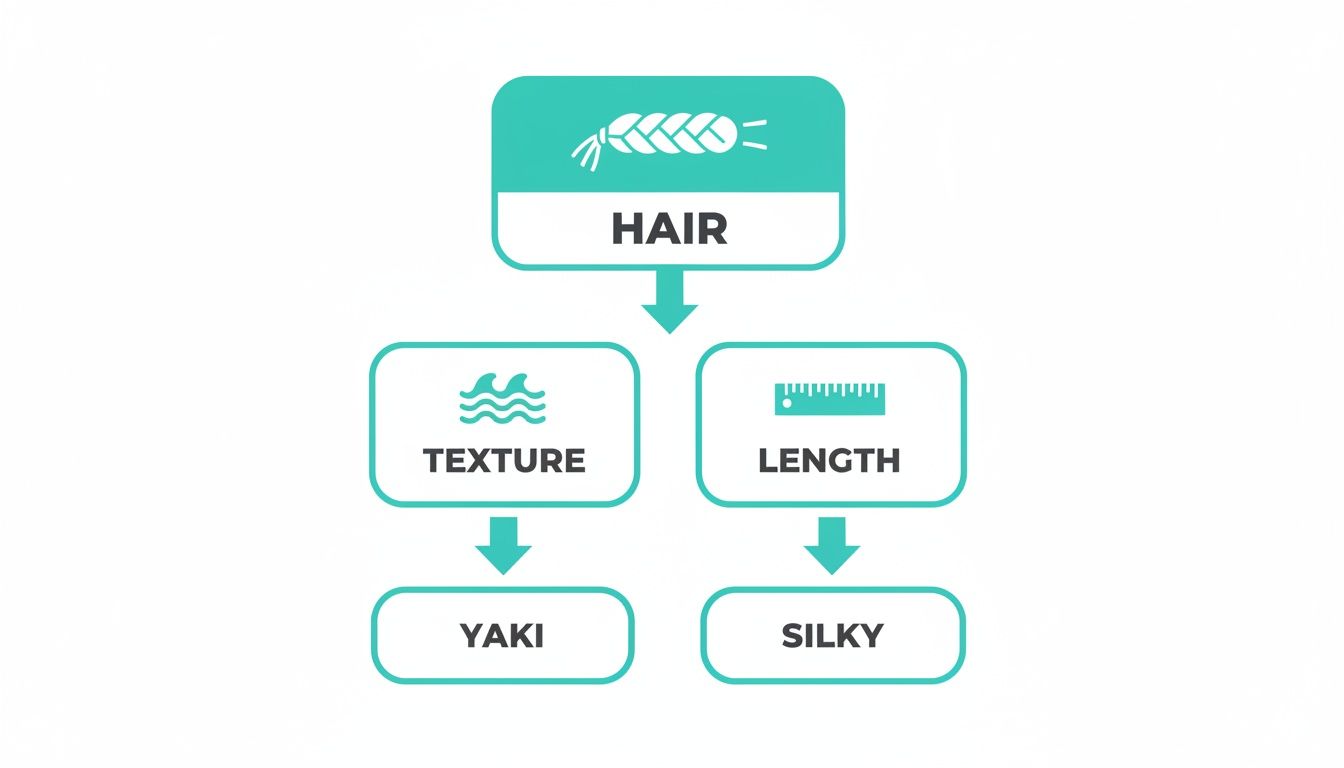
As you can see, figuring out the right texture and length is the foundation for matching the hair to the style you want. Choosing the best braiding hair for box braids ensures your style looks neat, lasts longer, and remains comfortable throughout wear.
And what about crochet box braids? This one is simple. You have to use pre-looped braiding hair. This hair is made specifically for this method, with a small loop at the top of each braid. You just use a crochet needle to loop it through your cornrows. It’s a game-changer for cutting down installation time and perfect for anyone who wants to do their braids at home.
To make things even clearer, here’s a quick-glance table to help you match the perfect hair to your dream braid style.
Braiding Hair Recommendations by Braid Style
| Braid Style | Recommended Hair Type | Key Features | Average Packs Needed |
|---|---|---|---|
| Knotless Braids | Pre-stretched Kanekalon | Lightweight, tapered ends, easy to feed in | 4-6 packs |
| Jumbo Box Braids | Kanekalon (Yaki Texture) | Coarse texture for grip, high volume | 6-8 packs |
| Micro Braids | Synthetic (Silky Texture) | Fine and sleek for a fluid look | 8-10 packs |
| Crochet Box Braids | Pre-looped Synthetic Hair | Designed with a loop for quick installation | 5-7 packs |
Ultimately, this table serves as a solid starting point. The right hair will make your installation smoother, your style last longer, and most importantly keep your natural hair healthy and happy underneath.
How Much Braiding Hair Do You Actually Need?
We’ve all been there. You walk out of the beauty supply store feeling confident, only to realize you’re two packs short halfway through installing your braids. It's a classic braider’s nightmare. On the flip side, no one wants to waste money on extra hair that just ends up in a closet.
Figuring out the right amount of hair might feel like a guessing game, but it’s really more like following a recipe. The two key "ingredients" that determine how much you'll need are the size and length you want for your braids. It’s pretty simple: bigger braids and longer styles will always demand more hair.
A Guide to Braid Size and Pack Count
The biggest factor by far is the size of the individual braids. Are you dreaming of thick, dramatic jumbo braids, or are you leaning toward delicate, intricate micro braids? The difference in how much hair each style eats up is massive.
Here’s a reliable breakdown to help you map out what you'll need for a full head of standard, mid-back length box braids:
- Micro Braids: Because there are so many of them, these tiny braids are the most hair-intensive. You'll want to grab 8 to 10 packs of standard braiding hair.
- Small Box Braids: For that classic, clean look (think braids smaller than a pencil), you should plan on using 6 to 8 packs.
- Medium Box Braids: This is the go-to size for most people—about the width of a pen. You can typically get a full, beautiful style with 5 to 7 packs.
- Jumbo Box Braids: For those bold, statement-making braids, you’ll use more hair per braid but need fewer braids overall. Aim for 6 to 8 packs, and maybe a little more if you want them extra long and full.
Think of these numbers as your starting point. Keep in mind that things like your head size and natural hair density can nudge the final count up or down a bit.
Adjusting for Length and Hair Type
Once you know your target size, think about length. Braiding hair is usually sold by its unfolded length—you'll see numbers like 48 inches or 52 inches on the package. Since the hair is folded in half to be installed, a 48-inch pack gives you braids that are about 24 inches long.
If you’re going for waist-length or even tailbone-length braids, you’ll not only need to buy packs with a longer measurement, but you might also need more of them to keep the braids looking thick and consistent all the way to the ends.
Pro Tip: Always, always buy one more pack of hair than you think you need. It’s the best and cheapest insurance policy against a braiding disaster. Running out of hair mid-style is a huge hassle, and having that extra pack on standby is a total lifesaver.
This one simple rule has rescued countless braiding sessions from the brink. It's so much better to have a little leftover for future touch-ups than to bring the whole process to a screeching halt. Plan ahead, grab that "just-in-case" pack, and you can start your style with total confidence.
Making Your Box Braids Last: A Care Guide
Alright, your beautiful box braids are in! The hard part is over, right? Now, the focus shifts from finding the best braiding hair for box braids to keeping that style looking flawless while protecting the natural hair underneath.
Think of it this way: the installation was the main event, but a solid care routine is what makes it last. It's the secret to keeping your braids neat, maximizing their lifespan, and ensuring your own hair stays healthy and hydrated.
Believe it or not, your care routine should actually start before the first braid is even installed. If you've ever dealt with an itchy scalp from synthetic hair, there's a simple trick that works wonders.
Soaking the hair in a solution of apple cider vinegar (ACV) and water for 20-30 minutes can be a game-changer. This ACV rinse strips away the alkaline coating on the fibers—the usual suspect behind that annoying itch. Just be sure to rinse the hair thoroughly with clean water afterward and let it air dry completely before installation.
Building Your Braid Maintenance Routine
Once your braids are in, the goal is pretty straightforward: keep your scalp clean, keep your hair moisturized, and keep the extensions fresh. You want to do all this without creating a ton of frizz or putting extra tension on your roots. A gentle, consistent routine always beats aggressive, infrequent washing.
A great maintenance plan doesn't need to be complicated. Here are the core steps to nail down:
- Cleanse Your Scalp: Forget soaking your entire head. Instead, mix a little shampoo with water in a spray bottle and spritz it directly onto your scalp. Use the pads of your fingers (never your nails!) to gently massage your roots, then rinse carefully.
- Moisture is Everything: Even though your hair is tucked away, it's still thirsty! Get into the habit of regularly spritzing your braids with a lightweight, water-based leave-in conditioner. Focus on the base of the braids to make sure your natural hair doesn’t become dry and brittle.
- Seal the Deal: After you moisturize, lightly apply a natural oil like jojoba or avocado to your scalp and down the length of the braids. This simple step helps lock in all that moisture and adds a beautiful, healthy sheen.
A clean scalp is a happy scalp. In between wash days, you can wipe down your scalp with a cotton pad soaked in witch hazel or use a dedicated braid spray. This helps manage any product buildup or sweat without messing up your style.
Protecting Your Braids Overnight
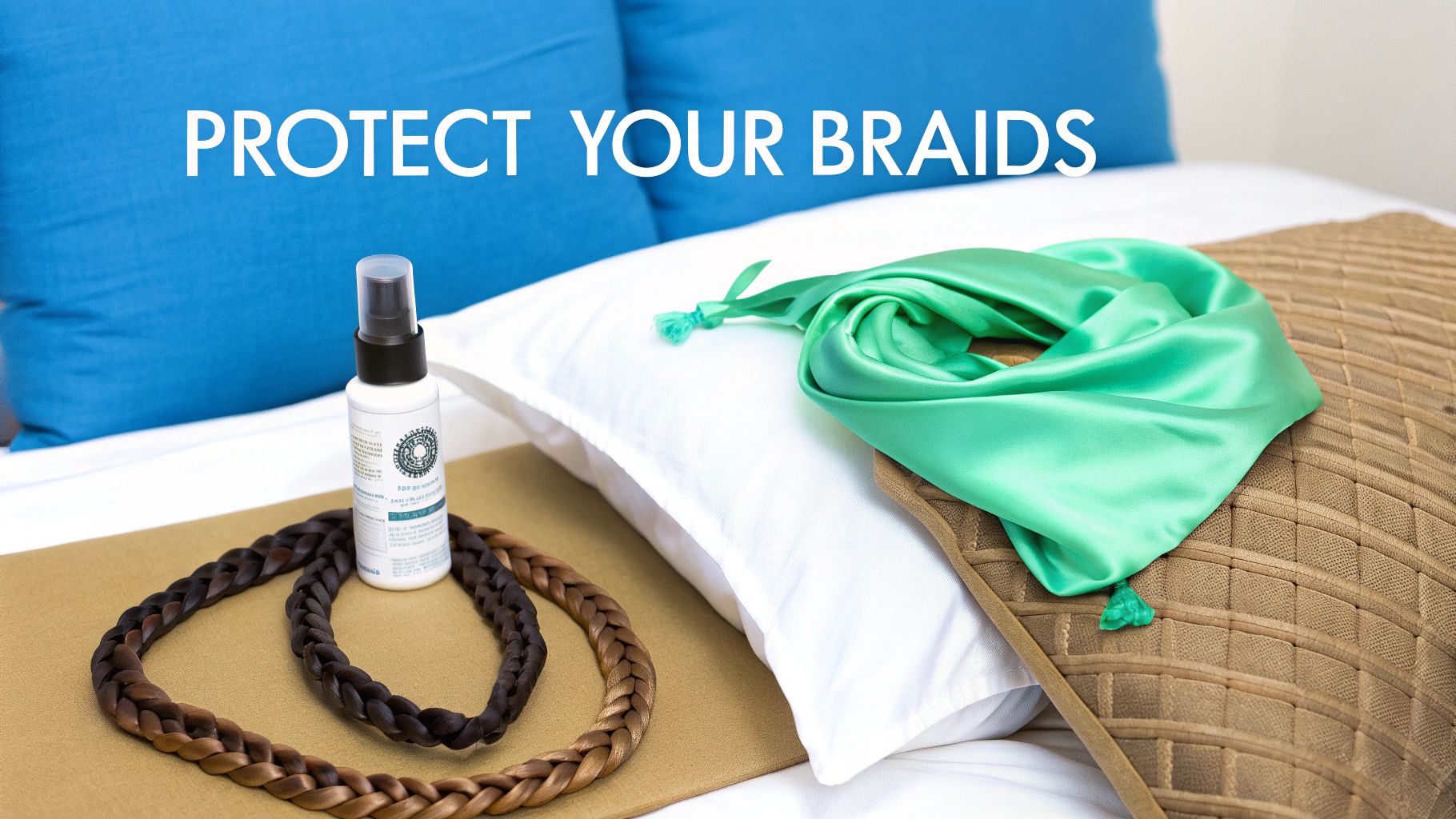
How you sleep can make or break your box braids. Seriously. Tossing and turning against a cotton pillowcase creates friction, which leads to frizz, flyaways, and can even cause breakage over time.
Your nightly routine is non-negotiable it's the easiest way to protect your investment. Before you go to bed, always wrap your hair in a satin or silk scarf or bonnet. These fabrics let your braids glide around without snagging, preserving your neat parts and keeping frizz at bay.
If you have extra-long braids, try gathering them into a loose, low ponytail or bun before wrapping them up. This keeps them from getting tangled or pulling while you sleep. For more tips on keeping your styles looking fresh, you can learn how to stop synthetic hair from tangling in our detailed guide.
Got a Few More Questions? Let's Talk Braiding Hair
Even with all the details covered, a few questions might still be bubbling up. That’s perfectly normal when you're aiming for the perfect style. Here are some quick, no-nonsense answers to the things people ask most often.
How Can I Stop My Scalp From Itching with Synthetic Hair?
Ah, the dreaded itch. Nine times out of ten, that irritation comes from an alkaline coating manufacturers put on synthetic fibers. The good news? The solution is cheap, easy, and incredibly effective.
Give the hair an apple cider vinegar (ACV) rinse before you install it. Just fill a sink or basin with warm water, pour in about a cup of ACV, and let the hair soak for 20-30 minutes. You'll probably see a thin white film float to the top that's the irritating chemical coming right off. After its bath, rinse the hair well with plain water and let it hang to air dry completely. Trust me, this simple prep step can save you weeks of itchy misery.
Can I Reuse Braiding Hair for Another Style?
This one really depends on the type of hair you're working with. If you've invested in human hair, absolutely! With the right care, you can use it for several installations, which helps justify the higher price tag over the long run.
Synthetic hair like Kanekalon, however, is almost always a one-time use product. After a few weeks of being worn, it gets frizzy, tangled, and just won't look as sharp the second time around. While you might be able to salvage some pre-looped hair for a quick crochet style, it's best to start with a fresh pack for box braids every single time.
For classic box braids, always start with fresh synthetic hair. It's the only way to guarantee a neat, long-lasting style and avoid the headache of tangles and frizz from old, worn-out fibers.
What Does Pre-Stretched Braiding Hair Mean?
Think of pre-stretched hair as a brilliant time-saver. It’s hair that's been professionally stretched out and tapered at the ends, so it goes from thick at the top to thin at the bottom, just like your natural hair.
The difference it makes is huge. It completely eliminates the tedious, arm-aching process of stretching the hair yourself. More importantly, it helps you create braids that are less bulky and have a much more natural-looking, feathered finish. They also seal beautifully with hot water. For beginners and pros alike, it’s a no-brainer pre-stretched is the way to go for a faster, sleeker result. If you want faster installs and less tangling, explore our pre-stretched braiding hair collection for professional-quality results.
Ready to find the perfect hair for your next look? Elise Beauty Supply has a fantastic selection of high-quality braiding hair, wigs, and extensions to make it happen. Explore braiding hair collection and grab everything you need for flawless, long-lasting braids.
What braiding hair does not itch?
How many packs of braiding hair do you need?