

How to Stop Synthetic Hair From Tangling Your Complete Guide
The absolute best way to keep synthetic hair from tangling is to build a consistent daily care routine. It's not about one magic trick; it's about a few simple habits that make a world of difference. Think gentle brushing with the right tools, a spritz of a good synthetic-safe detangling spray, and smart storage. These daily practices directly fight the two biggest enemies of synthetic fibers: friction and dryness.
Understanding Why Synthetic Hair Tangles
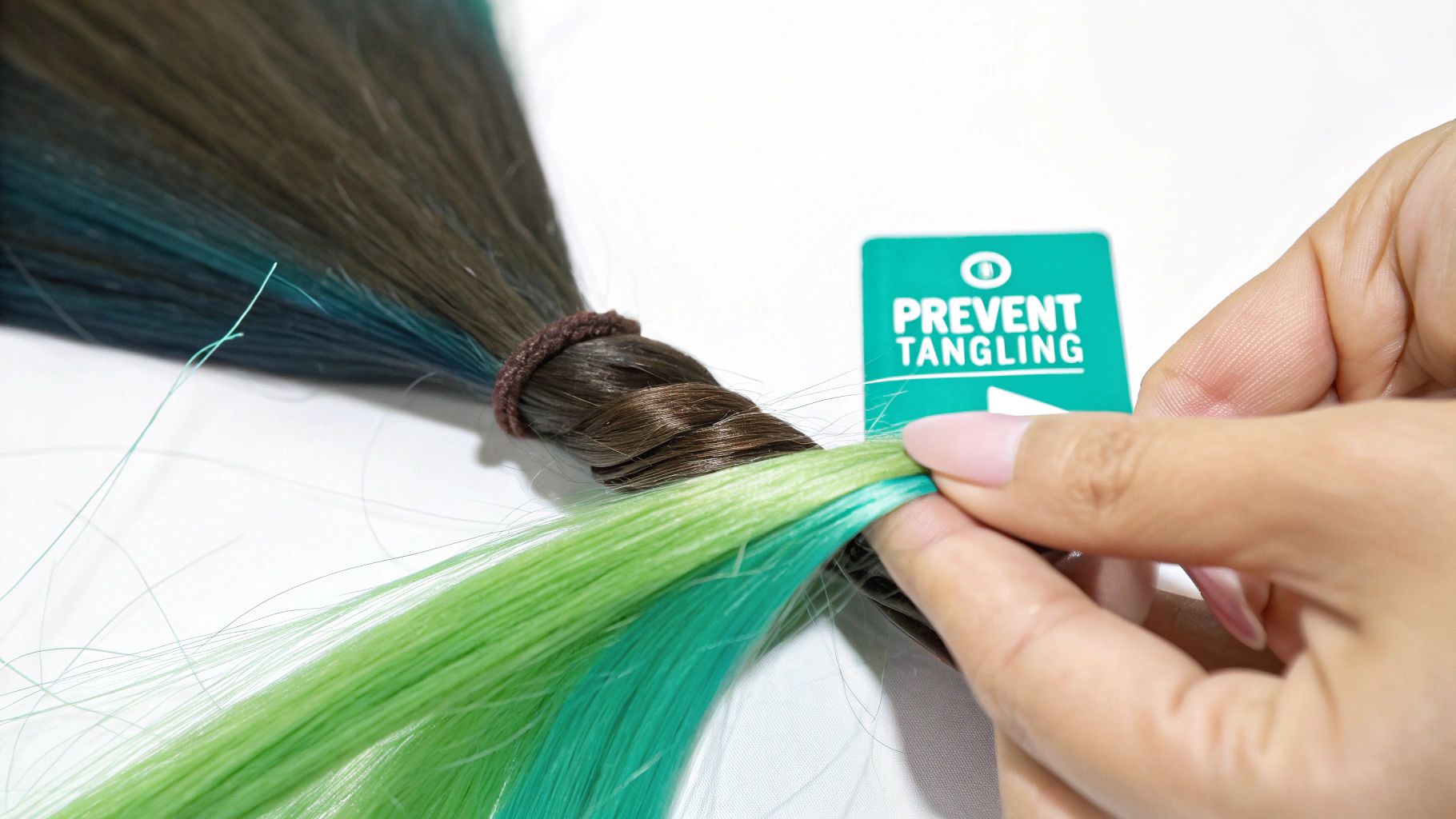
If you’ve ever felt that sinking feeling as you find a fresh knot in your wig, braids, or extensions, you're definitely not alone. The reason this happens is actually pretty simple. Your scalp naturally produces an oil called sebum, which coats your real hair and keeps it moisturized, smooth, and tangle-resistant.
Synthetic fibers don't have that built-in advantage. They're essentially a type of plastic, so they're naturally dry. When these dry fibers rub against each other—or your clothes, or a pillowcase—they generate static electricity. That static makes the individual strands cling together, which is the starting point for those tiny, annoying tangles that can quickly morph into a matted mess. You’ll often see this happen first at the nape of the neck, where the hair constantly brushes against your shoulders and clothing.
Key Culprits Behind The Knots
A few everyday things are constantly working against your style, turning it from sleek to snarled. Pinpointing these culprits is the first real step to keeping your hair looking great.
-
Friction and Movement: It’s unavoidable. Simply turning your head, wearing a chunky scarf, or catching a gust of wind creates friction. The longer the hair, the more it moves, and the more likely it is to tangle.
-
Dryness: Synthetic fibers can't moisturize themselves, period. Without regular conditioning and care, they get progressively drier and more brittle, making them grab onto each other instead of gliding smoothly.
-
Product Buildup: Using products not designed for synthetic hair (or just using way too much product) leaves behind a sticky film. This residue acts like glue, encouraging fibers to clump together and form knots.
The core issue isn't that your hair is low-quality—it's the fundamental difference in the material itself. Human hair is an organic fiber that lubricates itself, while synthetic hair is a polymer that depends entirely on you to keep it smooth.
The synthetic hair extension market is massive, expected to hit USD 2.5 billion by 2032. Yet, tangling remains a huge headache, affecting up to 70% of people who wear synthetic styles. This is almost entirely due to the lack of natural oils, which leads to that friction buildup. In fact, one consumer report found that 62% of synthetic wig wearers dealt with tangles in the very first month, often just from storing their pieces incorrectly. You can dig deeper into these numbers in this synthetic hair market research.
Building Your Tangle-Free Toolkit
Preventing tangles in synthetic hair starts long before you ever spot the first knot. Honestly, having the right tools and products ready to go is the secret weapon. It’s the entire foundation of a good care routine. Using the wrong stuff—like your regular hairbrush—can actually cause the very tangles you’re trying to prevent, which is just a recipe for frustration.
I like to think of a synthetic hair toolkit in two parts: the tools that physically handle the hair fibers and the products that treat them. You really need both working in sync to keep your wigs, braids, or extensions looking smooth.
Essential Detangling Implements
Your choice of comb or brush is a make-or-break decision. Those standard hairbrushes with the little ball-tips on the bristles? They’re a nightmare for synthetic hair, catching and snagging the fibers until you have a frizzy mess. You need tools designed to be gentle.
- Wide-Tooth Comb: This is your go-to, your first line of defense against any knot. The teeth are spaced far apart, so they glide through the hair with very little friction. Always, always start detangling from the ends and gently work your way up to the roots or the weft. This little trick prevents you from tightening small knots into bigger ones.
- Loop Brush: After you've worked through the major tangles with your comb, a loop brush is fantastic for smoothing and final styling. The bristles are unique—they're just smooth loops—so they pass right through the hair without catching on the base of the wig or the wefts. It's how you get that polished look without accidentally pulling out fibers.
Must-Have Product Types
The products you use are just as critical as the comb in your hand. They provide what stylists call "slip," which is just a fancy way of saying they make the fibers slick enough to slide past each other instead of grabbing on and tangling. For more tips on this, check out our guide on how to make synthetic hair soft.
A word of caution from experience: products made for human hair are often the enemy here. They can contain oils and proteins that just sit on top of synthetic fibers, creating a sticky buildup that leads to, you guessed it, more tangles. Stick with formulas made for synthetics.
Keep an eye out for these essentials:
- Sulfate-Free Shampoo: When wash day comes, sulfates are way too harsh for synthetic hair. They strip the fibers, leaving them incredibly dry and prone to matting. A gentle, sulfate-free shampoo is non-negotiable for cleaning without causing damage.
- Lightweight Leave-In Conditioner: Getting into the habit of spritzing your hair with a synthetic-safe leave-in conditioner every day will change the game. It adds just enough moisture and protection to help the strands glide, not cling.
- Silicone-Based Serum or Spray: For those high-friction spots—like the nape of your neck where your hair rubs against your collar, or the very ends of a long style—a tiny drop of silicone serum is a lifesaver. It creates an ultra-slippery shield. Just be sure to use it sparingly, as a little goes a long, long way.
Your Washing and Detangling Masterclass
Washing your synthetic hair the wrong way can turn a gorgeous style into a matted, tangled nightmare in minutes. I've seen it happen countless times. The trick is to stop thinking of it as "washing" and start thinking of it as a gentle, restorative soak. It's all about keeping friction to an absolute minimum and using products that make the fibers slick and smooth.
Before water even touches the hair, you have to pre-detangle. Seriously, don't skip this. Trying to wash a dry, knotted wig is a recipe for disaster. Grab a wide-tooth comb and gently work through any tangles, always starting from the ends and carefully making your way up to the roots or wefts. This simple step prevents you from accidentally tightening small knots into huge, unmanageable clumps.
The Gentle Soaking Method
Scrubbing and rubbing shampoo into synthetic fibers is probably the single fastest way to cause irreversible tangles. Instead, a simple soaking technique cleans the hair perfectly without creating that friction.
- Prep the Water: Start by filling a basin or your sink with cool water. Hot water is a no-go—it can damage the fibers and even cause pre-set curls or waves to fall flat.
- Add the Shampoo: Drizzle a small amount of a sulfate-free shampoo made for synthetic hair into the water and swish it around to create a light lather.
- Soak, Don't Scrub: Fully submerge the hair in the water and just let it sit for about 5-10 minutes. This gives the shampoo plenty of time to break down dirt, oil, and product buildup without you having to do any rough handling.
- Rinse with Care: Drain the soapy water and refill the basin with fresh, cool water to rinse. Gently swish the hair around until it's completely free of suds. Whatever you do, don't wring or twist it!
This flow shows the essential toolkit for your routine, from the initial comb-out to the final cleanse.
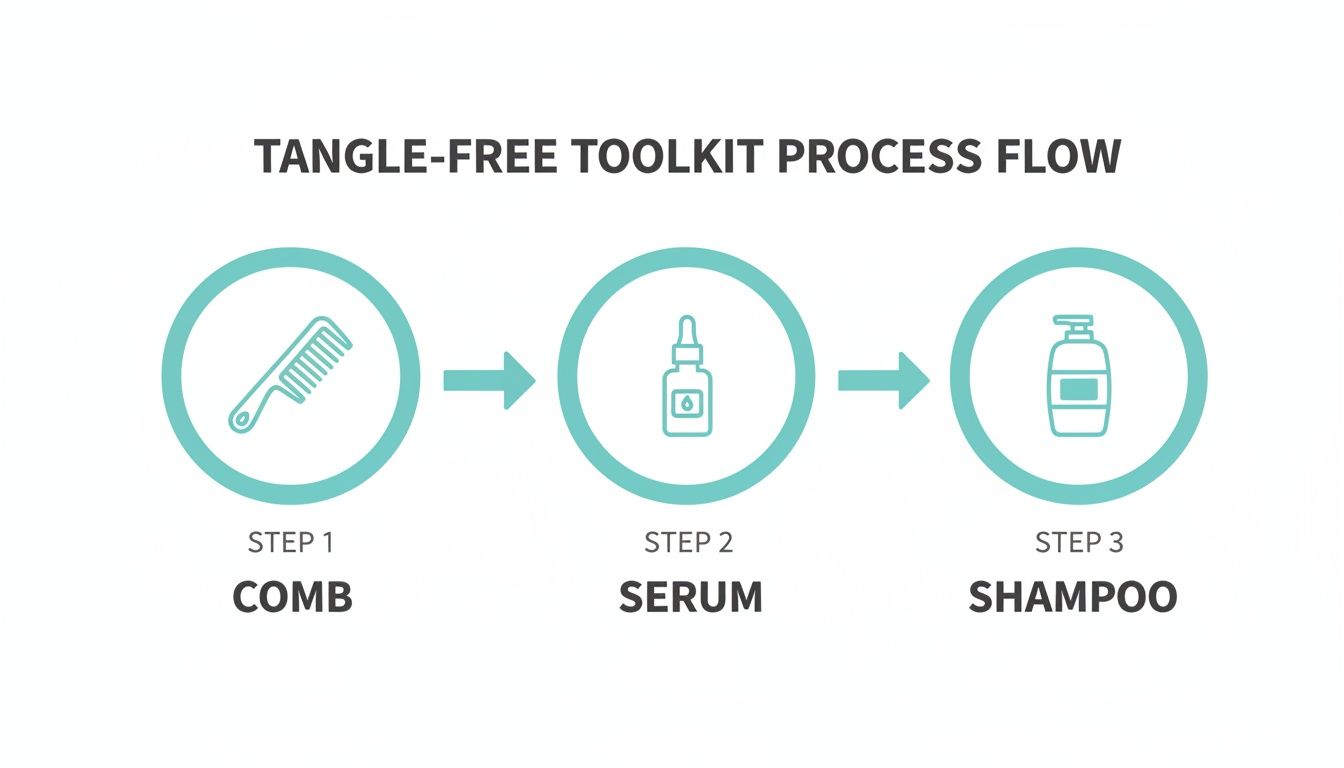
It’s a clear reminder that successful care isn't about one magic product; it's a multi-step process where each tool does its part to prevent damage.
Conditioning and Bringing Back the Softness
After washing, conditioning is where the real magic happens for keeping knots at bay. This is the step that restores moisture and adds that critical slip that helps the fibers glide past each other instead of grabbing and tangling.
Pro Tip: A diluted fabric softener solution can be a game-changer. It works by coating the fibers, much like it does with clothes, which dramatically reduces the static and friction that cause tangles in the first place.
You can also use a conditioner specifically designed for synthetic hair. European salon data actually backs up this method, revealing that a bi-weekly cool rinse with a bit of fabric softener (about one teaspoon per gallon of water) can cut down on tangles by 50% over a 90-day period.
To keep the hair in top shape, a monthly deep condition with an apple cider vinegar rinse (one part ACV to four parts water) can help restore the hair's natural pH balance, preventing up to 40% of knots.
Once you're done, lay the hair flat on a towel or hang it on a wig stand to air dry completely. Never, ever brush synthetic hair when it’s soaking wet—that's when the fibers are at their weakest and most vulnerable. Only after it's totally dry should you go in for a final, gentle detangling session. For a more detailed breakdown of a full maintenance routine, check out our guide on how to care for synthetic wigs.
Smart Styling Habits to Minimize Friction
How you wear your synthetic hair from day to day makes a world of difference in the tangle department. It's really all about playing defense—reducing friction before it even has a chance to create a mess. The biggest culprit is almost always the constant rubbing against your clothes, especially at the nape of your neck.
Making a few small tweaks to your daily routine can be a game-changer. For example, if you're pulling on a coat with a high collar or wrapping up in a big scarf, don't just let your long hair hang free. Tying it back into a low, loose ponytail, a simple braid, or even a chic bun keeps those fibers from rubbing all day long, which is what causes that static and those frustrating knots.
The Truth About Heat Styling
Using heat can be a fantastic way to switch up your style, but it's also the fastest way to ruin a synthetic piece if you aren't careful. You have to be smart about it. The reality is only about 40% of synthetic fibers are even heat-safe, and they usually top out around 350°F. If you push past that limit, you can expect 60% more knots as the fibers literally start to melt and stick together.
A good heat protectant spray—one made for synthetic hair—can cut down on that heat damage by 42%. Here’s another pro tip: after you've used a curling iron or straightener, let the hair cool down completely before you touch it with a comb. Running a comb through warm, pliable fibers can increase breakage by a whopping 25%. Instead, just gently separate the curls with your fingers. If you're interested in the data behind this, you can learn more about synthetic hair market findings and the industry trends.
When you do use heat on safe fibers, live by these rules:
- Start low and go slow. Always begin with the lowest temperature setting on your tool. Only bump it up a tiny bit if you absolutely have to.
- Keep it moving. Never let the heat tool sit in one spot. A constant, steady motion prevents you from melting or damaging the hair.
- Always use protection. A light mist of heat protectant creates a crucial barrier between the hot plate and the delicate fibers. Don't skip this.
Taming High-Friction Zones
Let's be honest, some spots are just going to be more prone to tangling. The nape of the neck is public enemy number one. The ends of long hair that swish against your back and shoulders all day are a close second.
To keep these areas under control, put a tiny drop of a silicone-based serum or a light, synthetic-safe oil on your fingertips. Gently smooth it over those trouble spots. This creates a bit of slip, helping the strands glide past each other instead of grabbing and knotting up.
Think of it like this: You wouldn't run an engine without oil, so don't expect dry synthetic fibers to move friction-free without a little help. A touch of serum is the lubricant your hair needs to survive daily wear and tear.
For anyone who loves braids or crochet styles, a little prep work goes a long way. Before you even begin installing, give the braiding hair a light spritz with a leave-in conditioner and gently detangle it. This one simple step makes the installation feel smoother and dramatically reduces tangles from the very first day, which means your protective style will look better and last longer.
The Secret to Longevity: Proper Storage

What you do with your synthetic hair when you're not wearing it is just as crucial as your daily detangling routine. Honestly, proper storage is one of the most overlooked secrets to keeping tangles at bay and preserving the hair's shape and shine for the long haul.
Tossing a wig onto a dresser or cramming braiding hair into a drawer is a surefire way to ruin it. The loose fibers will rub against each other and every surface they touch, creating a friction-fueled, matted mess by the time you want to wear it again.
Your Everyday Storage Solutions
For the pieces you wear all the time, you need a storage solution that’s both protective and convenient.
- Wig Stand or Mannequin Head: This is the gold standard for a reason. Keeping your wig on a stand lets the hair hang freely, which not only prevents tangles but also helps maintain the cap’s shape and the style's natural flow.
- Hanging Storage: Got long extensions or bundles of braiding hair? A simple clip hanger in a closet works like a charm. It keeps all the strands hanging straight and separated, which is a massive help in stopping them from knotting up.
Storing hair loose is one of the biggest, yet most avoidable, causes of tangles and serious matting. Making a simple change, like always using a wig stand, can have a huge impact on your hair's lifespan and appearance.
Long-Term and Travel Storage
When it's time to put a style away for a while or pack it for a trip, protecting it from friction becomes even more critical. The goal is to tuck it away in a soft, smooth environment where the fibers can rest without being roughed up.
This is where a silk or satin bag becomes your best friend. These materials are incredibly low-friction, so the synthetic fibers glide against them instead of snagging. After you’ve carefully detangled the hair, just fold it gently and slip it inside the bag. It’s a much better option than the original plastic packaging, which often traps moisture and creates static.
Improper storage is a huge factor in tangles. Research shows that simple acts like using a satin pillowcase or a wig stand can prevent up to 70% of overnight tangling. And a basic nighttime routine, like the "pineapple" method, is reported by 75% of US women to slash morning frizz by 50%. You can dig deeper into these insights on false hair products.
Nightly Protection for Weaves and Braids
If you're rocking an installed style like a weave, braids, or crochet hair, your nighttime routine is your storage. Sleeping on a standard cotton pillowcase creates an incredible amount of friction, leading to frizz and tangles while you sleep.
The fix is incredibly simple: wrap your hair. A satin scarf or bonnet is absolutely non-negotiable. It forms a protective barrier that drastically cuts down on overnight friction, preserving your style and making your morning routine a million times easier. This small habit is a cornerstone of keeping synthetic hair tangle-free.
Your Top Synthetic Hair Questions, Answered
Even with the most diligent care routine, you're bound to have a few questions. The world of synthetic hair can feel a bit tricky sometimes, but once you have the right info, you can handle just about any issue and keep your styles looking incredible.
Here are the straightforward answers to the questions we get asked all the time.
Can I Dye Synthetic Hair?
This is easily one of the most popular questions, and the short answer is a hard no. Think of synthetic hair fibers as a type of plastic; they don't have the porous cuticle that human hair has. Because of this, traditional hair dye has absolutely nothing to grab onto, meaning the color won't take.
Trying to use a box dye or professional color on synthetic hair will just leave you with a patchy, uneven mess. Worse, it could permanently damage the fibers. While some special dyes for plastics do exist, they're often harsh and give unpredictable results. Your best bet is always to buy the wig or extensions in the exact shade you want right from the start.
How Can I Revive Frizzy Ends?
Frizzy, frayed ends are a dead giveaway of friction damage, but they aren't always a lost cause. If you're working with heat-friendly synthetic fibers, you can work some magic with a handheld steamer or a flat iron on its absolute lowest temperature setting.
Here’s how to do it without causing more damage:
- Work in small sections. Isolate just the frizzy ends you want to treat.
- Apply heat quickly. With a steamer, just pass it over the ends. With a flat iron, do one or two very swift passes. Never let the heat linger on the fibers.
- Comb while it cools. Right after the heat, grab a wide-tooth comb and gently guide the fibers straight as they cool. This helps "reset" them into a sleek, smooth shape.
If your hair is not heat-safe, you can try the "hot water dip" method. Just dip the frizzy ends into a bowl of very hot (not boiling!) water for a few seconds, then comb them straight and let them air dry completely. Always, always test this on a small, hidden section first to be safe.
It's a fact that synthetic fibers tangle about three times more than human hair because of their chemical processing, which underscores why specific care is so important. Using a loop brush for daily styling can actually slash tangles by 65% compared to standard combs, a technique proven highly effective in Asia-Pacific markets. You can discover more insights about the false hair products market on maximizemarketresearch.com.
Why Is My Wig Always Tangling at the Nape?
Ah, the dreaded nape tangles. This spot is the ultimate high-friction zone. As you go about your day, the hair fibers at the back of your neck are constantly rubbing against your skin, shirt collars, scarves, and jackets. This nonstop motion creates static and causes the fibers to cling together, leading to those stubborn knots.
The key is to give this area a little extra TLC. A tiny drop of a silicone-based serum applied to the nape area in the morning creates a slick barrier that helps the fibers glide instead of grab. On days you're wearing a turtleneck or a high-collared coat, consider an updo like a low bun or ponytail. It's a simple trick that dramatically cuts down on friction.
How Often Should I Wash My Synthetic Wig?
Unlike your natural hair, synthetic wigs don’t soak up scalp oils, so they don’t need washing nearly as often. In fact, over-washing can strip the fibers and shorten your wig’s life. A solid rule of thumb is to wash your wig after every 10-15 wears.
But that’s just a guideline. If you use a lot of styling products, spend time in smoky or strong-smelling places, or just notice the hair looks dull and feels heavy, it’s definitely time for a wash. Trust your gut—if it looks or feels like it needs a refresh, it probably does. While the care routine is different, understanding the lifespan of various hair types can be helpful. You might be interested in our guide on how long human hair wigs last to compare.
Ready to build your perfect tangle-free toolkit? At Elise Beauty Supply, we have everything you need, from premium synthetic braiding hair to essential accessories that keep your styles looking salon-fresh. Explore our collection today and experience the difference quality makes.