
Braid Spray for Itching: Quick Relief and Scalp Care Tips
That incredible feeling of a fresh protective style can quickly turn into a nightmare when the maddening itch starts. If you're dealing with a persistent, nagging itch after getting new braids, you're definitely not alone. It's one of the most common complaints out there.
A good braid spray for itching is your best friend in this situation. It's specifically made to deliver soothing, moisturizing ingredients directly to your scalp for instant relief.
So, Why Do Your New Braids Suddenly Itch So Much?
It's a classic story: one day your braids are perfect, and the next, your scalp is screaming for a good scratch. What gives? Usually, it's not just one thing, but a combination of factors all ganging up on your scalp. Getting to the root of the problem is the key to finding real, lasting relief so you can actually enjoy your style.
Most of the time, the main culprit is tension. To get that super sleek, neat look, braids can sometimes be installed a little too tightly. This constant pulling on your hair follicles stresses the scalp, leading to inflammation, tiny bumps, and that relentless itchy sensation.
Dryness, Buildup, and Pesky Synthetic Fibers
Scalp dryness is another huge player in the itch game. Your scalp produces natural oils to stay moisturized, but braids can sometimes make it tricky to get your usual oils and conditioners where they need to go. This problem gets worse when you use synthetic braiding hair, as the fibers can be rough and actually pull moisture away from your scalp and hair. That constant friction between coarse synthetic strands and your sensitive skin only makes the irritation worse.
If you find your synthetic hair is a big part of the problem, our guide on how to make synthetic hair soft has some really helpful tricks.
Then there's the sneaky issue of product buildup. All those gels, edge controls, and mousses used to get your style just right can start to clog your pores. Over a few days, this traps dirt and oil, creating the perfect environment for an irritated, itchy scalp.
Finally, some of us have a mild allergic reaction to the alkaline coating on synthetic hair. This chemical finish is meant to preserve the fibers, but it can cause intense, almost immediate itching for people with sensitive skin. A quality braid spray helps tackle all these issues by calming inflammation, adding back lost moisture, and creating a protective barrier on the scalp.
To make it simple, let's break down how a good braid spray directly addresses these common triggers.
Quick Guide to Common Braid Itch Triggers
| Common Cause of Itch | How a Braid Spray Helps |
|---|---|
| Tight Installation Tension | Soothing ingredients like aloe vera and chamomile calm inflammation and reduce redness caused by pulling. |
| Scalp Dryness | Moisturizing agents like glycerin and natural oils (like tea tree or jojoba) hydrate the scalp directly, preventing flaking. |
| Synthetic Hair Friction | The spray creates a light, lubricating barrier on the scalp, reducing irritation from hair fibers rubbing against the skin. |
| Product Buildup | Sprays with clarifying ingredients like witch hazel or apple cider vinegar can help gently break down buildup between washes. |
| Allergic Reaction to Coatings | Anti-inflammatory and antibacterial ingredients help neutralize irritants and calm the skin's reactive response. |
As you can see, the right spray is more than just a quick fix—it's formulated to counteract the very things making you uncomfortable in the first place.
It's a well-known issue in the hair braiding world. In fact, itchiness is a major problem, affecting up to 65% of women who wear protective styles. The discomfort usually kicks in around day three to five, right when dryness and buildup start to take hold. You can see how the industry is responding by learning more about the latest trends in hair care products.
Decoding the Label: Ingredients That Soothe vs. Irritate
Choosing the right braid spray for itching can feel overwhelming, but it really just boils down to knowing what's inside the bottle. A quick scan of the ingredients list is your best defense against picking a product that will make your scalp even angrier.
Some formulas are loaded with natural, calming ingredients, while others are packed with hidden irritants. Learning to spot the difference is the key to finding real relief.
Scalp-Soothing Ingredients to Look For
When you're scanning a label, a few key ingredients should give you the green light. These are the natural MVPs known for delivering both immediate comfort and long-term scalp health.
- Tea Tree Oil: This is a non-negotiable for an itchy scalp. Its natural antiseptic and anti-inflammatory powers go straight to the source, fighting the bacteria and fungus that often cause irritation under braids.
- Aloe Vera: Think of this as an instant cooling agent for your scalp. Aloe vera is brilliant for calming inflammation and redness on contact, all while providing lightweight moisture that won't clog your pores.
- Peppermint or Menthol: If you're desperate for that immediate "ahhh" sensation, look no further. These create a cooling, tingling feeling that seriously distracts from the itch and helps soothe the underlying irritation.
- Glycerin or Propylene Glycol: These are what we call humectants. They work by pulling moisture from the air and locking it into your scalp, preventing the tightness and flaking that comes with dryness.
Itching is an incredibly common issue for braid wearers. In fact, some studies show it affects over 52% of people, often due to friction from synthetic hair. This is why braid sprays were created in the first place.
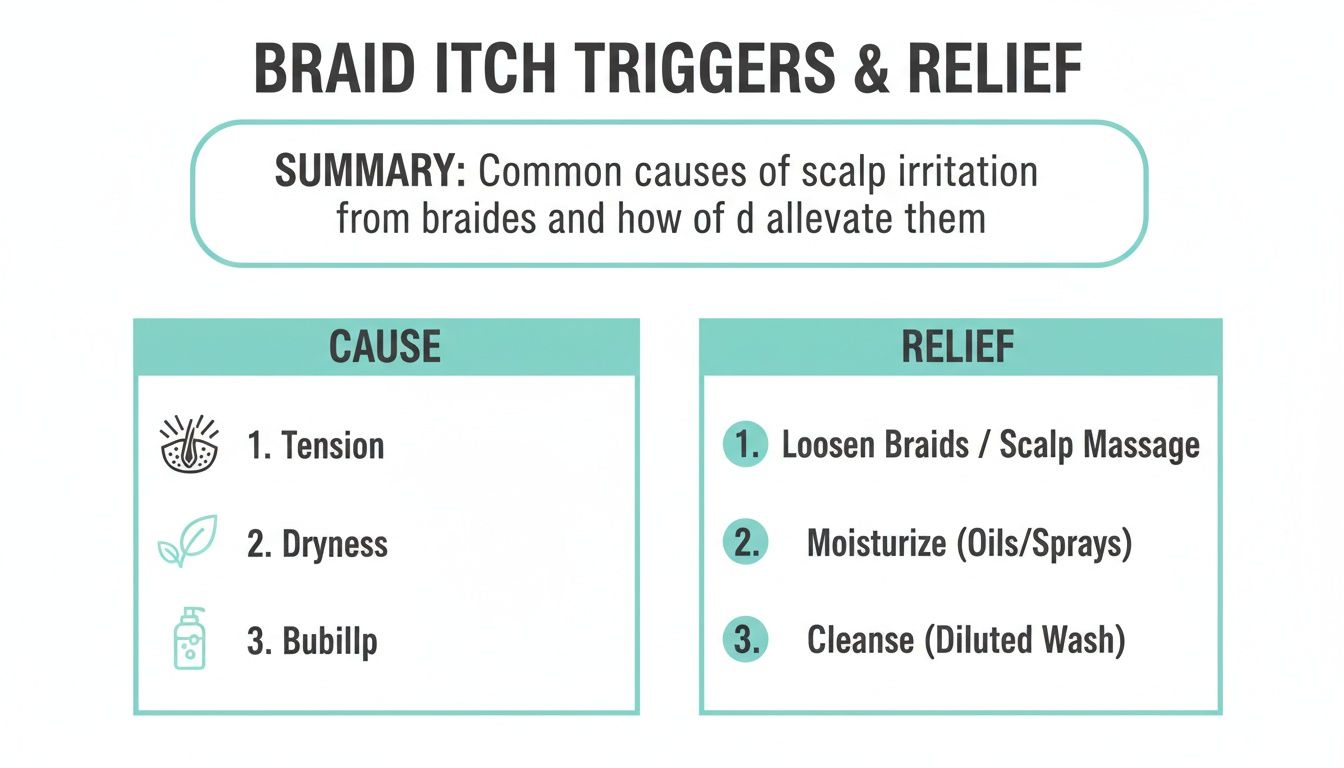
As the infographic shows, the main culprits are tension, dryness, and buildup, which is exactly why a spray with moisturizing and cleansing ingredients is so essential.
Irritating Ingredients You Should Avoid
Knowing what to look for is only half the battle; knowing what to steer clear of is just as crucial. Some of the most common ingredients in hair products can actually make your scalp's condition worse.
Be especially wary of products that look good on the front but hide irritants on the back. A product’s power isn't just about what's in it—it's also about what's been left out.
Keep an eye out for these potential troublemakers on the label:
- Drying Alcohols (like SD Alcohol, Denatured Alcohol): Sure, they make a product feel like it's drying quickly, but they achieve this by stripping your scalp of its natural oils. This just leads to a vicious cycle of more dryness and irritation.
- Heavy Mineral Oil and Petrolatum: These ingredients provide a cheap, surface-level shine but don't actually moisturize. Instead, they sit on top of your scalp, clogging follicles and trapping dirt, which only fuels more buildup and itching.
- Artificial Fragrances and Dyes: If your skin is even remotely sensitive, strong synthetic fragrances can be a major trigger for allergic reactions, contact dermatitis, and an even more irritated scalp.
Braid Spray Ingredient Cheat Sheet
To make it even easier, here’s a quick reference guide to help you make smart choices at a glance.
| Ingredients You Want to See | Ingredients You Should Avoid |
|---|---|
| Tea Tree Oil (antiseptic) | Drying Alcohols (SD Alcohol, Alcohol Denat.) |
| Aloe Vera (soothing, hydrating) | Heavy Mineral Oil & Petrolatum (pore-clogging) |
| Peppermint/Menthol (cooling relief) | Artificial Fragrances/Dyes (potential allergens) |
| Glycerin (moisture-attracting) | Sulfates (harsh, stripping cleansers) |
| Witch Hazel (anti-inflammatory) | Parabens (potential irritants/disruptors) |
| Jojoba or Coconut Oil (light moisture) | Formaldehyde-Releasing Preservatives (harsh) |
Think of this table as your shopping companion. When you're in the aisle, a quick check for the "good" column and a scan for the "bad" can save your scalp a lot of grief.
Ultimately, becoming a savvy label reader is your best bet for finding lasting relief. The global hair care market is massive, but ingredients don't lie. Products with ingredients like tea tree oil have been shown in user trials to reduce itchiness by as much as 55%. Choosing the right formula empowers you to stop scratching and start enjoying your protective style.
Applying Your Braid Spray for Maximum Relief
Finding the right braid spray for itching is only half the battle. How you apply it makes all the difference between temporary relief and truly calming your scalp. Just misting it over the top of your braids won't cut it—you have to get the product right where the problem is: your skin.
A little extra care during application ensures those soothing ingredients get down to the root of the irritation. It’s a simple change that can drastically improve your comfort and help you rock your protective style for longer.
Target the Scalp, Not Just the Hair
The goal is to bypass the hair and treat the skin directly. If you only spray your braids, you're just inviting product buildup without ever solving the itch.
Here’s a better way:
-
Work in Sections: Use your fingers to gently lift and separate your braids. This creates a clear path, exposing the scalp you need to treat. Going row by row ensures you don’t miss a single spot.
-
Find the Sweet Spot: Hold the spray bottle about 4 to 6 inches from your scalp. Get too close, and the product will just run down your neck. Too far, and you’ll end up spraying your hair instead of your skin.
-
Spray and Repeat: Lightly mist the product along the exposed part line. Then, move over about an inch and create a new part. Keep doing this until your entire scalp has been covered.
This direct approach gets those active ingredients, like aloe or tea tree oil, right where they need to be to work their magic.
Gently Massage for Full Absorption
Don't just spray and walk away. The final step is what really seals the deal.
Use the pads of your fingertips—never your nails!—to gently massage the spray into your scalp. This simple motion does two things: it helps the product absorb fully and boosts circulation, which can help calm down inflammation. Digging in with your nails is a huge no-no, as it can cause tiny scratches that worsen the itch and even lead to infection.
Key takeaway: The goal is to soothe, not scratch. A gentle massage calms the skin and provides lasting relief without causing more damage.
By the way, if you’re also dealing with extra tension or flyaways, a good braid detangler can be a great tool to have on hand, though you'll want to use it sparingly just on the hair itself.
How Often Should You Apply It?
This really comes down to what your scalp is telling you.
When your braids are fresh and the itch is intense (we’ve all been there), feel free to apply the spray twice a day. A spritz in the morning and another before bed can make that first week much more bearable.
After the initial tightness eases up, you can dial it back. Applying it once a day or every other day is often plenty to maintain a happy, hydrated scalp. Just pay attention—if you feel that familiar tingle starting up, it’s time for another application.
Your Complete Braid Care Routine Beyond the Spray
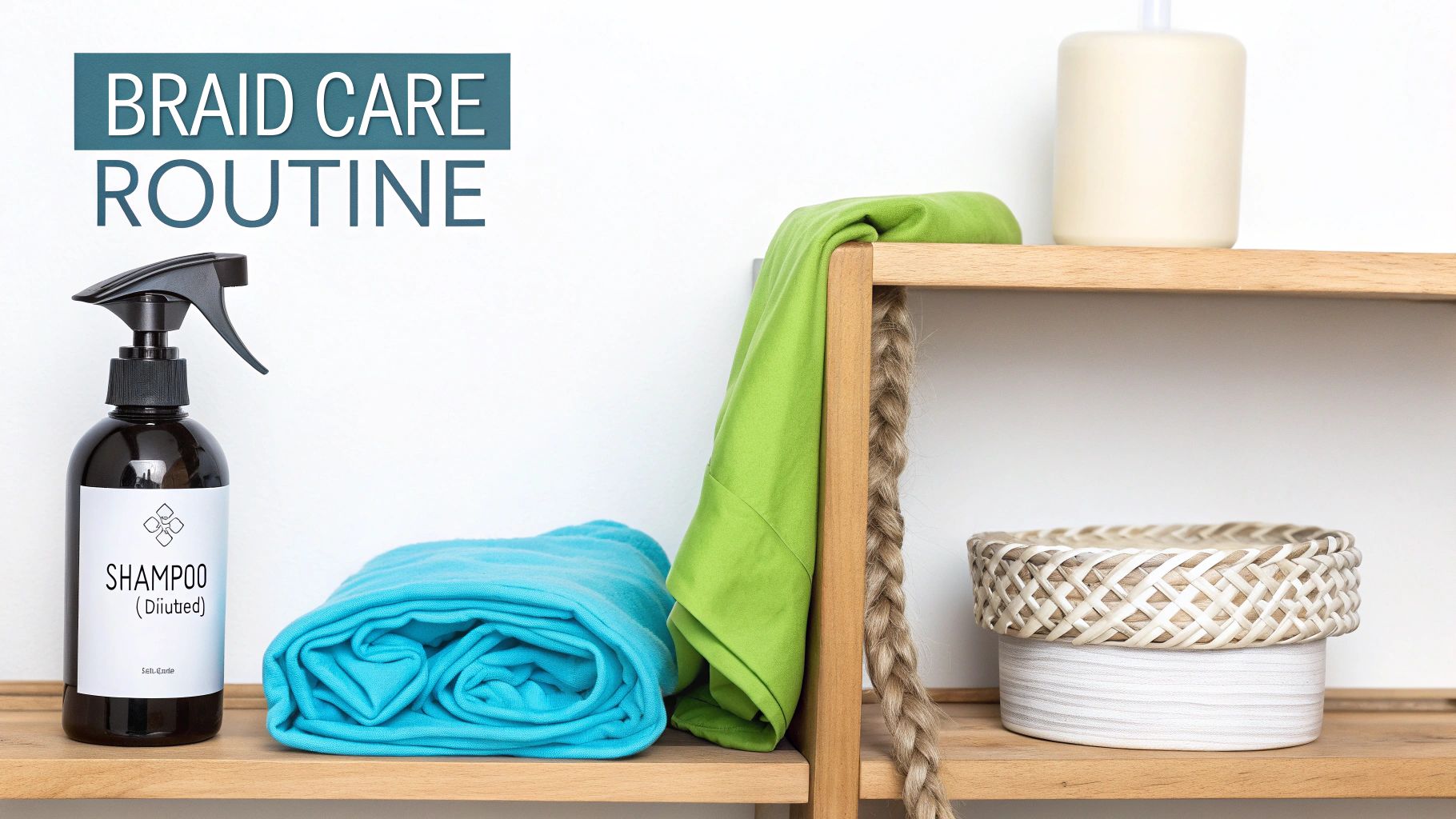
A good braid spray for itching is a lifesaver, no doubt. But to get the most out of it, you need to see it as just one piece of the puzzle. The best results come from a full-on care routine that prioritizes a clean scalp, proper moisture, and solid protection.
Think of it this way: a healthy routine builds a strong foundation. When your scalp is clean and hydrated from the start, itchiness doesn't even get a chance to move in, letting you enjoy your braids without the constant distraction.
The Right Way to Wash Your Braids
I get it—washing a fresh set of braids can feel like a high-stakes operation. But skipping washes is a recipe for disaster. That's how you end up with the product buildup, sweat, and clogged pores that make your scalp scream. The trick is to clean your scalp without turning your braids into a frizzy mess. And for that, a nozzle applicator bottle is your secret weapon.
Here’s how I recommend doing it:
- Create a Shampoo Mix: Grab an applicator bottle and fill it about a quarter of the way with a good sulfate-free shampoo. Top it off with warm water and give it a gentle shake.
- Get Right to the Scalp: Part your braids and use the nozzle to apply the watery shampoo mix directly onto your scalp. Work your way through in sections.
- Massage, Don't Scrub: Use the pads of your fingers (never your nails!) to gently massage your scalp. This will lift all that grime without roughing up your roots.
- Rinse with Care: Let the water run down the length of your braids until it runs clear. Lightly squeeze the braids as you go to help push all the suds out.
This method gets your scalp truly clean without disturbing the braids themselves. If you’re curious about which types of hair can handle a good wash, our guide on the best braiding hair for knotless braids has some great pointers.
Keep Your Braided Hair Moisturized
Dryness is one of the biggest culprits behind an itchy scalp. When the hair inside the braids gets parched, it starts pulling moisture from your scalp to compensate, leading to a vicious cycle of irritation. That’s why moisturizing the braids themselves is just as crucial as spritzing your scalp.
A light leave-in conditioner or a touch of oil (jojoba and coconut are fantastic) smoothed down your braids every few days will do the trick. It keeps the hair inside flexible and hydrated so it doesn't rob your skin of moisture.
A well-cared-for style not only feels better but also looks better for longer. Polling data shows that 45% of women aged 18-25 prefer using sprays with their braids to maintain a flake-free look and achieve up to four weeks of durability. You can explore more about these trends and the global hair braiding market for further insights.
Protect Your Braids While You Sleep
Your nighttime routine is absolutely non-negotiable if you want your braids to last. Tossing and turning on a cotton pillowcase creates friction that leads to frizz and breakage. But the most important rule of all? Make sure your braids are 100% dry before you even think about lying down.
Going to bed with damp braids is like sending an open invitation for mildew and bacteria to set up shop on your scalp. It creates a warm, moist environment where they thrive, which is a fast track to serious scalp issues and relentless itching.
Always, always wrap your hair in a silk or satin scarf or bonnet. This simple step cuts down on friction and helps your hair and scalp hold onto that precious moisture.
When an Itchy Scalp Is a Sign of Something More
Most of the time, a little itchiness is just part of the braid life. But sometimes, your scalp is trying to tell you something more serious is going on. A good braid spray for itching is your best friend for day-to-day irritation, but it's not a cure-all. Knowing how to read the signs is key to keeping your scalp healthy in the long run.
The usual itch from a fresh install or a bit of dryness is one thing. Persistent, painful irritation is a whole different beast. If that nagging itch doesn't calm down after the first week, or if it actually gets worse no matter how much you spray and soothe, it’s time to listen up. Your body might be waving a red flag that the style is too tight or you're having a reaction to something.
Recognizing Red Flags on Your Scalp
A normal itch is just... well, an itch. It’s when other symptoms join the party that you need to be concerned. These are the signals you absolutely can't ignore, as they can point to real problems like traction alopecia, folliculitis, or a nasty case of contact dermatitis.
Keep a close watch for these warning signs:
- Persistent Bumps or Pimples: If you see little itchy or pus-filled bumps popping up where the braid meets your scalp, your hair follicles are likely inflamed or infected.
- Open Sores or Crusting: Any kind of weeping, crusting, or raw skin means your skin's natural barrier is broken. This needs attention, fast.
- Extreme Flaking: A few white flakes from dryness are common. But if you’re seeing large, thick, or yellowish scales, it could be a sign of something like seborrheic dermatitis.
- Significant Hair Shedding: It’s a major red flag if you notice clumps of hair coming out whenever you touch your braids or scalp.
If you're dealing with severe swelling, pain that’s so bad it wakes you up at night, or a rash that’s spreading down your neck or face, it’s time to get professional help. This isn't normal and could be a serious allergic reaction or infection.
When to Consult a Professional
Spotted one of the red flags I just mentioned? Your first call should be to your stylist. They’re the expert on the install itself and can check if the braids are simply too tight. A skilled braider can often loosen them just enough to take the pressure off and can tell the difference between normal tension and a scalp in real distress.
But if the symptoms stick around or get worse even after your stylist works their magic, it's time to book an appointment with a dermatologist. A doctor can give you a proper diagnosis for any underlying scalp conditions and prescribe medicated shampoos or creams that a braid spray just can't handle. Your health comes first, and that means knowing when to move from the salon chair to the doctor’s office.
Your Top Braid Spray Questions, Answered
Even with the best braid spray in hand, you’re bound to have some questions. Let's get into a few of the most common ones I hear, so you can feel totally confident while rocking your protective style.
Getting the timing right is probably the biggest hurdle. You want sweet relief from the itch, but you definitely don't want to end up with greasy, weighed-down braids.
How Often Should I Actually Be Using My Braid Spray?
Honestly, the best advice is to just listen to your scalp. It’ll tell you what it needs.
Right after your braids are installed, your scalp is usually at its most stressed. That tension can be intense. For the first 3-5 days, I usually recommend spraying twice a day—once in the morning and once before bed. This really helps to get ahead of the inflammation and keep that crazy itching from starting in the first place.
Once that initial week is over and things have settled down, you can pull back. A light mist once a day, or even every other day, is typically all you need for maintenance. Of course, if you just finished a workout or the weather is super dry and you feel an itch coming on, go ahead and give your scalp an extra spritz. There are no hard-and-fast rules here.
Does Braid Spray Work on Other Protective Styles, Too?
Yes, absolutely! Don't let the name fool you. We call it "braid spray," but it's really a "scalp spray" for any style where your scalp is under a little extra tension and needs some love.
It’s fantastic for all sorts of styles:
- Twists (like Senegalese, Marley, or Passion twists): The game plan is the same. Just part the twists and spray the product right onto your scalp to soothe any pulling or dryness.
- Faux Locs and Goddess Locs: These can get pretty heavy, and that weight pulls on the roots. A good spray is a lifesaver for calming down that tension.
- Cornrows: It’s incredibly easy to get the nozzle right between the rows, delivering that moisturizing relief exactly where you need it.
No matter the style, the goal is always to care for the skin underneath. As long as you can get to your scalp, a quality spray will work its magic.
I Ran Out of Spray! What Can I Do for a Quick Fix?
It’s the worst feeling—an itch strikes and you realize your bottle is empty. Don’t panic! You’ve got a couple of solid options in your kitchen that can tide you over.
A diluted apple cider vinegar (ACV) rinse is probably one of the best temporary solutions. ACV has natural antibacterial properties that are great for calming an irritated, itchy scalp.
Quick DIY Itch-Relief Spray: Just mix one part apple cider vinegar with three parts water in a spray bottle. Mist it onto your scalp, let it hang out for about 15-20 minutes, and then give it a gentle rinse with cool water.
Another easy alternative is mixing a few drops of tea tree oil with a carrier oil, like jojoba or grapeseed. Use your fingertips to apply a tiny amount directly to the itchy spots. This works wonders in a pinch, but remember it’s not a permanent fix since oils can build up over time. Think of these as temporary stand-ins until you can get your hands on a properly formulated braid spray for itching, which is balanced to moisturize without creating gunk.
Ready to give your scalp the relief it deserves? Explore the premium hair care essentials at Elise Beauty Supply and find the perfect products to keep your protective styles feeling comfortable and looking fresh. Visit us at https://elisebeautysupply.shop to shop now.